
Tanto
Showing all 6 results
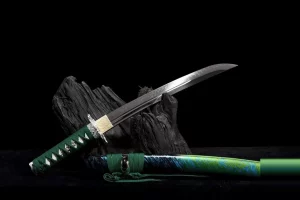
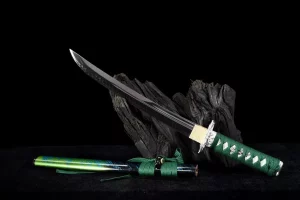
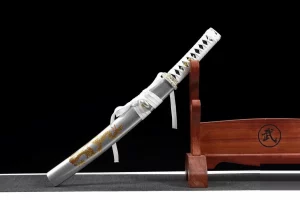
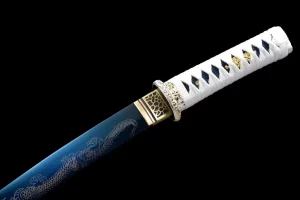
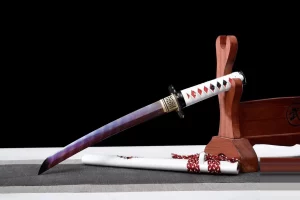
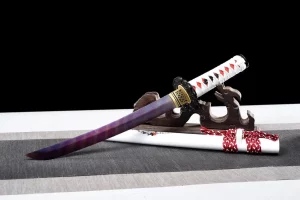
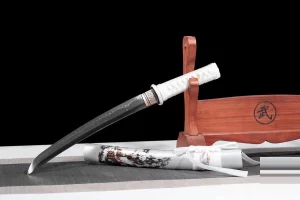
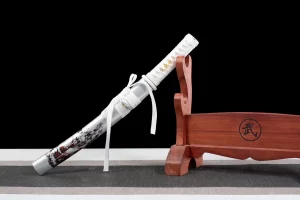
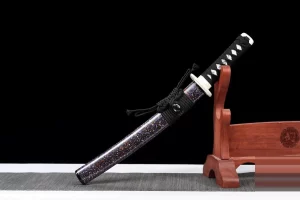
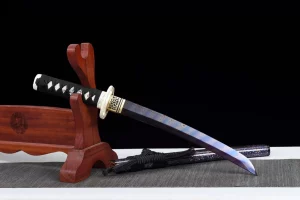
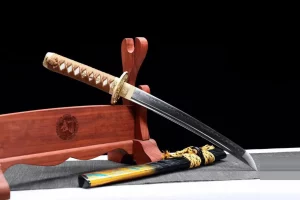
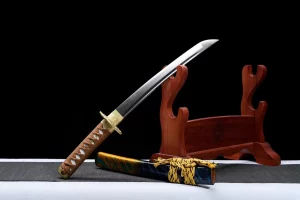
Showing all 6 results
Tanto: the third blade of the samurai
The tanto is the short blade in the swordsmith's vocabulary — compact, deliberate, and far older than its modest length suggests. Where the katana commands the open ground and the wakizashi answers in close quarters, the tanto belongs to the moment when distance has all but disappeared. Every piece in this collection is hand-forged from high-carbon steel, fitted by hand, and finished to the same standard we hold for our longer work.
A tanto rewards close looking. With so little blade to hide behind, the hamon sits right in front of you, the geometry of the point is uncompromised, and the quality of the tang and fittings has nowhere to retreat. It is a connoisseur's blade as much as a historical one.
History & Symbolism
The tanto came into its own in an age of lamellar armour, conceived as a thrusting blade narrow and rigid enough to find the gaps that a long cutting sword could not. Carried as the third blade alongside the daito and shoto, it was the weapon of last recourse and closest distance — the one that mattered when nothing else could be brought to bear. Its symbolism outgrew the battlefield: the kaiken, a slender concealed tanto, was carried by women of the samurai class as a mark of station and self-possession, kept within the sleeve or the folds of a kimono. To own a tanto was to carry a small, finished statement of bearing rather than a tool of display.
Craftsmanship & Steel
A short blade hides nothing, so it must be made honestly. Our tanto are clay-tempered: the spine is dressed in clay before the quench so that the edge cools fast and hardens, while the spine cools slower and stays tough. That differential hardening yields a genuine hamon born in the quench — not etched on afterwards — and an edge that takes a keen, lasting bite. Steel choice follows intent: T10 tungsten high-carbon takes clay-temper beautifully and shrugs off abuse; 1095 runs harder and holds a more aggressive edge at the cost of a little forgiveness; 1060 is the durable, mid-carbon ground that suits a first blade; folded Damascus brings a flowing, layered grain that reads superbly across such a small canvas. Every tanto is full-tang, the steel running unbroken into the handle, and dressed with proper fittings — habaki, tsuba and a fitted saya. Read more in our steel guide.
Our Collection
This range is built for collectors and for those completing a set. A tanto is the natural third piece in a daisho-plus display, sitting beneath a katana and wakizashi to form the traditional triple arrangement, and several here are forged to match the fittings of our longer blades for exactly that purpose. If you are choosing a first hand-forged piece, our beginner range in forgiving 1060 is the sensible starting point, while the mid-range and master-grade tiers reward the eye that has learned what to look for. Unsure where to begin, our how to choose guide walks you through it.
It is legal to buy and own a tanto in the United Kingdom provided you are 18 or over. Genuine hand-forged blades made by traditional methods, as ours are, fall under the recognised exemption for swords made in the traditional way. We dispatch with care, and we ask that every piece be enjoyed responsibly.
Frequently Asked Questions about the tanto knife
What is a tanto knife?
A tanto is the short Japanese blade traditionally carried as the third weapon alongside the longer katana and wakizashi. Historically it was a thrusting blade designed to defeat armour at very close range, and it was also worn as the kaiken by women of the samurai class. A genuine tanto knife is hand-forged from high-carbon steel and fitted with the same components as a full-length sword.
Is a tanto sharp, and is it full-tang?
Yes on both counts. Our tanto are sharpened to a keen working edge, and because most are clay-tempered the hardened ha holds that edge well. Every blade is full-tang, meaning the steel runs unbroken from the point through the handle, which is what gives a short blade its structural integrity.
Is a tanto legal in the UK?
It is legal to buy and own a tanto in the UK if you are 18 or over. Genuine hand-forged blades made by traditional methods, like ours, fall under the exemption for swords produced in the traditional way. This is general information rather than legal advice, and we ask that every blade be owned and stored responsibly.
What is the difference between a tanto and a wakizashi?
The difference is principally length and role. A wakizashi is a short sword, typically between roughly 30 and 60 centimetres of blade, worn as the companion to the katana. A tanto is shorter still — a dagger-length blade under that range — historically used for thrusting in the closest quarters rather than cutting at a distance.
How do I display a tanto?
A tanto displays beautifully on a small horizontal stand with the edge facing upward and the saya kept on or set alongside. It is most striking as the lowest blade in a daisho-plus-tanto triple stand, completing the set beneath a katana and wakizashi. Keep it out of direct sunlight and humidity, and wipe the blade with a light protective oil as set out in our care guide.
Begin or complete your set with a hand-forged tanto knife
Whether you are seeking the final piece for a daisho display or a finely made blade to study up close, explore the full tanto collection and find the one that earns its place on your stand.