
Wakizashi
Showing all 6 results
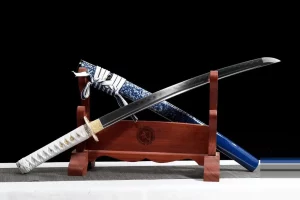
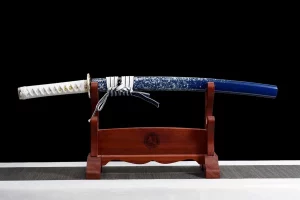
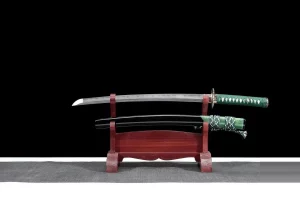
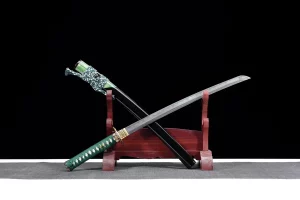
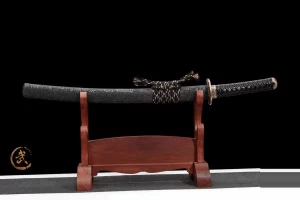
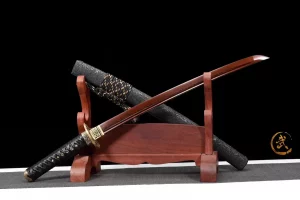
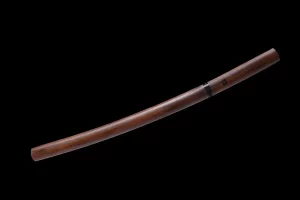
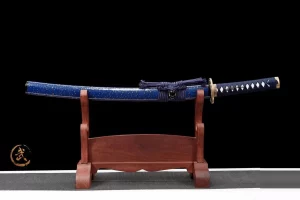
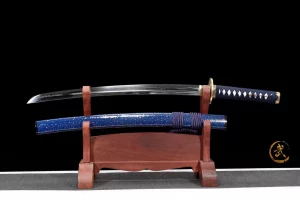
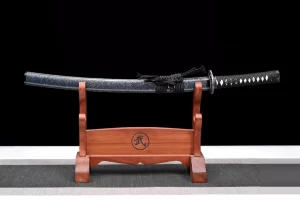
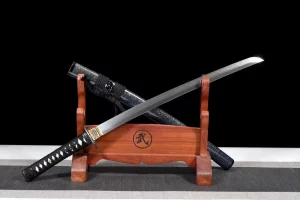
Showing all 6 results
The wakizashi sword: the katana's companion blade
Worn at the same hip as the long sword, the wakizashi was never an afterthought. It was the blade a samurai kept close indoors, in the tea room and the corridor, where a full-length katana had no room to draw. Shorter in the nagasa but identical in spirit, it carries the same curve, the same discipline, and the same demands on the forge.
Every wakizashi we make is hand-forged from high-carbon steel, fitted by hand, and finished to the standard we hold for our longest blades. A shorter sword forgives nothing — the geometry is tighter, the balance more exacting — so the work is the same work, simply scaled to a more intimate length.
History & Symbolism
The wakizashi earns its meaning in the daisho, the paired set of long and short swords that only the samurai class was permitted to wear together. The katana spoke to rank and the open field; the wakizashi spoke to the everyday and the enclosed. A guest left his katana at the threshold, but the short sword stayed with him — a constant, personal companion rather than a weapon of the battlefield.
That intimacy gave the wakizashi a graver role in the codes of the warrior class, including the ritual of seppuku. We mention it because it is part of the blade's history and ought to be understood honestly, without theatre. What matters to a modern collector is the lineage: a sword woven into the daily life and the moral world of those who carried it, not merely an offcut of a larger one.
Craftsmanship & Steel
A wakizashi is forged by the same methods as a full katana — heat, fold, shape, quench — only over a shorter blade. Choose T10 tungsten high-carbon steel for a tough, clay-temper-friendly blade that takes a vivid hamon; 1095 for a hard edge that holds a keen polish at the cost of being more brittle; or 1060 mid-carbon for a durable, forgiving sword that suits a first owner. Where we clay-temper, the hamon is born in the quench, not etched on afterwards, and the edge is genuinely differentially hardened: a hard ha over a softer, more resilient spine.
Construction is full-tang, with the nakago running the length of the handle for integrity in the hand. The fittings are chosen to match — tsuba, saya and tsuka — so a wakizashi reads as a deliberate piece rather than a miniature. To understand how all of this comes together at the anvil, read how a blade is forged.
Our Collection
Most buyers come to the wakizashi for one of three reasons. Some are completing a daisho and want a short sword whose steel, curve and fittings answer their existing katana. Others are collectors drawn to the form itself, the elegance of a blade that does so much in so little length. And some simply want a sword that suits a smaller space — the indoor practicality the wakizashi was made for. If you are still deciding which length and tier fits you, our guide to choosing a sword walks through it, and you can step up through the beginner, mid-range and master-grade ranges. For an even shorter companion, see our tanto.
It is legal to buy and own a wakizashi in the United Kingdom provided the buyer is 18 or over. Genuine hand-forged swords made by traditional methods, such as ours, fall under the exemption for swords made by traditional methods. We are happy to set out what that means in plain terms, but it is not a substitute for checking your own circumstances.
Frequently Asked Questions about the wakizashi
What is a wakizashi?
A wakizashi is a traditional Japanese short sword, shorter than a katana but forged to the same standards and worn by the samurai class as a close-quarters and indoor companion blade. It shares the katana's curve, full-tang construction and high-carbon steel, simply over a shorter nagasa. Historically it was the sword a samurai kept on his person at all times, even where a long blade was set aside.
What is the difference between a katana and a wakizashi?
The principal difference is length: a wakizashi blade is shorter, which made it better suited to enclosed spaces and the everyday, while the katana was the longer field and dress sword. They are forged from the same steels by the same methods and were worn together as the daisho. Think of them as a matched pair rather than two unrelated swords.
Can you complete a daisho with one of your katanas?
Yes. Many buyers pair a wakizashi from this collection with one of our katana to build a daisho, matching the steel, the curve and the fittings so the two read as one set. If you tell us which katana you own or intend to buy, we can advise on the closest companion. Choosing both from the same range gives the cleanest match.
Is a wakizashi legal in the UK?
It is legal to buy and own a wakizashi in the United Kingdom provided you are 18 or over. Genuine hand-forged swords made by traditional methods fall under the exemption for swords made by traditional methods, which applies to the blades we forge. This is general information rather than legal advice, so check your own situation if you are unsure.
What length is a wakizashi blade?
A wakizashi is traditionally defined by a blade between roughly 30 and 60 centimetres in nagasa — long enough to be a serious sword, short enough to wear and use indoors. Anything shorter falls into tanto territory, while a longer blade becomes a katana. The exact length on each piece is listed on its product page.
Find your wakizashi
Browse the wakizashi above, or read our steel guide first to decide which steel suits how you intend to keep and use your sword.