Ninjato
Showing all 4 results
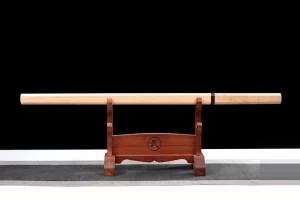
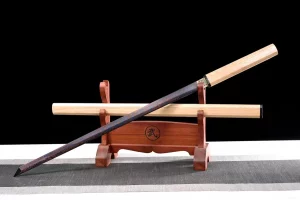
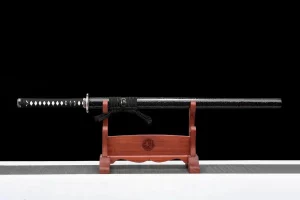
Showing all 4 results
The Ninjato Sword: The Straight Blade of the Shinobi
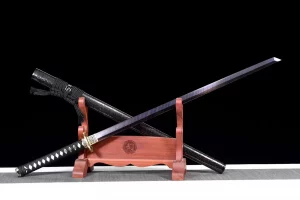
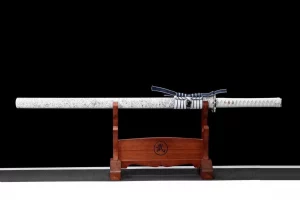
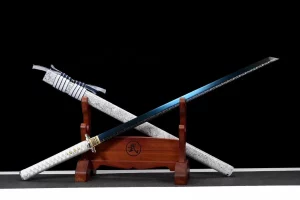
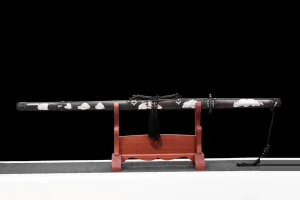
Few swords carry as much shadow and rumour as the ninjato. Where the katana announces itself with a long, sweeping sori, the ninjato speaks in a quieter register: a straight or near-straight profile, an honest length, and fittings stripped of ornament. It is the blade most people picture when they imagine the shinobi slipping over a moonlit wall, and it remains one of the most requested pieces to come off our benches.
At our forge we treat the ninjato as what it truly is rather than what the films pretend. That means being candid about its history, deliberate about its steel, and generous with the craft. What follows separates the lore from the record without draining away any of the romance that draws collectors to this sword in the first place.
History and Symbolism
Here is the honest part. The iconic straight ninja blade with its square tsuba is, in large measure, a creation of the twentieth century — popularised by stage, screen and the post-war ninja boom rather than documented in the surviving record. The shinobi of feudal Japan were agents of espionage and infiltration who carried whatever served the work, often ordinary curved swords cut down for concealment. There is little firm evidence of a single, standardised "ninja sword" pattern.
And yet the romance is real, and we see no reason to apologise for it. The straight-bladed ninjato has become a genuine symbol — of stealth, of restraint, of a craft practised out of sight. We honour the myth as a myth, build it with real steel, and let the story stand on its own merits.
Craftsmanship and Steel
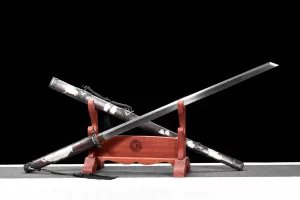
The defining trait is the straight, or very nearly straight, blade. With minimal curve the geometry sits closer to the spine, and the squared guard gives the sword its unmistakable silhouette. The ha still carries the edge, the mune still forms the spine, and a well-cut kissaki finishes the point with the same discipline we bring to any blade.
Steel choice does the heavy lifting. We forge ninjato in T10 tungsten high-carbon, which clay-tempers beautifully and yields a tough, durable blade; in 1095, harder and keener but less forgiving; in 1060 mid-carbon for those who want a durable, beginner-friendly piece; and in 9260 spring steel, which flexes under load and returns straight, making it extremely hard to break. Where a blade is clay-tempered, the differential hardening leaves a hard edge against a softer spine and a genuine hamon — born in the quench, never etched on after. Read our steel guide to weigh the trade-offs, or see how each blade is forged from billet to polish.
Our Collection
This collection of the ninjato sword is built for two kinds of owner: the enthusiast of ninja lore who wants a striking display piece, and the practical collector who wants a full-tang sword that performs. Every functional ninjato runs a full tang through the tsuka, with a fitted saya and clean furniture. If you are new to Japanese swords, our beginner range is the kinder starting point, while the mid-range and master-grade tiers reward the committed. Curious how the straight ninjato contrasts with the curved silhouette of the katana? It comes down to that curve — present in one, all but absent in the other. Our how to choose guide will point you to the right blade.
It is legal to buy and own a ninjato in the UK provided the buyer is 18 or over. Genuine hand-forged blades made by traditional methods fall under the exemption for swords of traditional manufacture; the curved-sword legislation is aimed at cheap, mass-produced replicas rather than swords forged the old way. Store and handle responsibly, and keep your blade maintained — our care guide covers oiling, the habaki and safe storage.
Frequently Asked Questions about the Ninjato
What is a ninjato?
A ninjato is a Japanese-style sword with a straight or near-straight blade, traditionally associated with the shinobi. It is usually shorter than a katana and is recognised by its squared tsuba and unadorned fittings. The form owes more to popular culture than to documented history, but it is forged today as a serious, functional sword.
Did ninja really use straight swords?
The evidence is thin. Historical shinobi were spies and infiltrators who used practical, often improvised arms — frequently shortened curved swords rather than a purpose-made straight blade. The standardised straight ninjato we recognise today is largely a modern, popular-culture creation, which we are happy to build faithfully while being honest about its origins.
Is a ninjato full-tang and functional?
Our functional ninjato are full-tang, with the blade and tang forged as a single continuous piece of steel that runs the length of the handle. This is what allows a sword to take real load without the blade working loose. Display-only pieces differ, so check each product description for the build and intended use.
Is a ninjato legal in the UK?
Yes. It is legal to buy and own a ninjato in the UK provided the buyer is 18 or over. Genuine hand-forged blades made by traditional methods fall under the exemption for swords of traditional manufacture. This is general information rather than legal advice, so handle and store any sword responsibly.
What is the difference between a ninjato and a katana?
The clearest difference is the curve. A katana carries a pronounced sori and is typically longer, while a ninjato is straight or nearly straight and often shorter, with a squared guard. Both can be forged from the same high-carbon steels and clay-tempered to raise a hamon — the geometry and silhouette are what set them apart.
Find Your Ninjato Sword
Whether you collect for the lore or want a straight blade that genuinely performs, every ninjato here is forged with the same discipline as the rest of our work. Browse the ninjato collection above, or speak to us about a build suited to your hand.