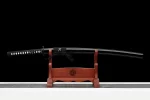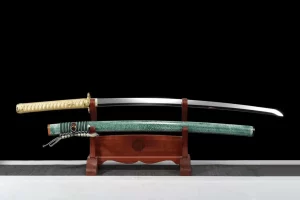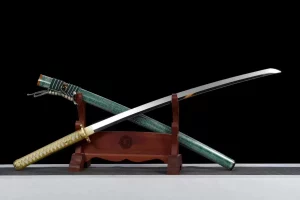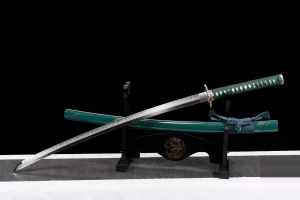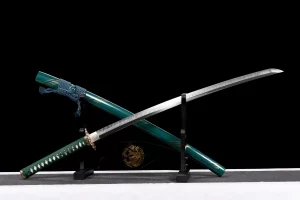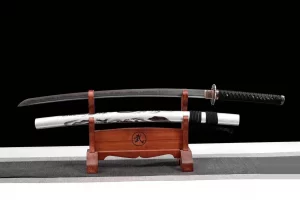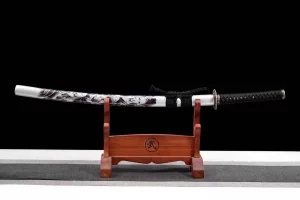
Koi here reads as deep — depth and richness, the quiet intensity of something done properly rather than loudly. This entry-level katana takes that to heart: no gilding, no theatre, just the natural color of good steel and traditional fittings, a piece that celebrates the depth of Japanese craft without shouting about it.
Forging & Steel
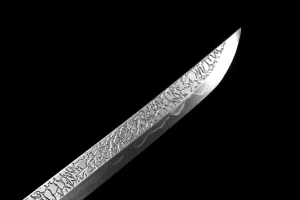
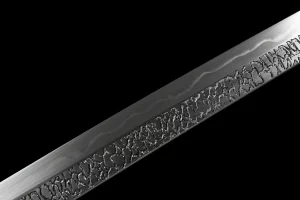
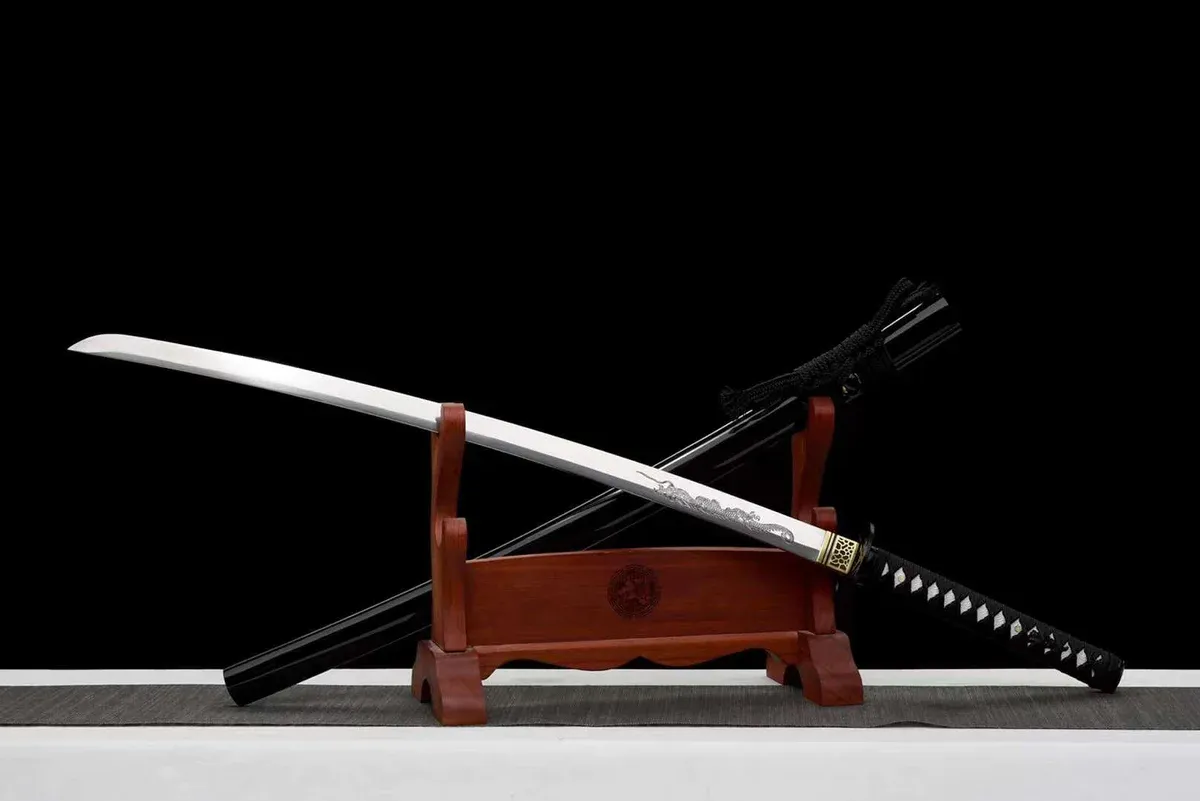
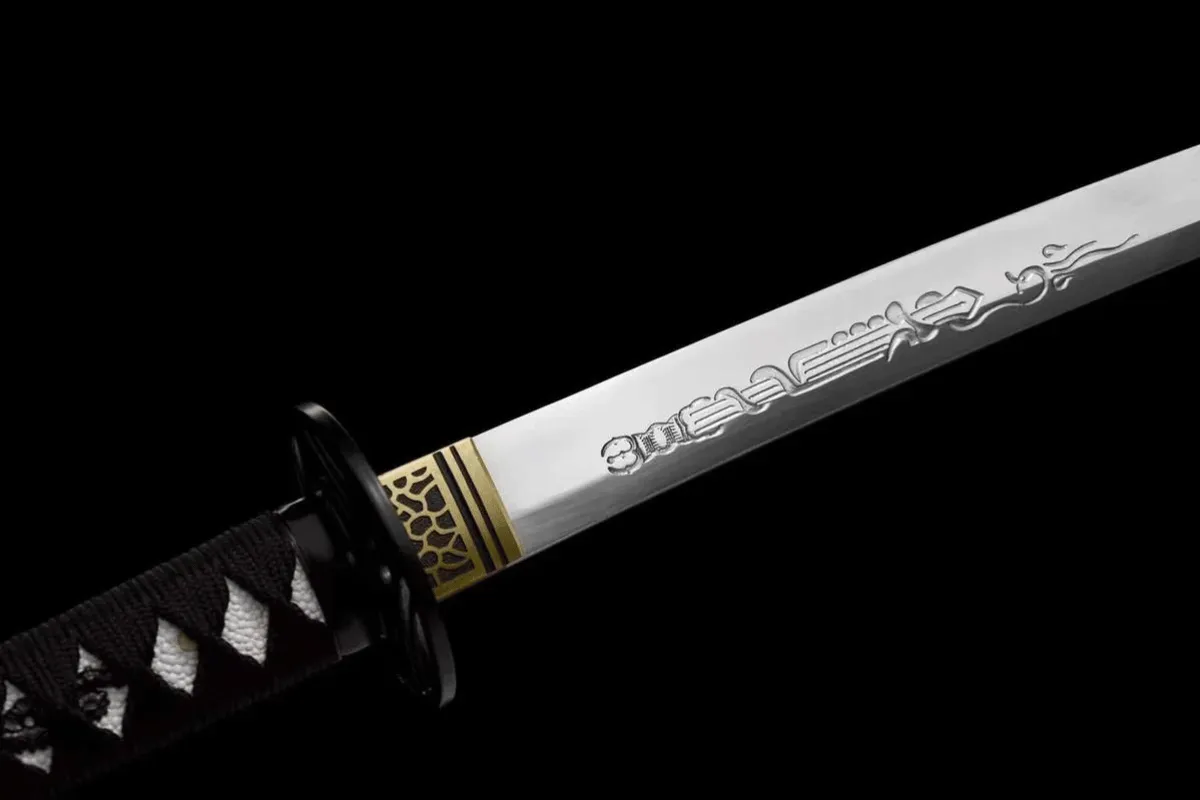
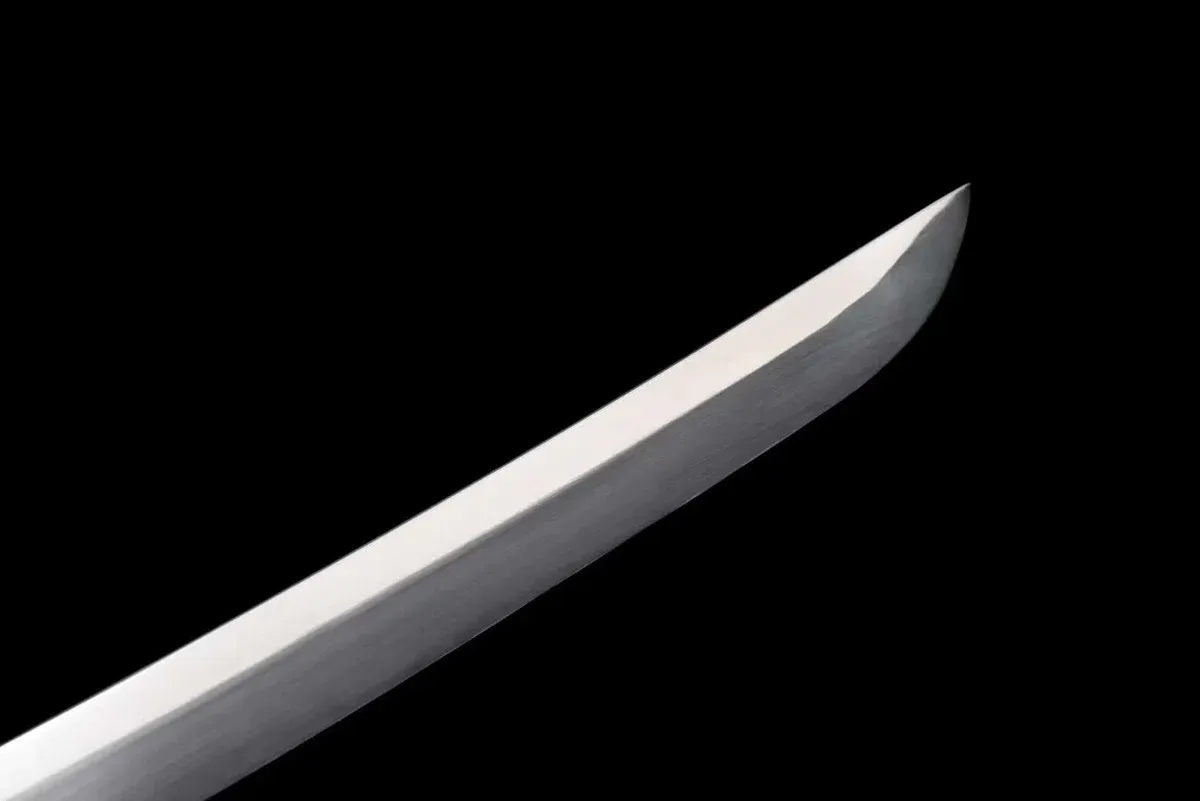
The blade is manganese steel kept in its natural color — no coloured finish, just the bare metal. Manganese steel is prized for hardness and wear resistance, so the Koi takes and holds a sharp edge through handling and practice. It is built as both a collector’s piece and a functional tool: an honest entry-level workhorse rather than a display-only ornament. Left in natural steel, the blade also keeps maintenance straightforward — a wipe of oil and it is ready for the next session.
Fittings
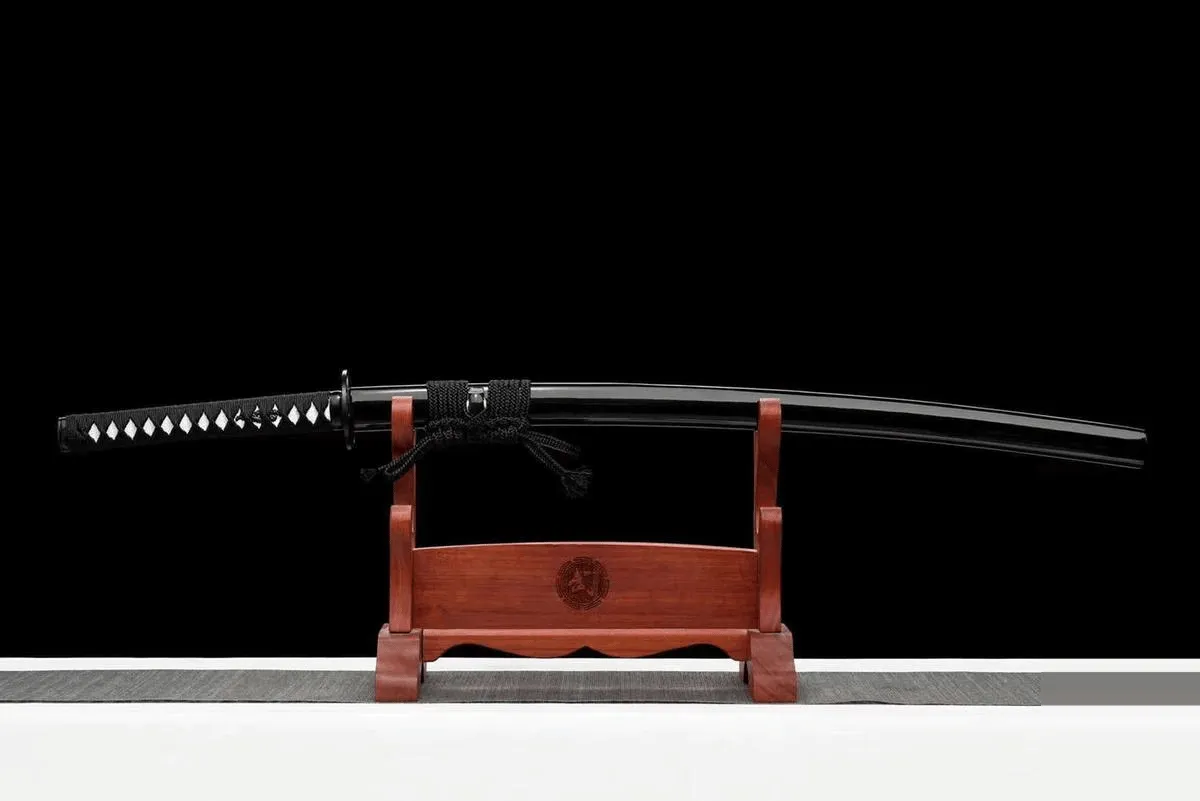
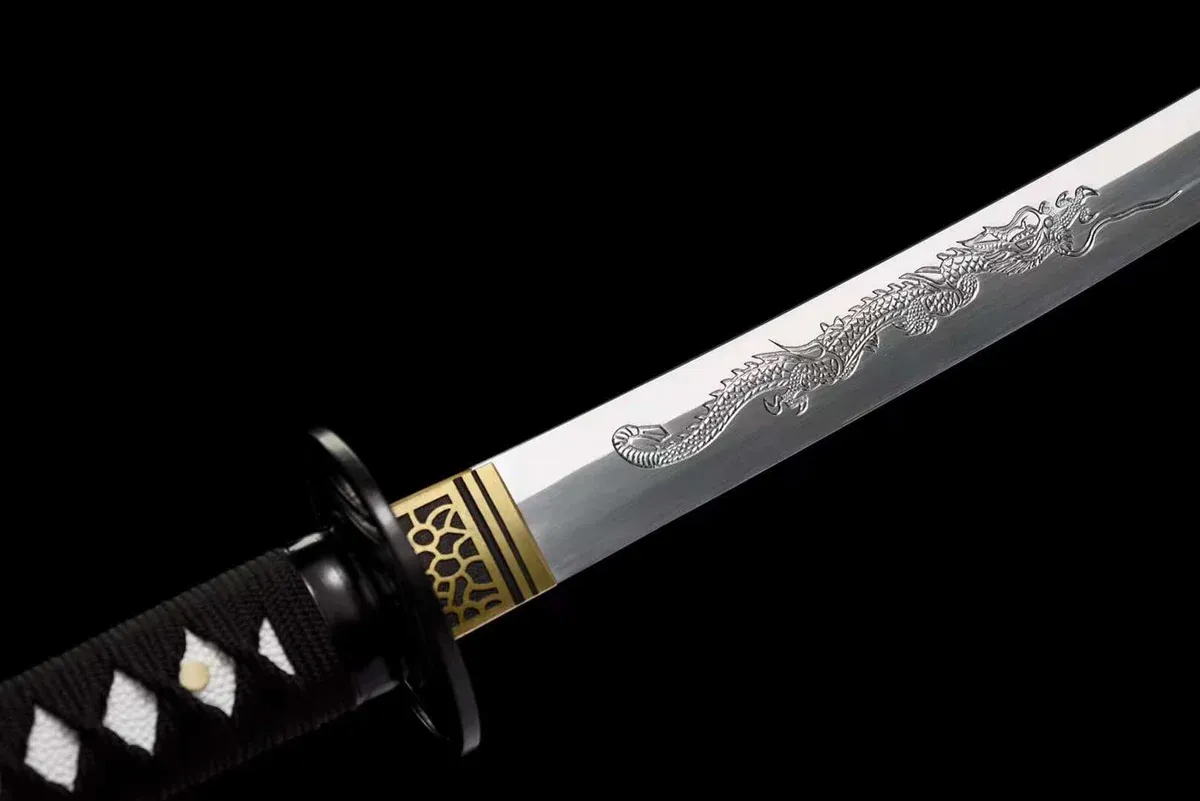
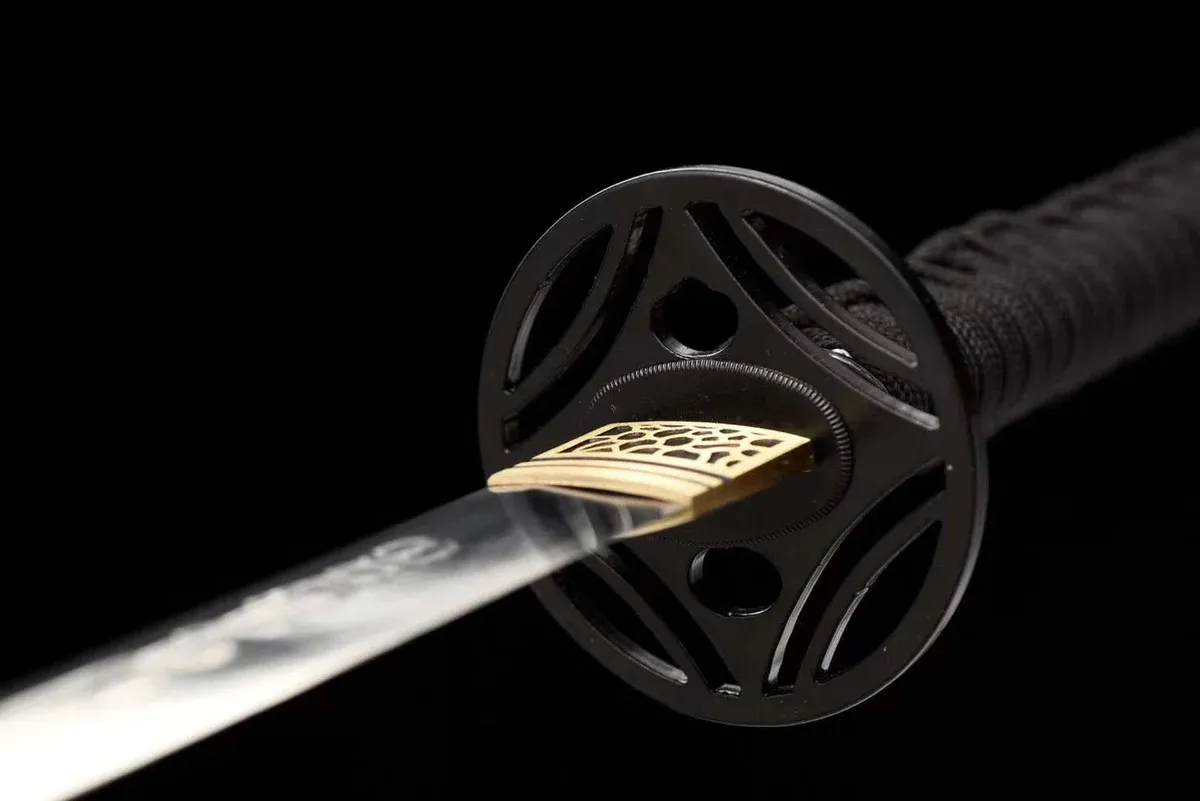
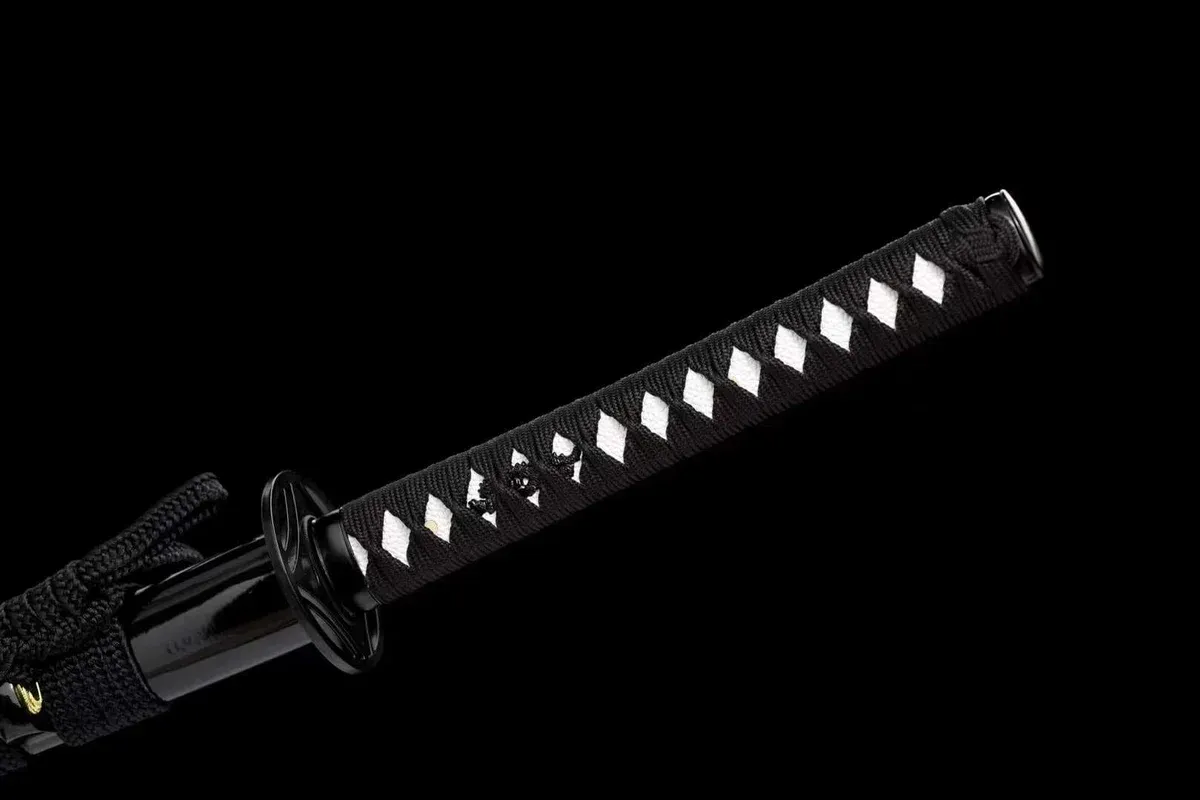
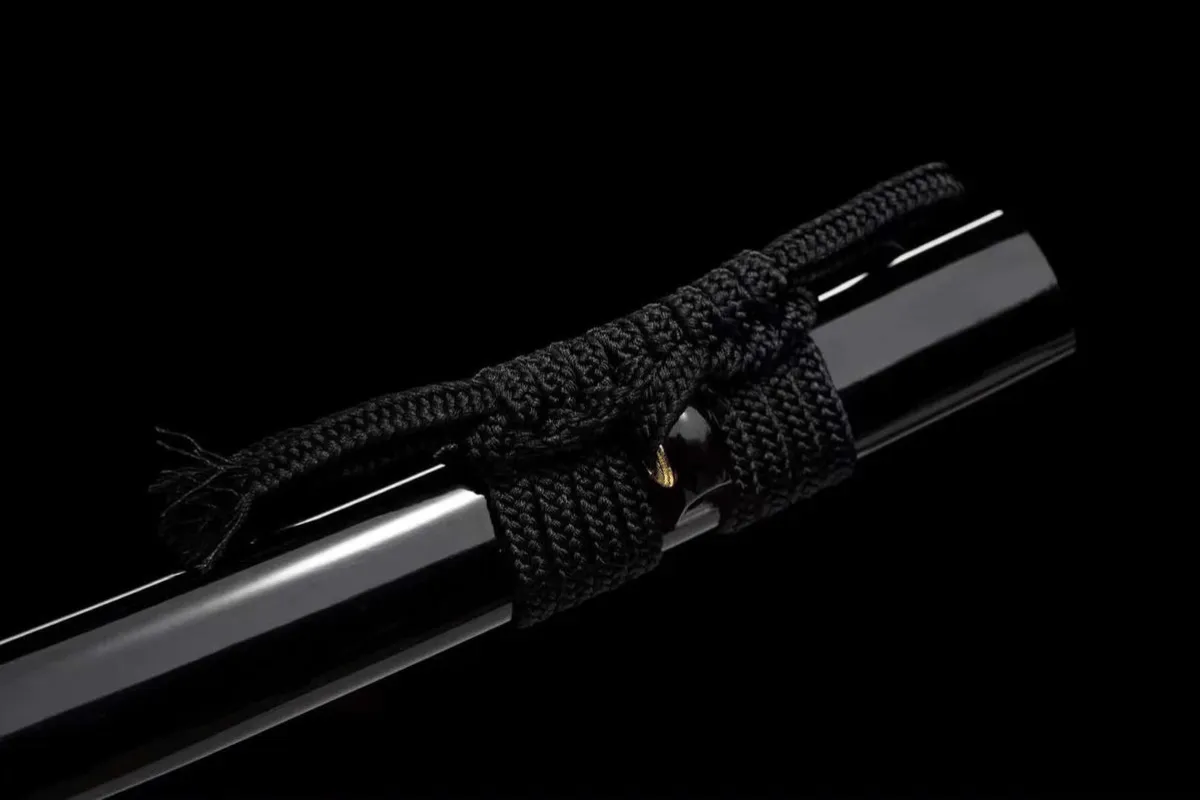
The furniture is traditional and solid. The tsuba is sculpted iron, the saya is ebony wood with a bull-horn kurigata and cord, and the tsuka is wrapped in genuine stingray leather over an iron menuki set, pinned with two bamboo mekugi. It is a classic, understated mounting that matches the bare-steel blade — function and quiet good taste over flash.
Specifications
| Component | Detail |
|---|---|
| Blade steel | Manganese steel |
| Blade colour | Natural steel |
| Tsuba | Sculpted iron |
| Saya | Ebony wood, bull-horn kurigata, cord |
| Tsuka | Genuine stingray leather, iron menuki set, 2 bamboo mekugi |
Dimensions
| Measurement | Value |
|---|---|
| Total length | 103 cm |
| Blade length | 71 cm |
| Handle length | 26 cm |
| Blade thickness | 0.75 cm |
| Blade width | 3.2 cm |
Is it battle-ready?
The Koi is marketed as both a collector’s piece and a functional tool. The hard manganese blade keeps a sharp edge well, suiting it to handling and controlled practice, while the traditional iron-and-ebony mounting makes it a clean display piece. Browse the full katana collection, the blue Katana Koori, or the refined Katana Ōku.

 Verified owner