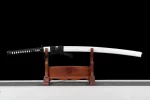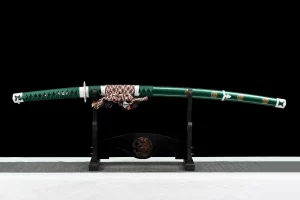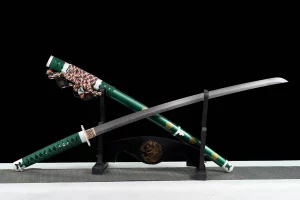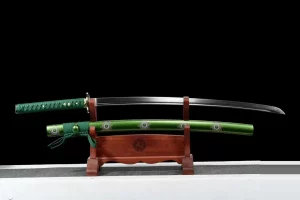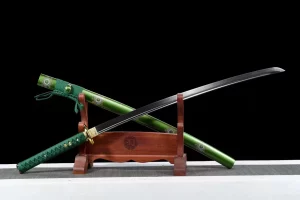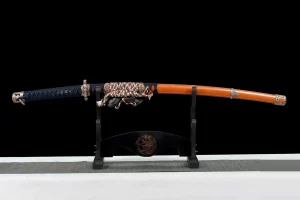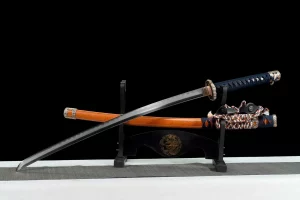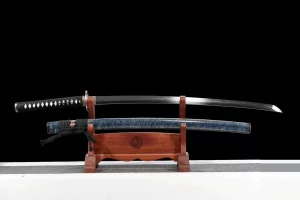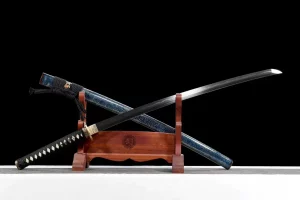
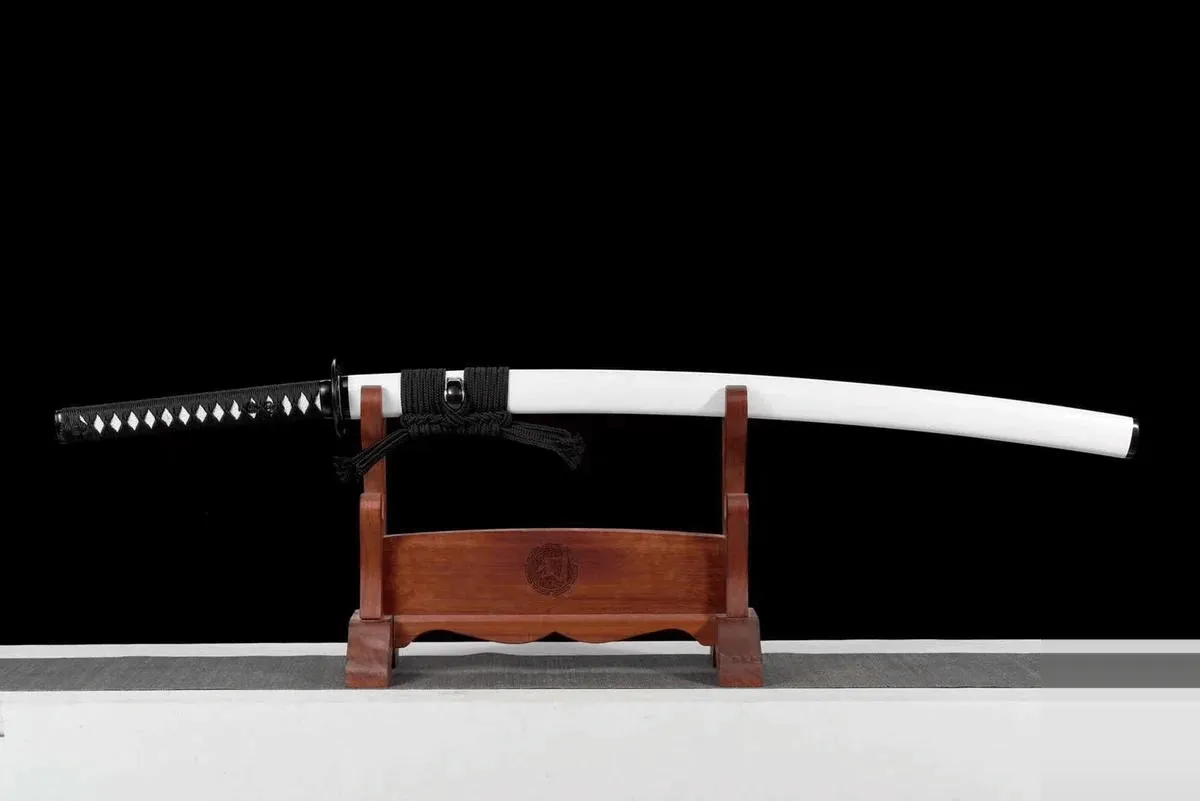
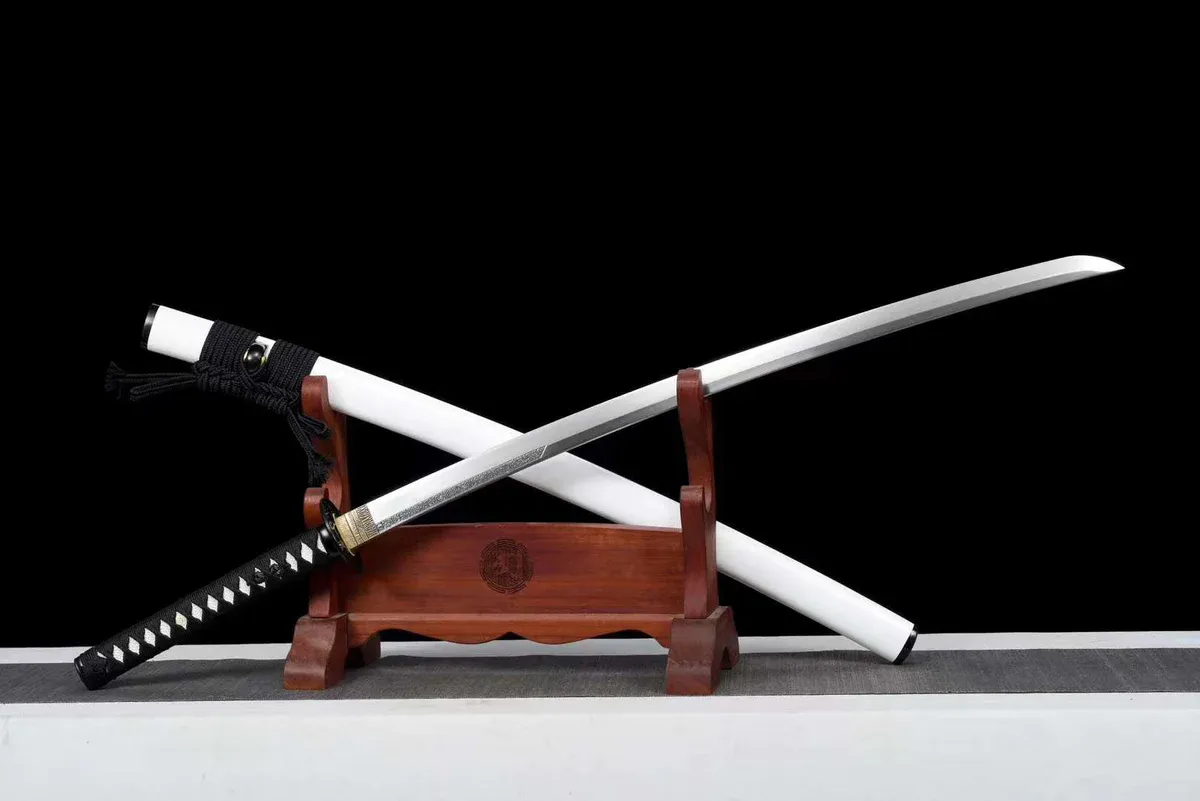
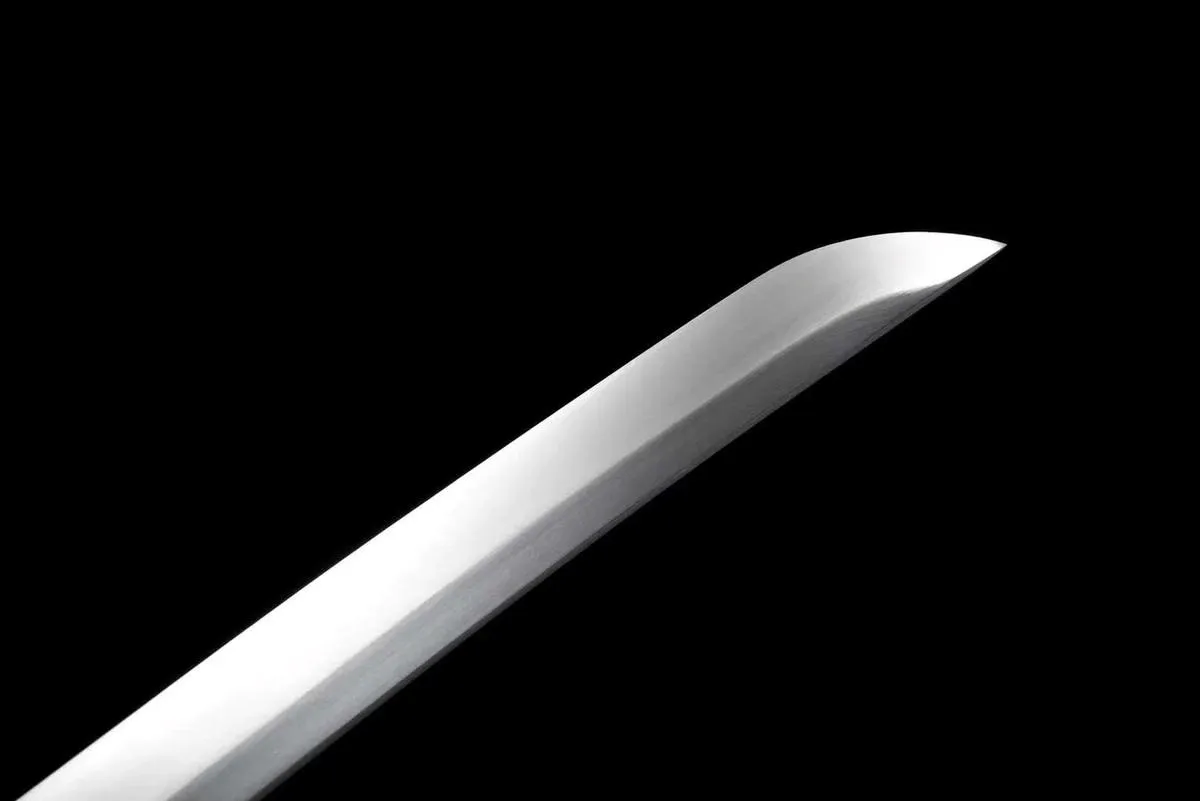
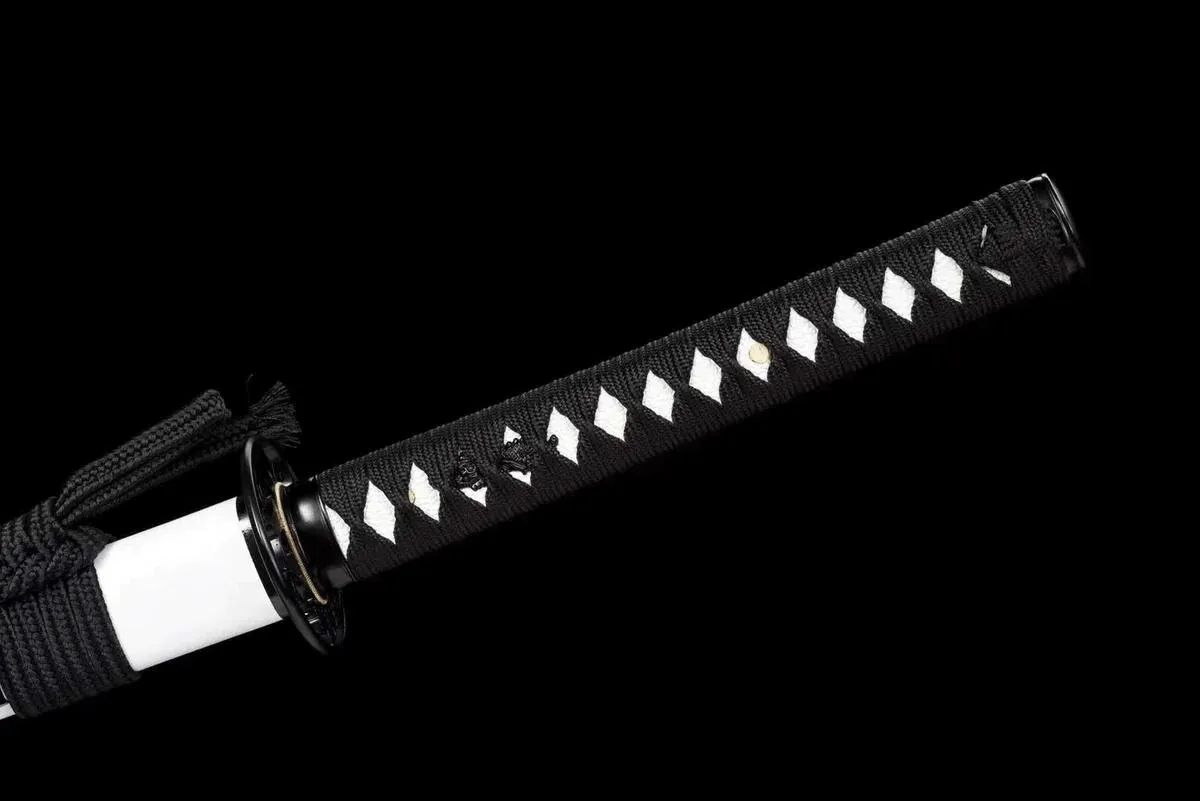
Seppaku reads as snow white — 雪白, the color of untouched winter — and the whole sword is built around that idea of purity and precision. From the snow-white saya to the clean lines of the blade, the Seppaku spring steel katana is a collector’s piece for the connoisseur and the martial-arts practitioner alike.
Forging & steel
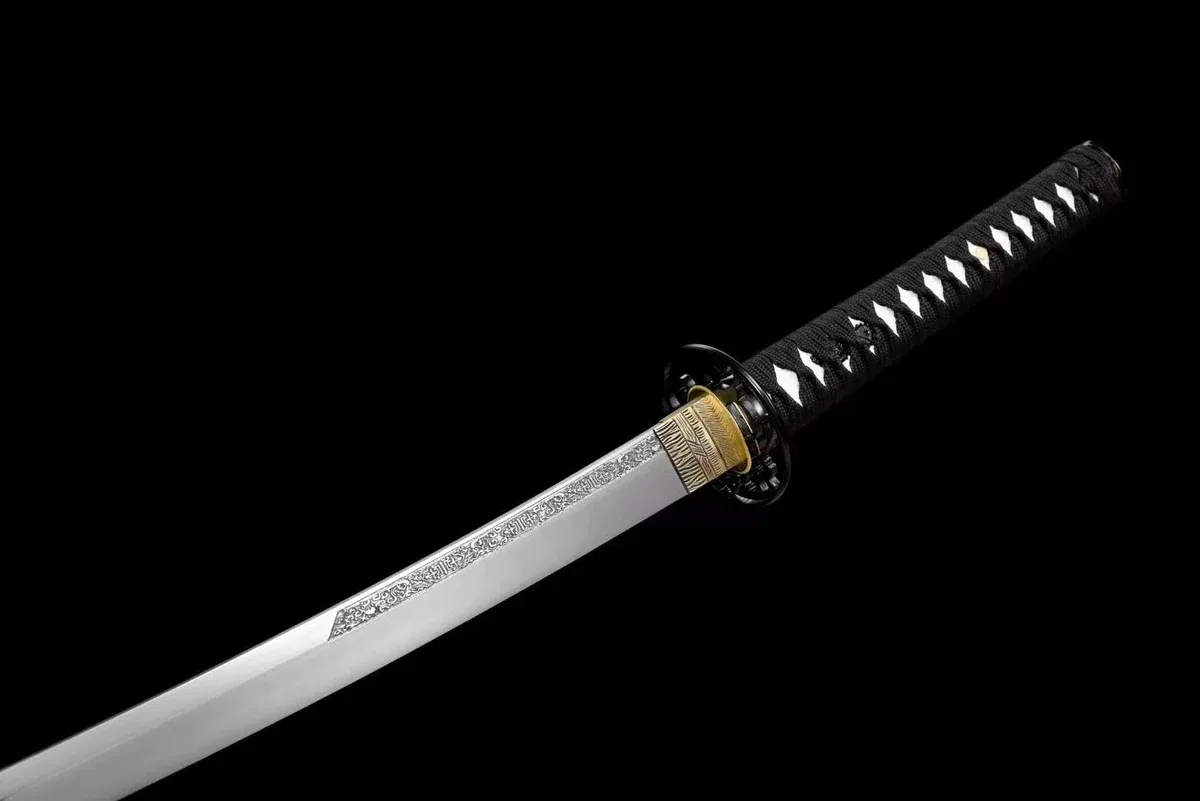
The blade is forged from spring steel, which marries flexibility and strength: it flexes under impact and returns to its original shape rather than bending or chipping, which is exactly what makes it durable through repeated practice. That resilience is the steel’s defining trait — where a harder, more brittle blade might crack against a bad cut, spring steel rides it out and springs back. The result is a blade that stays precise and resilient session after session, forgiving of the imperfect angles every practitioner works through on the way to clean cuts.
Fittings
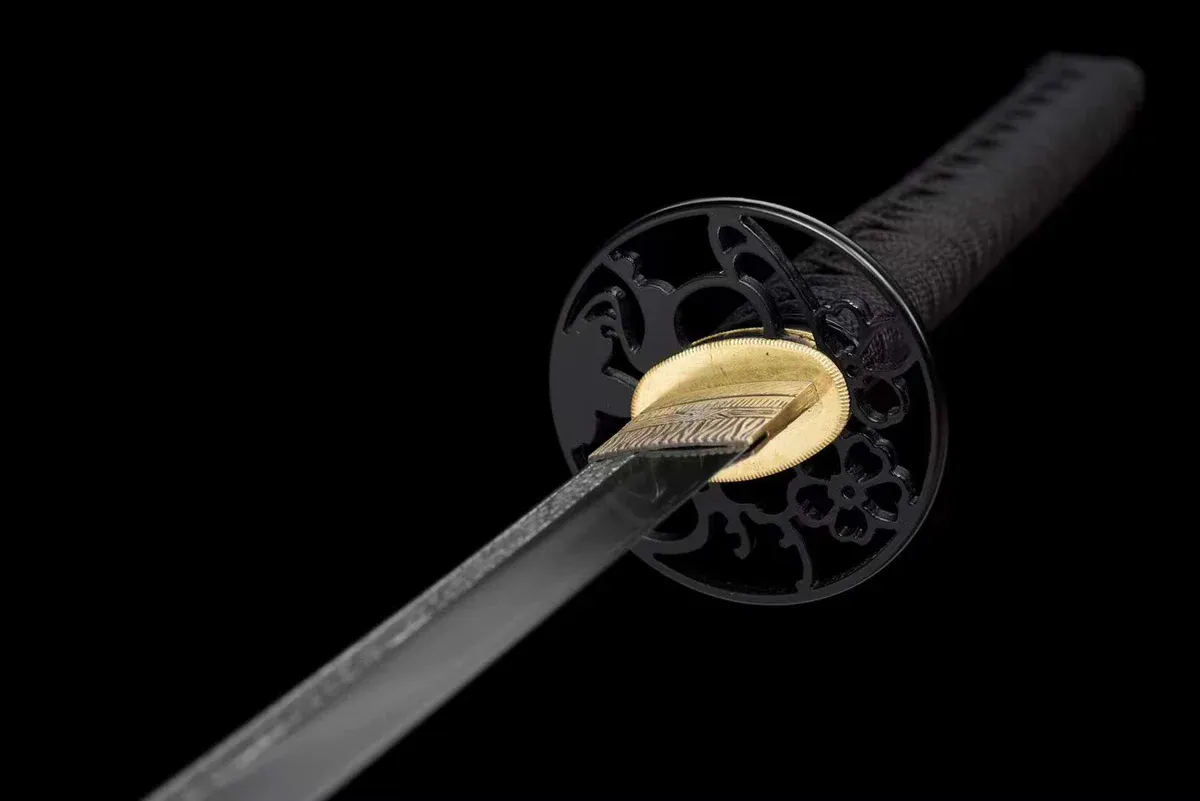
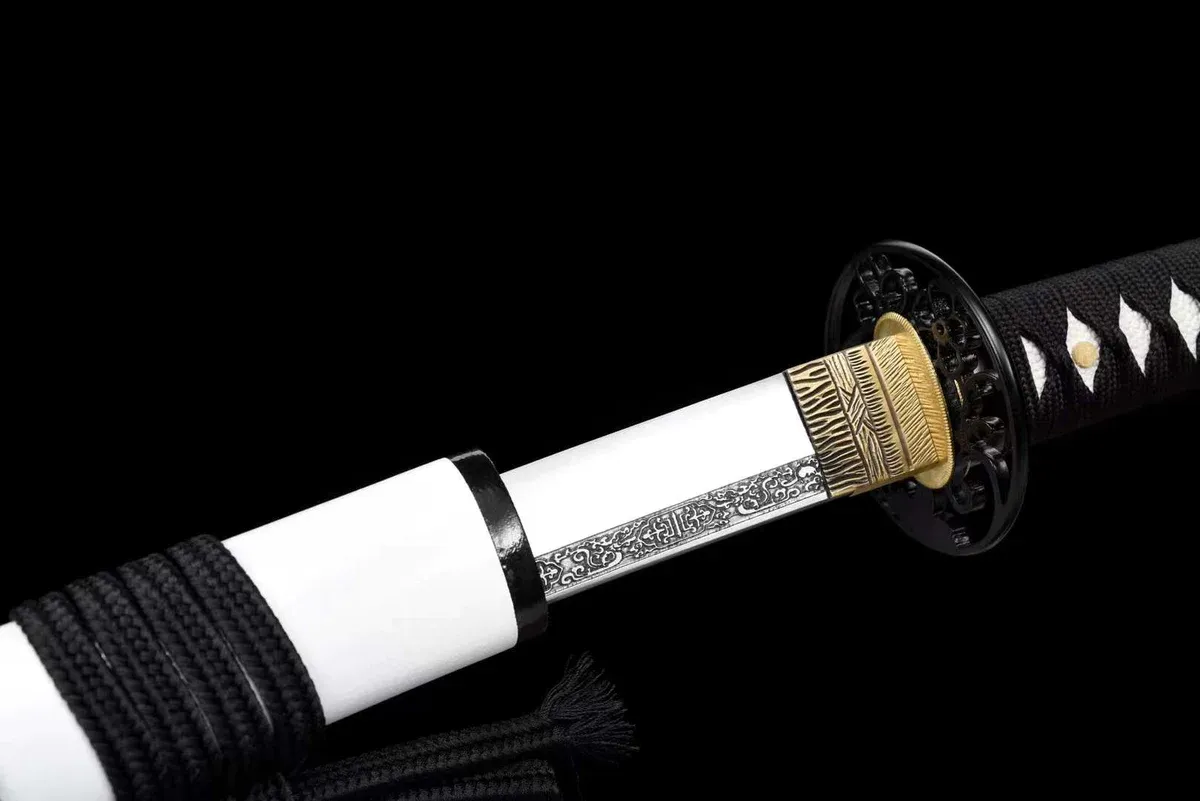
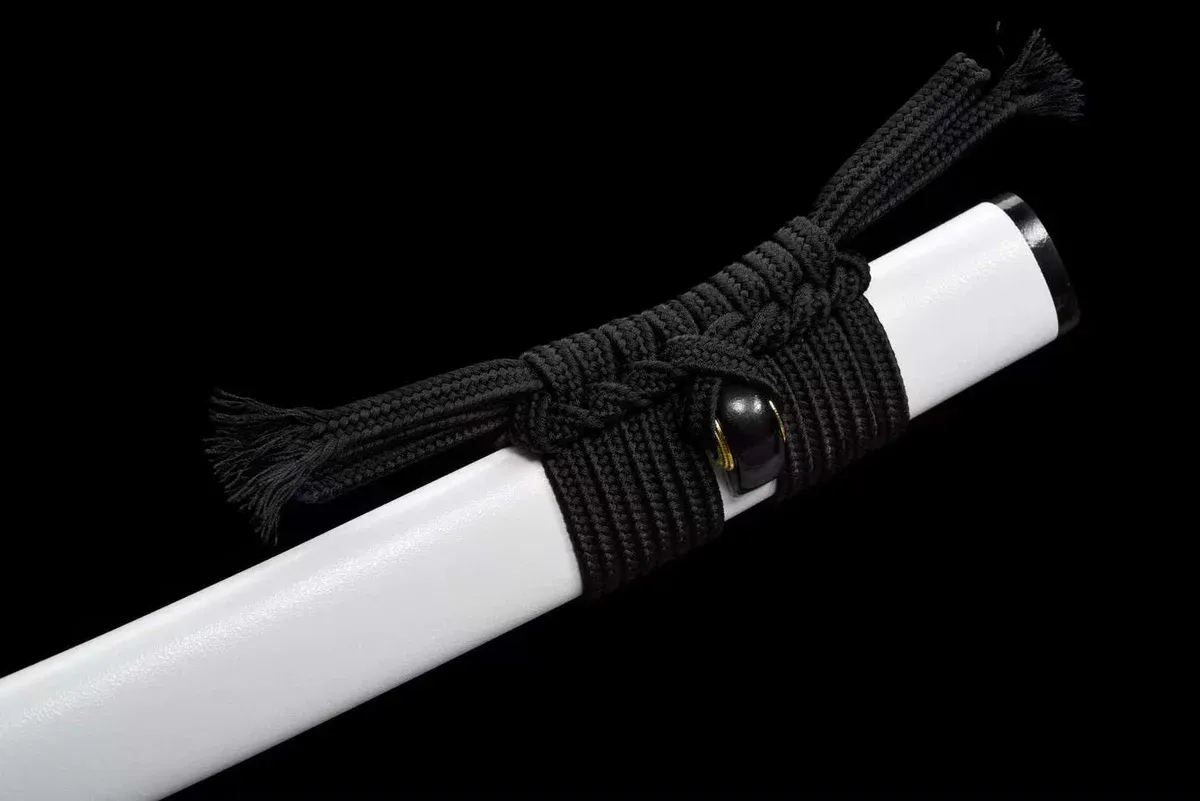
A sculpted zinc-alloy tsuba guards the hand. The saya is white-lacquered wood that evokes snow and purity, hung with a black sageo for contrast against the pale lacquer. The tsuka wears genuine white shagreen over a copper menuki kit, pinned with two bamboo mekugi for a firm, elegant grip.
Specifications
| Blade steel | Spring steel |
|---|---|
| Tsuba | Sculpted zinc alloy |
| Saya | White-lacquered wood, black sageo |
| Tsuka | Genuine white shagreen, copper menuki, 2 bamboo mekugi |
Dimensions
| Total length | 103 cm |
|---|---|
| Blade length | 72 cm |
| Blade width | 3.2 cm |
| Blade thickness | 0.7 cm |
| Handle length | 27 cm |
| Weight | 1.2 kg |
Is it battle-ready?
Yes. The spring steel blade is functional and built for practice — flexing and recovering through repeated cuts. Its white dress sets it apart from the black-saya Saru; collectors who prefer folded steel often pair it with the Damascus Ten, while those who want a flexible cutter at the same tier stay with spring steel. See the full katana collection.

 Verified owner