
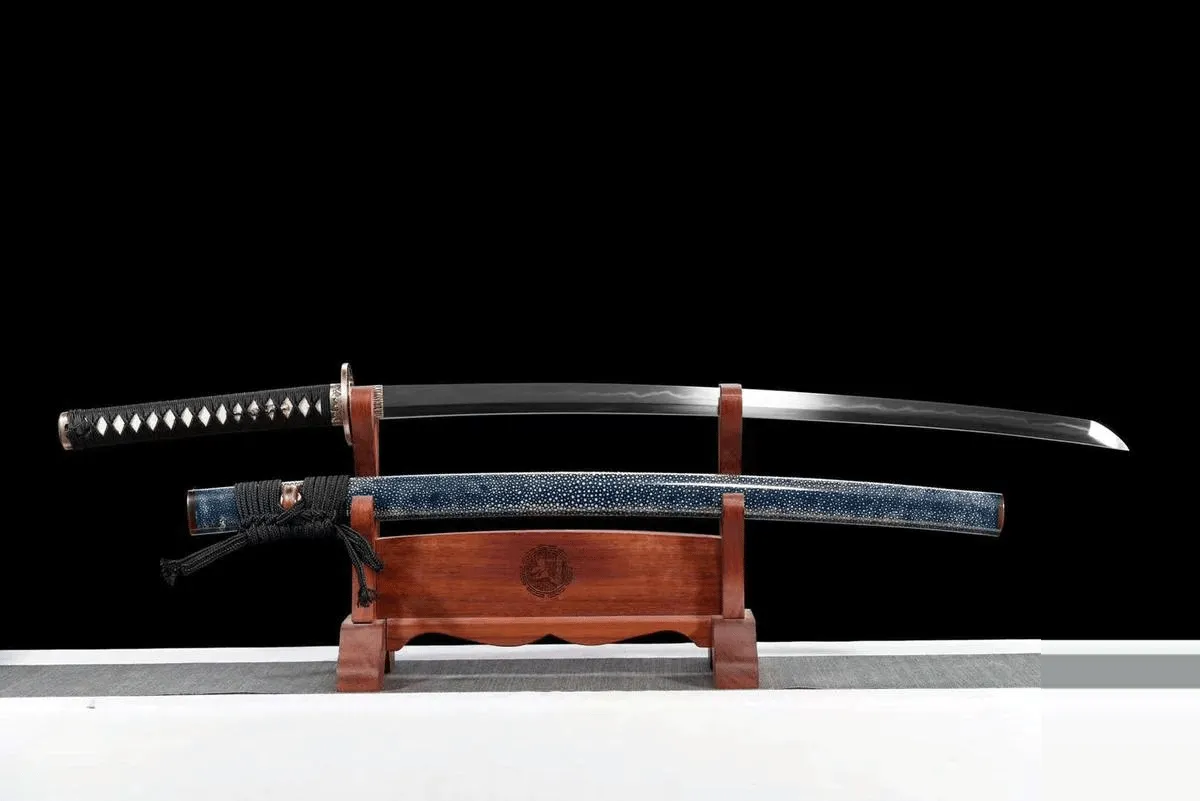
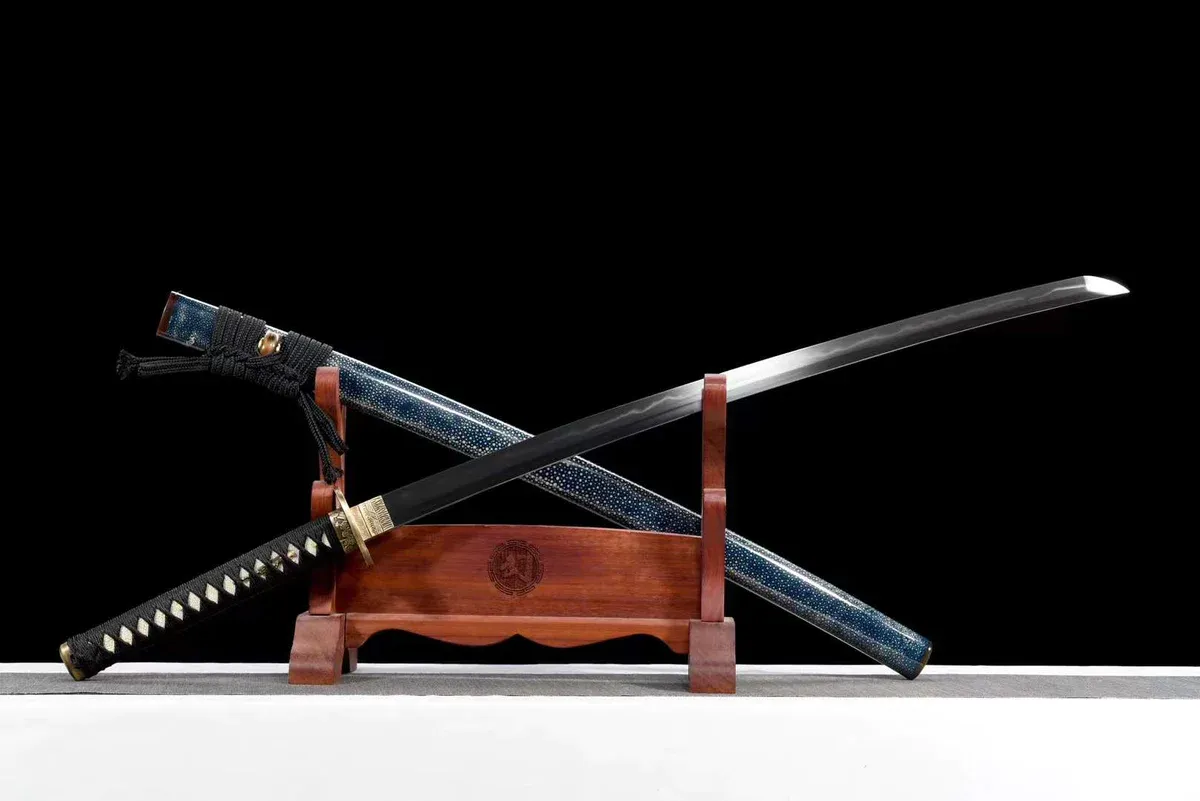
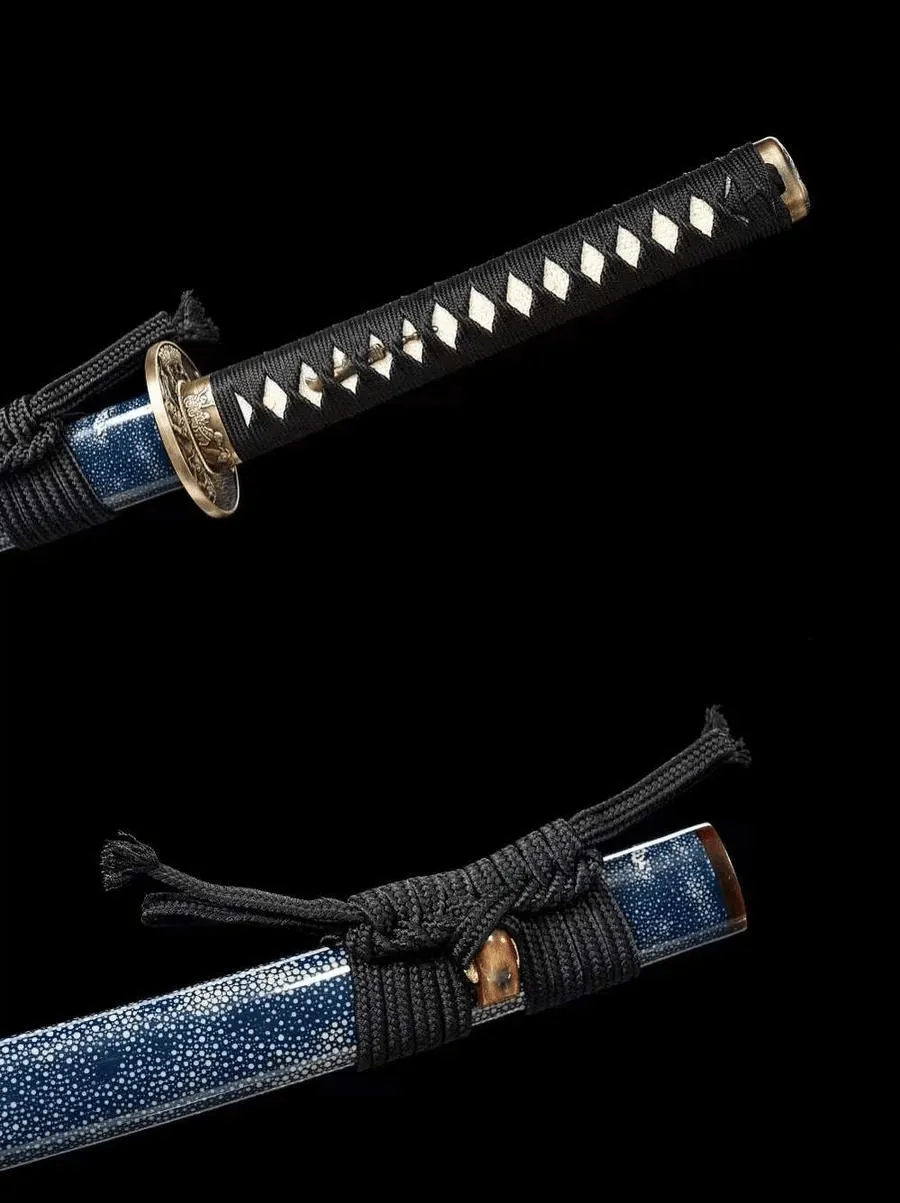
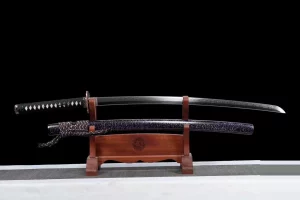
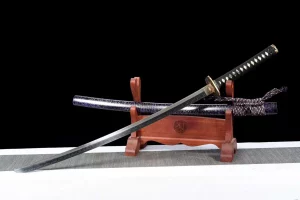
Ray takes its name from the stingray — 鱝 — the same creature whose skin gives the handle its grip, echoed again in the saya’s pattern. This is a mid-range piece presented as a small masterpiece of traditional craft, made for the refined collector and the demanding martial artist who want a blade that performs as well as it shows.
Forging & steel
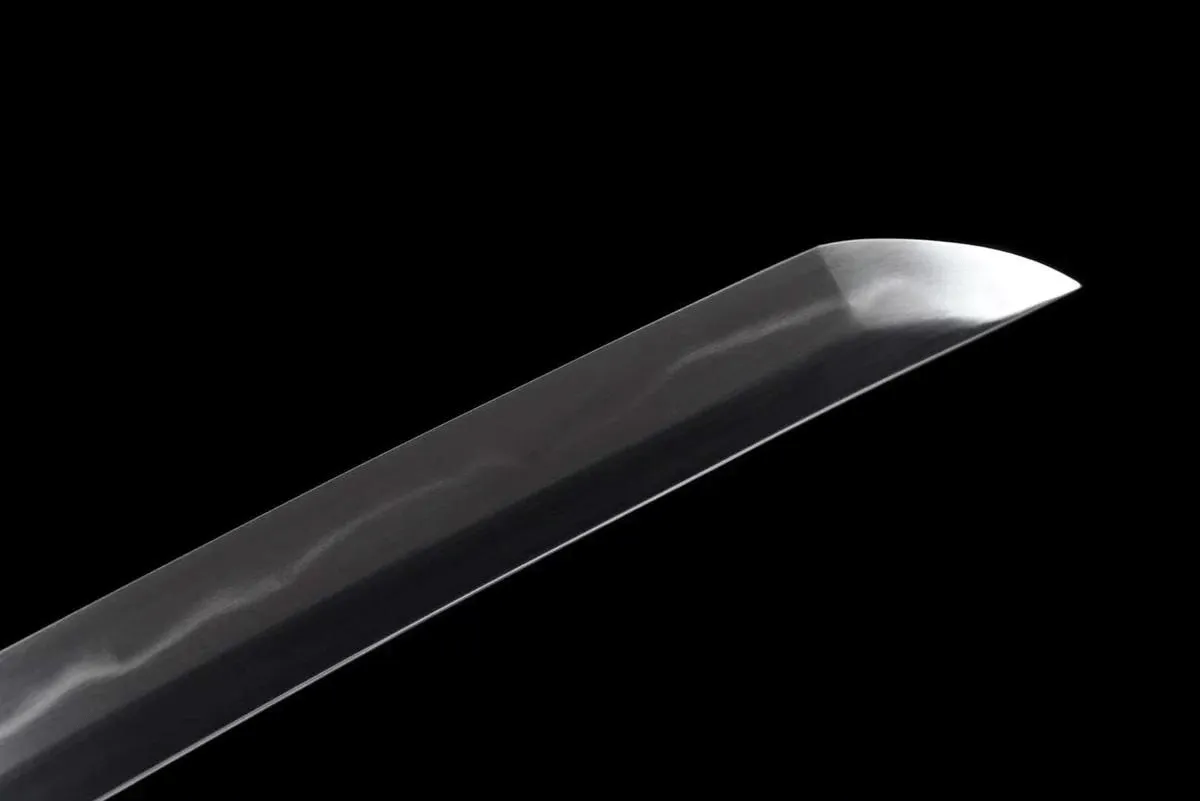
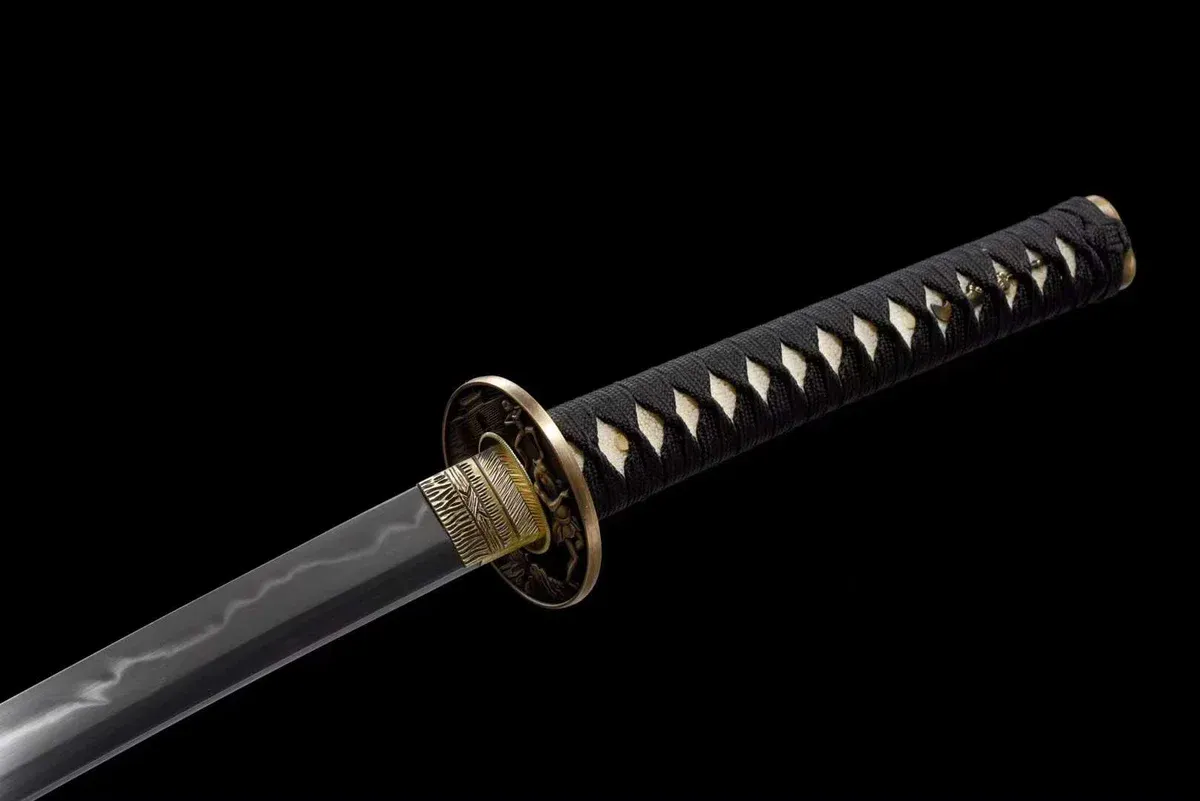
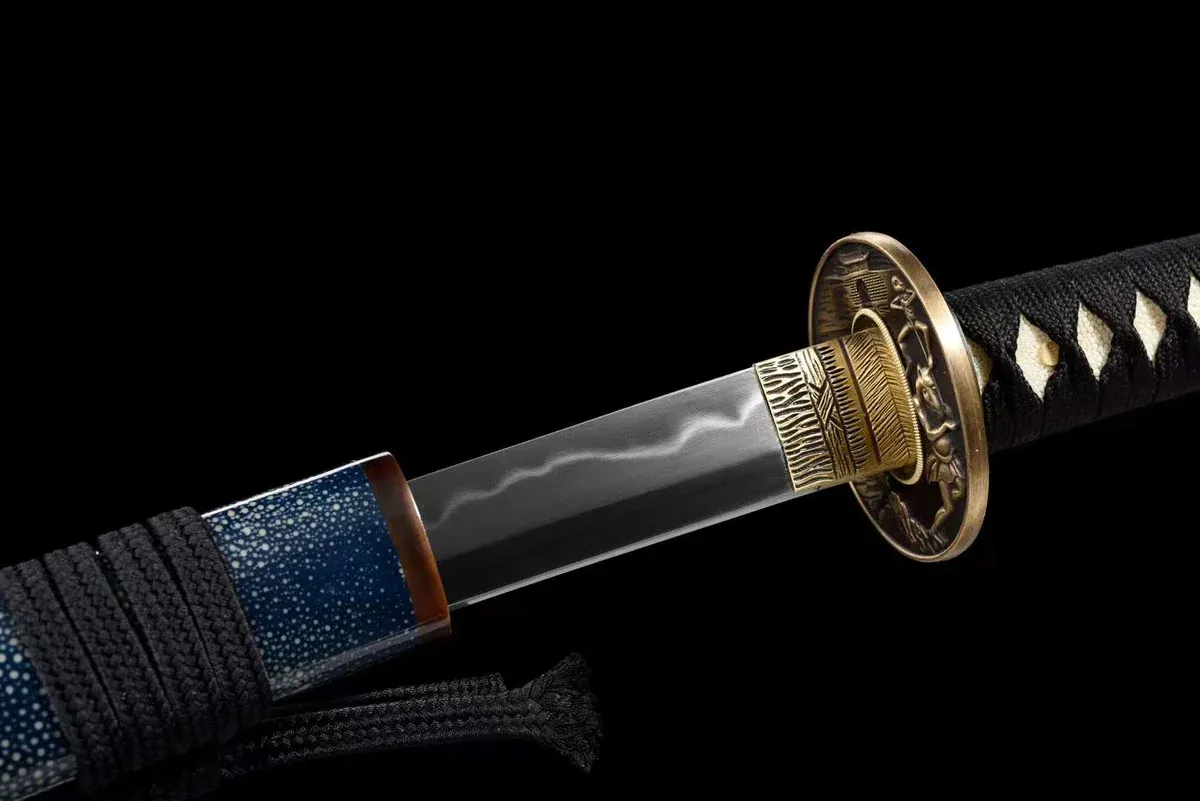
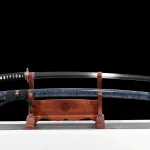
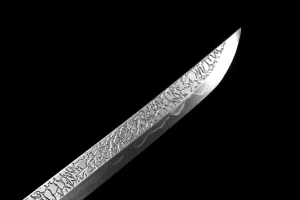
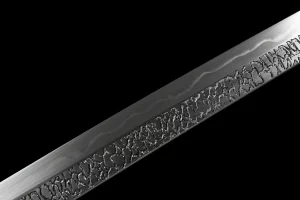
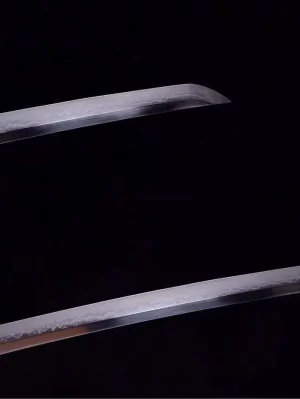
The blade is forged from high-carbon T10 tool steel, prized for exceptional hardness and cutting ability. Across the edge runs a top-grade hamon — the temper line born in the quench from precise differential heat treatment, where the edge hardens fast while the spine stays tougher. That contrast is what gives a T10 blade both its bite and its resilience: a keen, hard edge backed by a body that absorbs shock instead of shattering. The hamon is not a cosmetic etch but the visible boundary between those two states of the steel.
Fittings
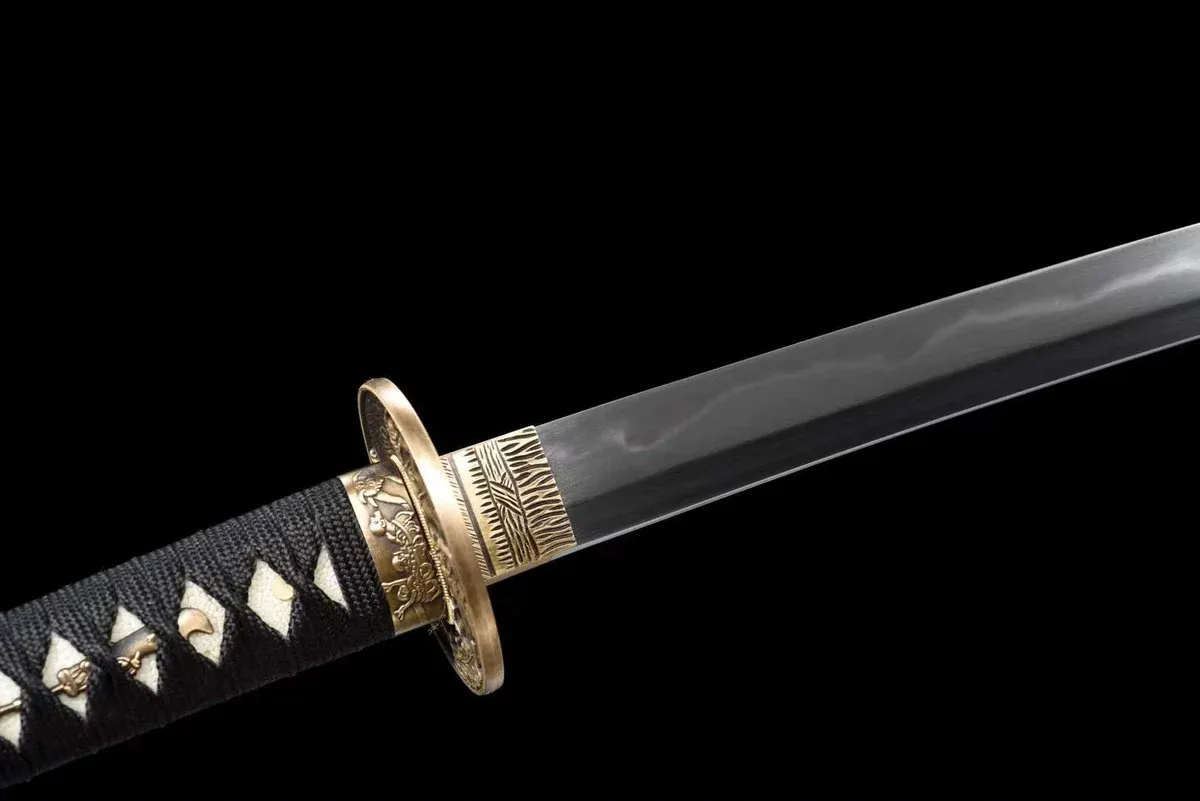
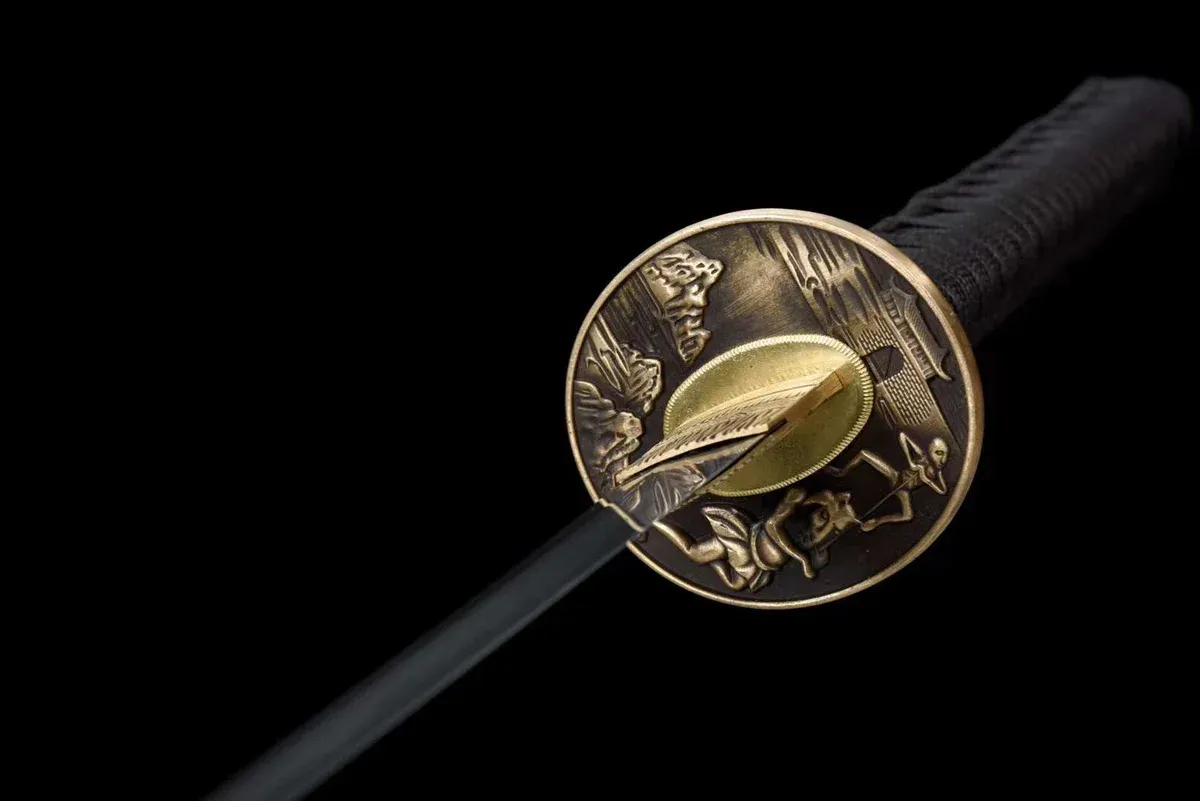
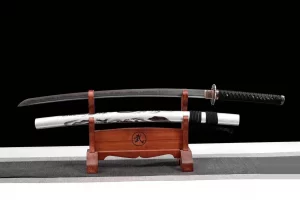
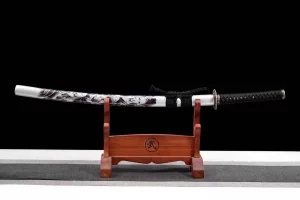
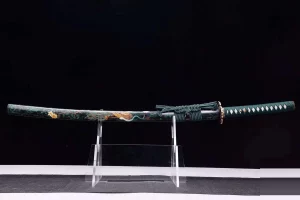
A carved copper tsuba absorbs shock and protects the hands. The saya is dark-blue lacquered wood carrying a ray-skin (stingray) pattern that names the sword. The tsuka wears genuine white shagreen over a copper menuki kit, pinned with two bamboo mekugi for a firm, secure grip.
Specifications
| Blade steel | Top-grade T10 steel with hamon |
|---|---|
| Tsuba | Carved copper |
| Saya | Dark-blue lacquered wood, ray-skin pattern |
| Tsuka | Genuine white shagreen, copper menuki, 2 bamboo mekugi |
Dimensions
| Total length | 103 cm |
|---|---|
| Blade length | 72 cm |
| Blade width | 3.2 cm |
| Blade thickness | 0.7 cm |
| Handle length | 27 cm |
| Weight | 1.2 kg |
Is it battle-ready?
Yes. T10’s hardness and the differential temper make Ray a serious cutting blade as much as a display piece. It shares its clay-tempered character with the claw-hamon Emerarudo and the flame-hamon Ikoi, all built on the same hard, edge-holding T10 steel and finished with the temper line each blade is known for. Browse the wider katana range.

 Verified owner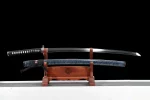
Identical to the picture and in great condition