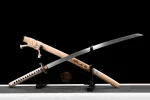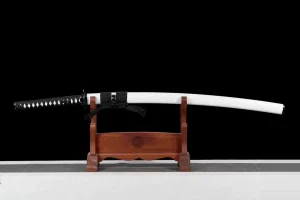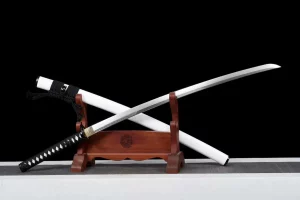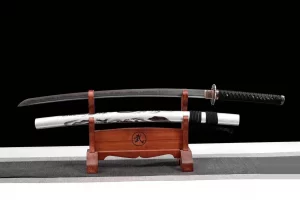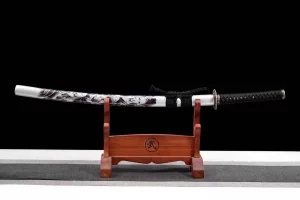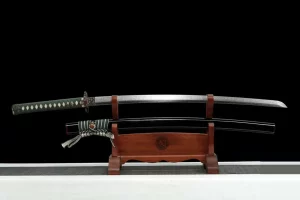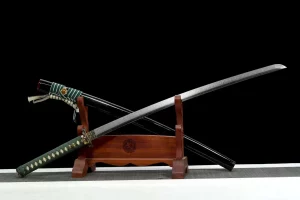
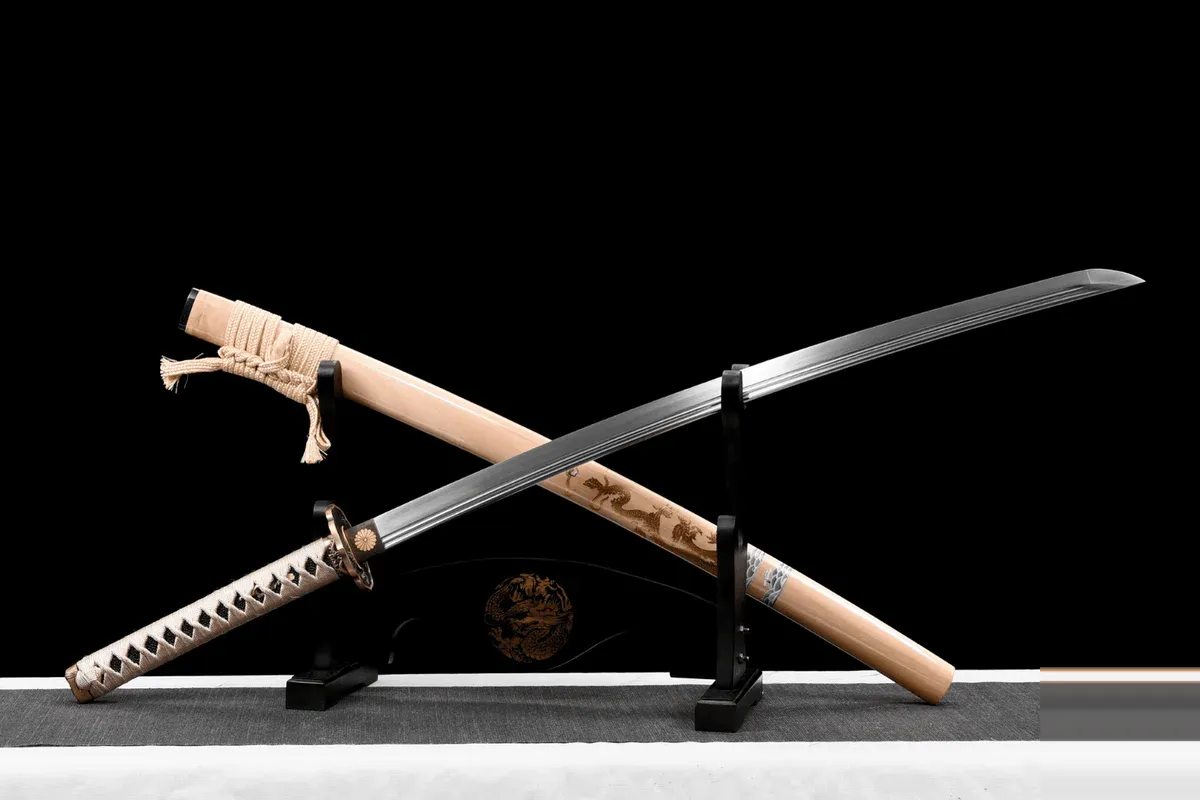
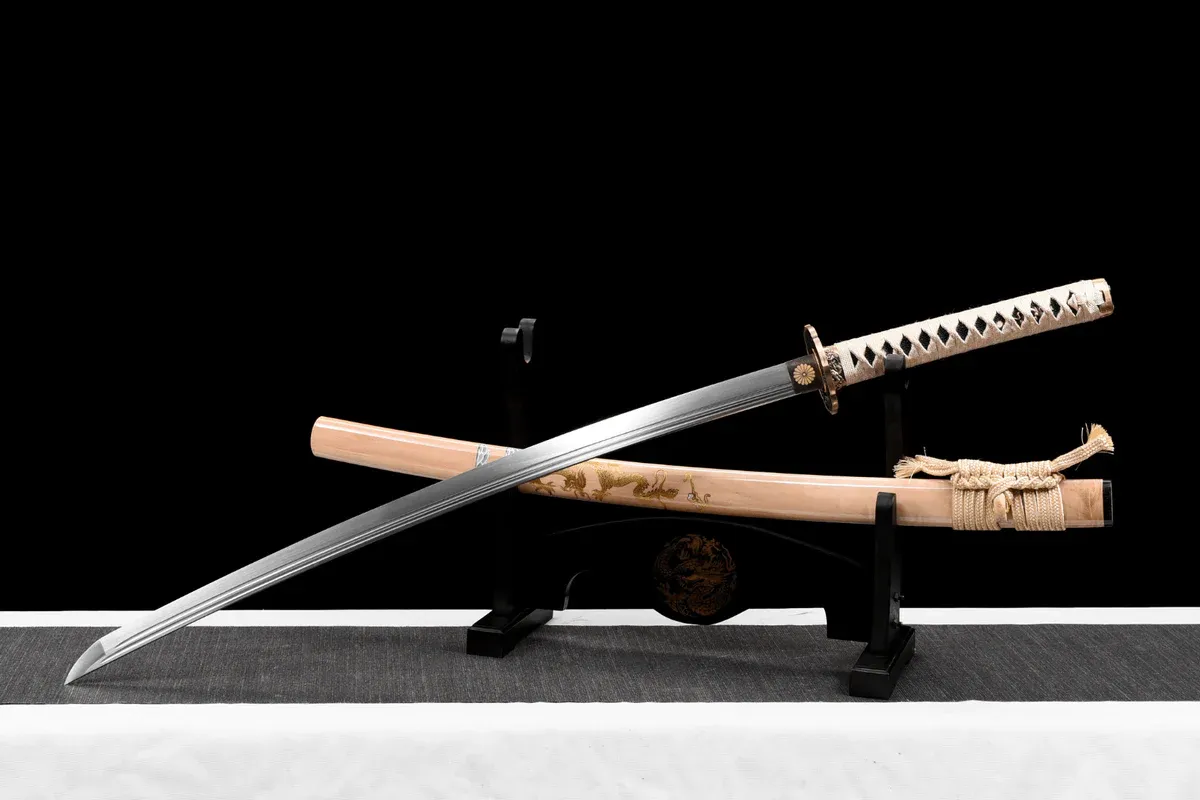
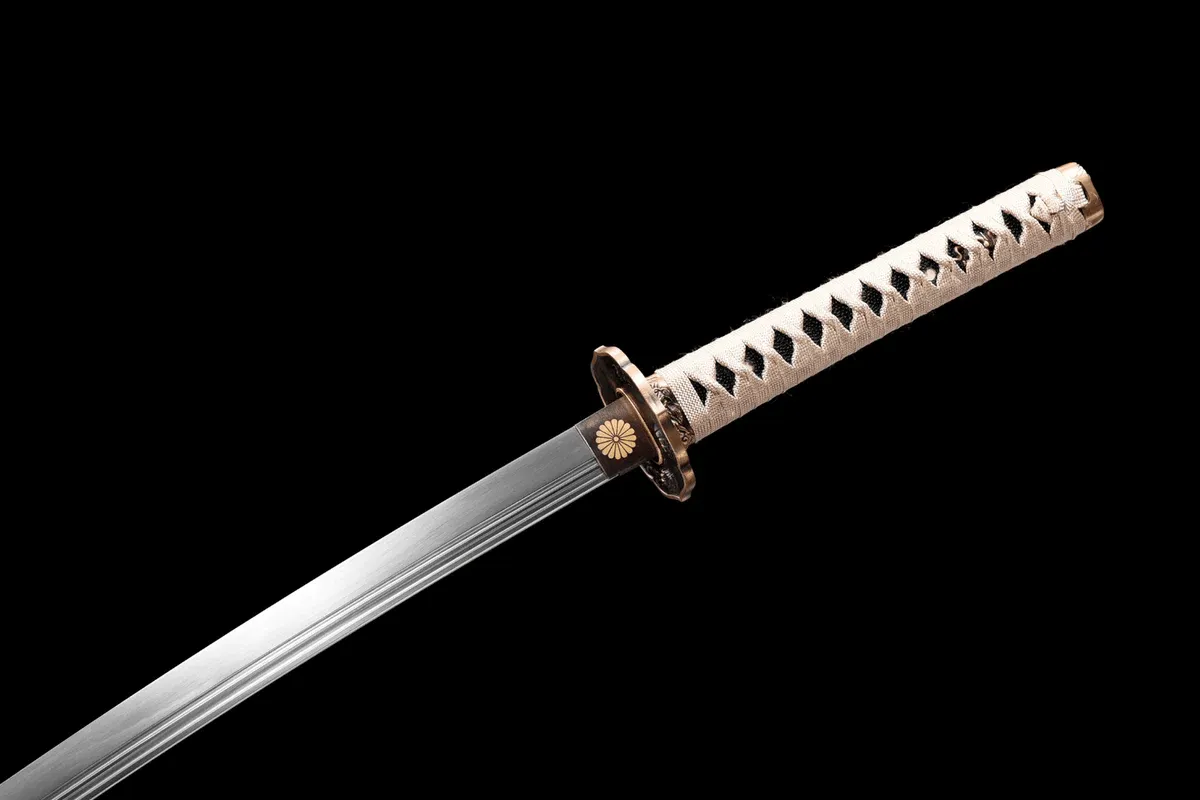
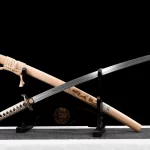
Kamon (家紋) means family crest — the heraldic mark a samurai house carried into battle and onto its blades. This katana is named for that lineage and built for the modern practitioner inheriting the discipline: a fast, vocal training sword tuned for kendo and iaido.
Forging & Steel
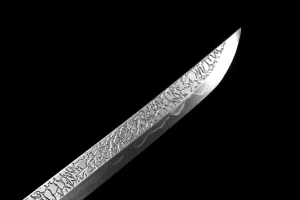
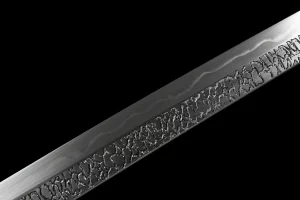
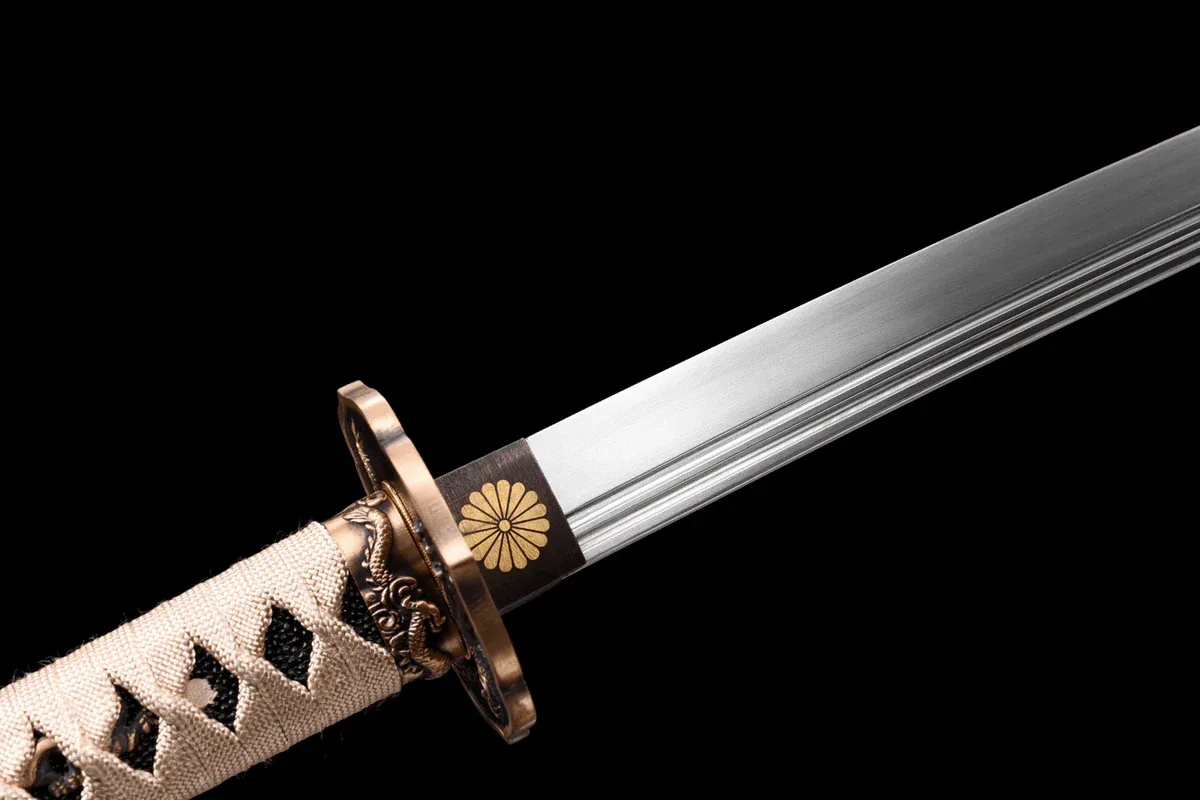
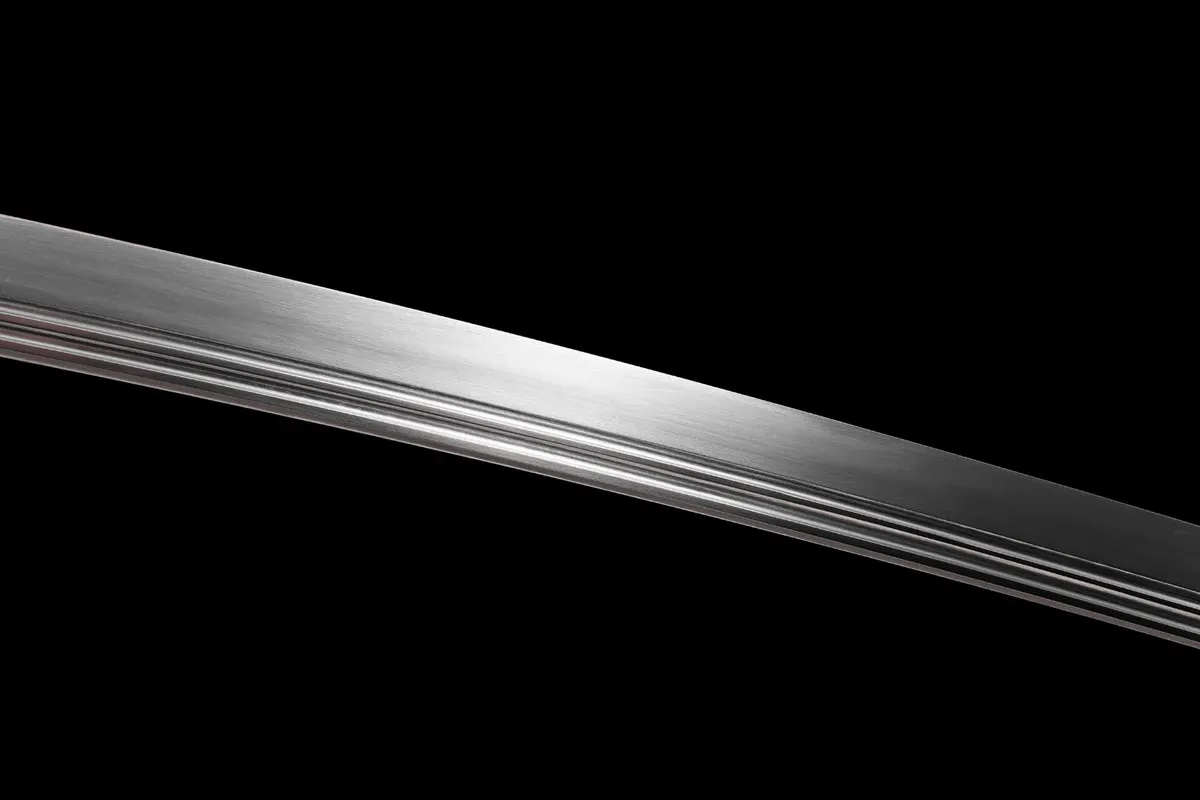
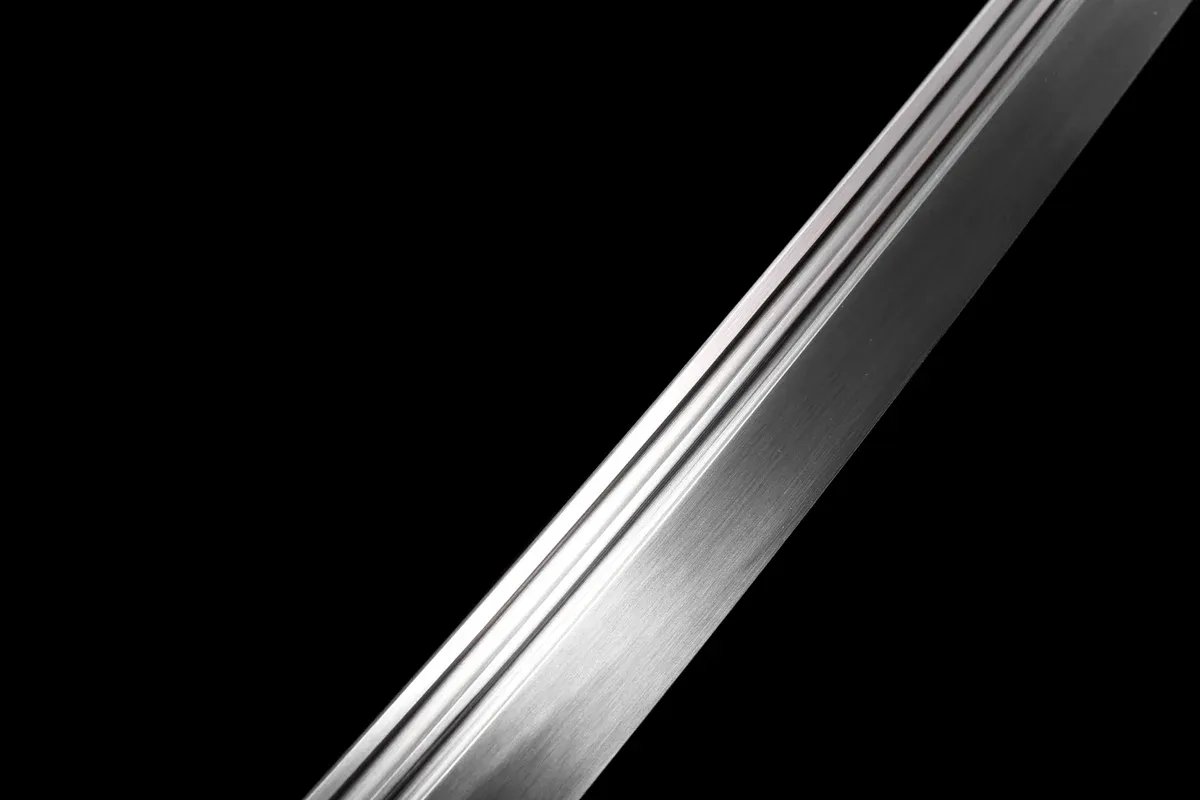
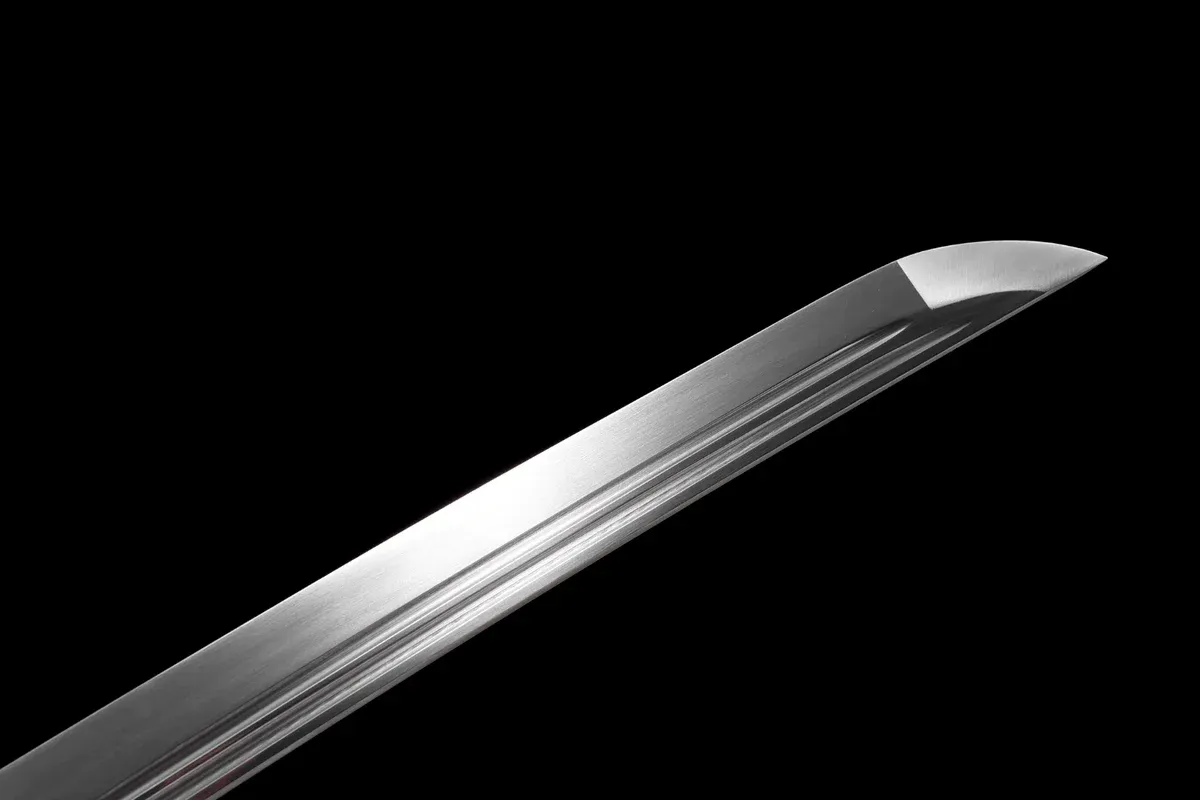
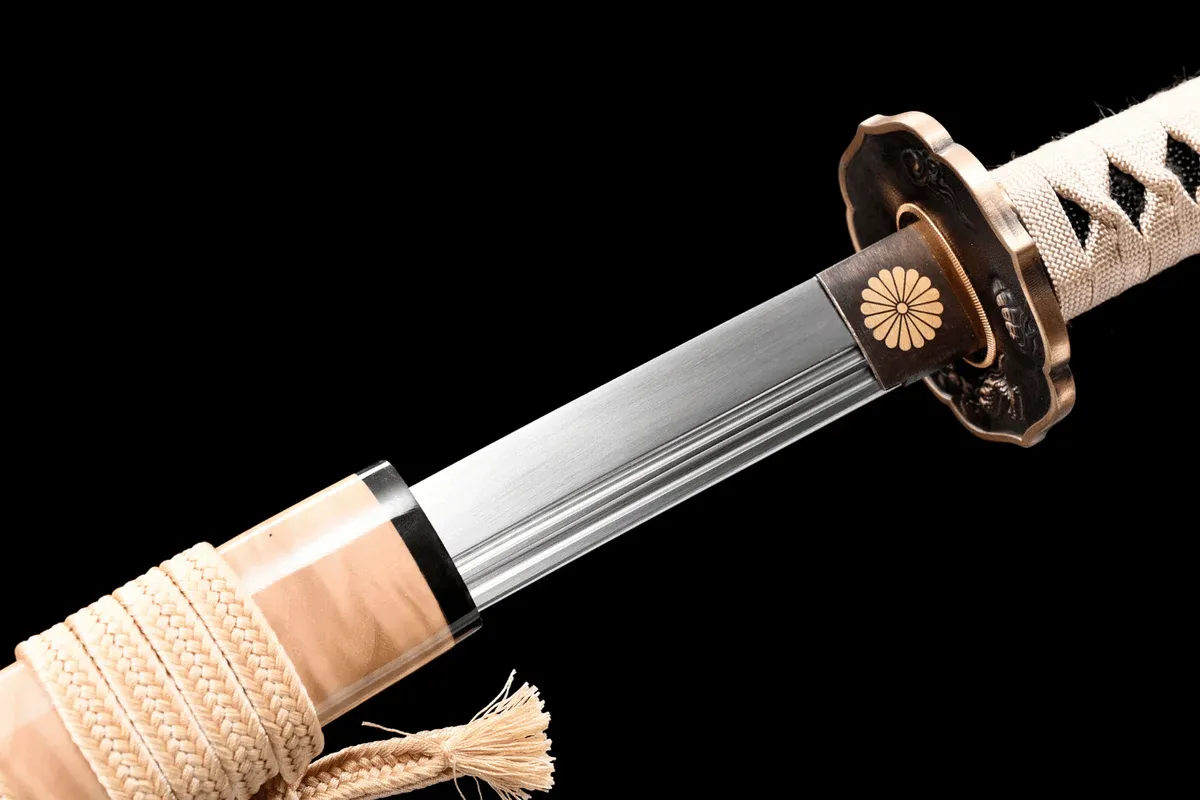
The Kamon is forged from flexible high-carbon steel and cut with two bo-hi — the longitudinal fuller grooves that run down each face of the blade. The double bo-hi does three things at once: it removes mass so the sword feels quick and balanced in the draw, it shifts the point of balance back toward the hand for control, and it gives that distinct tachikaze whistle on a clean cut. That sound is a built-in coach — when your edge alignment is true, the blade sings; when it is off, it goes quiet. Maintenance is minimal: a dry cloth on the blade and an occasional light oiling keep it ready between sessions. The flexible temper is forgiving of the off-angle cuts every beginner makes, bending and returning true instead of taking a set.
Fittings & Mounts
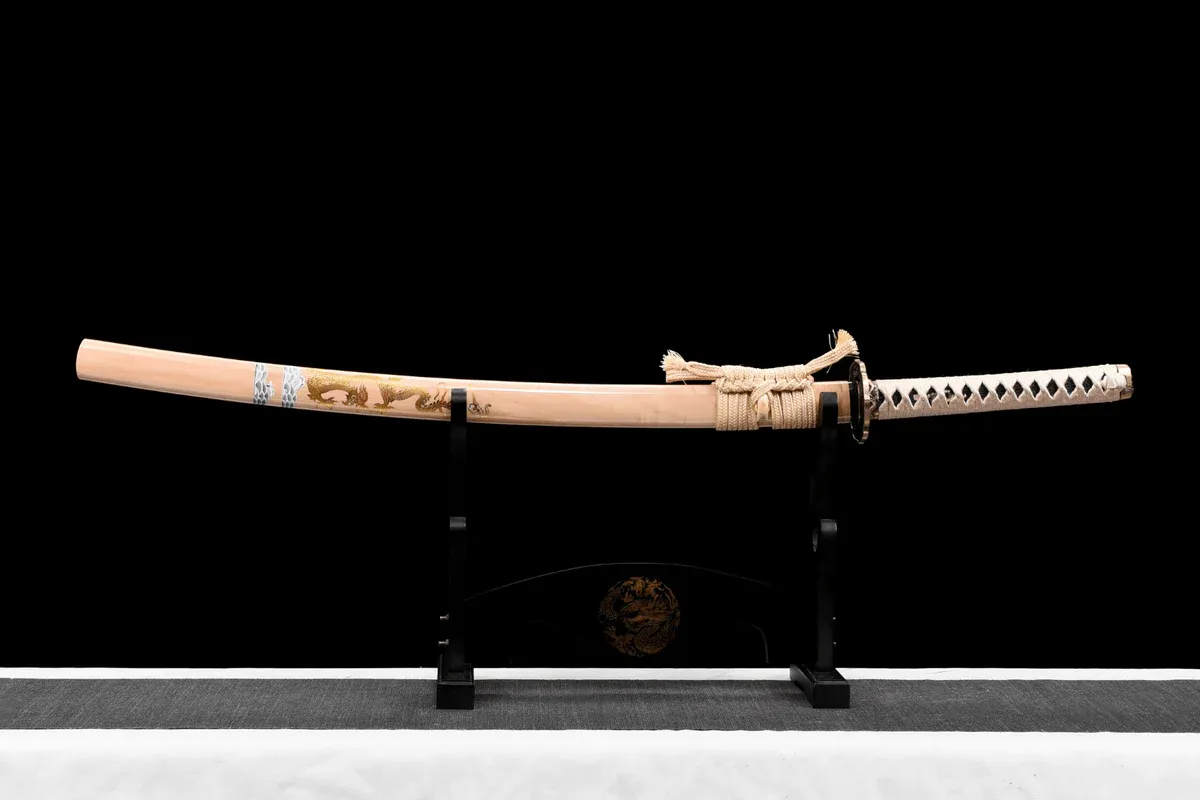
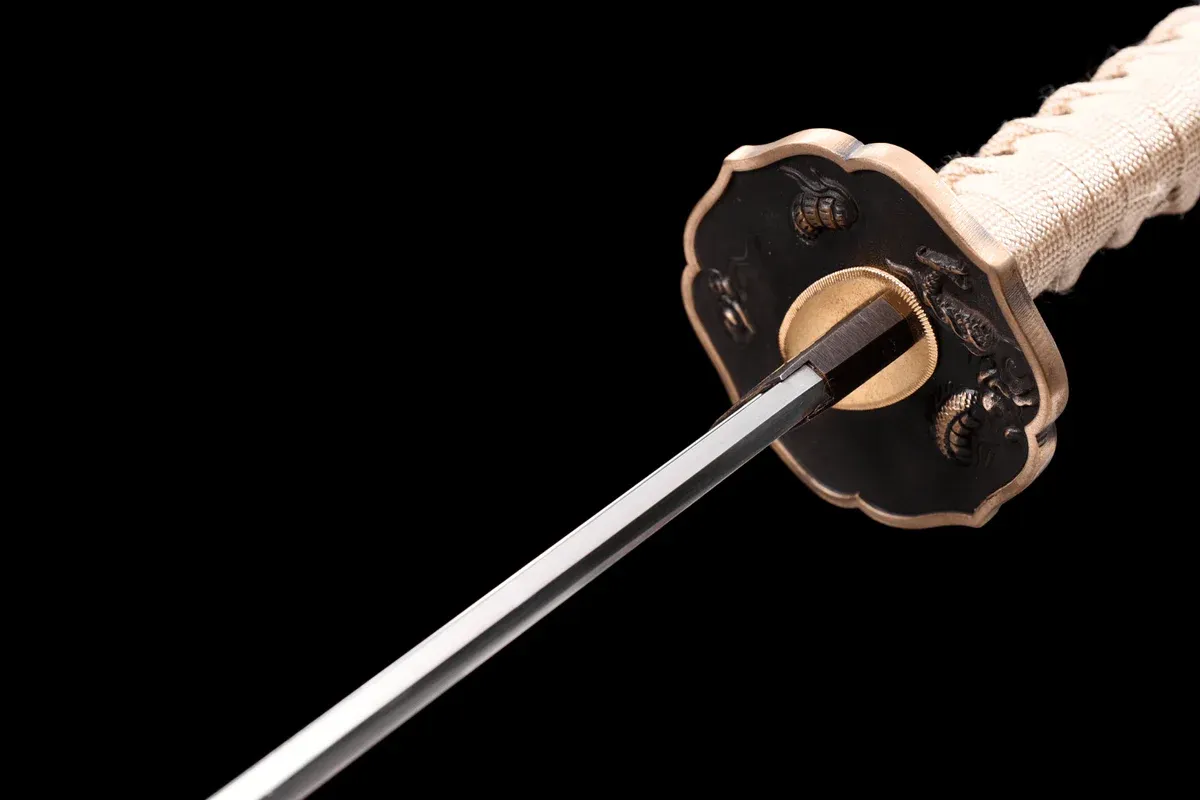
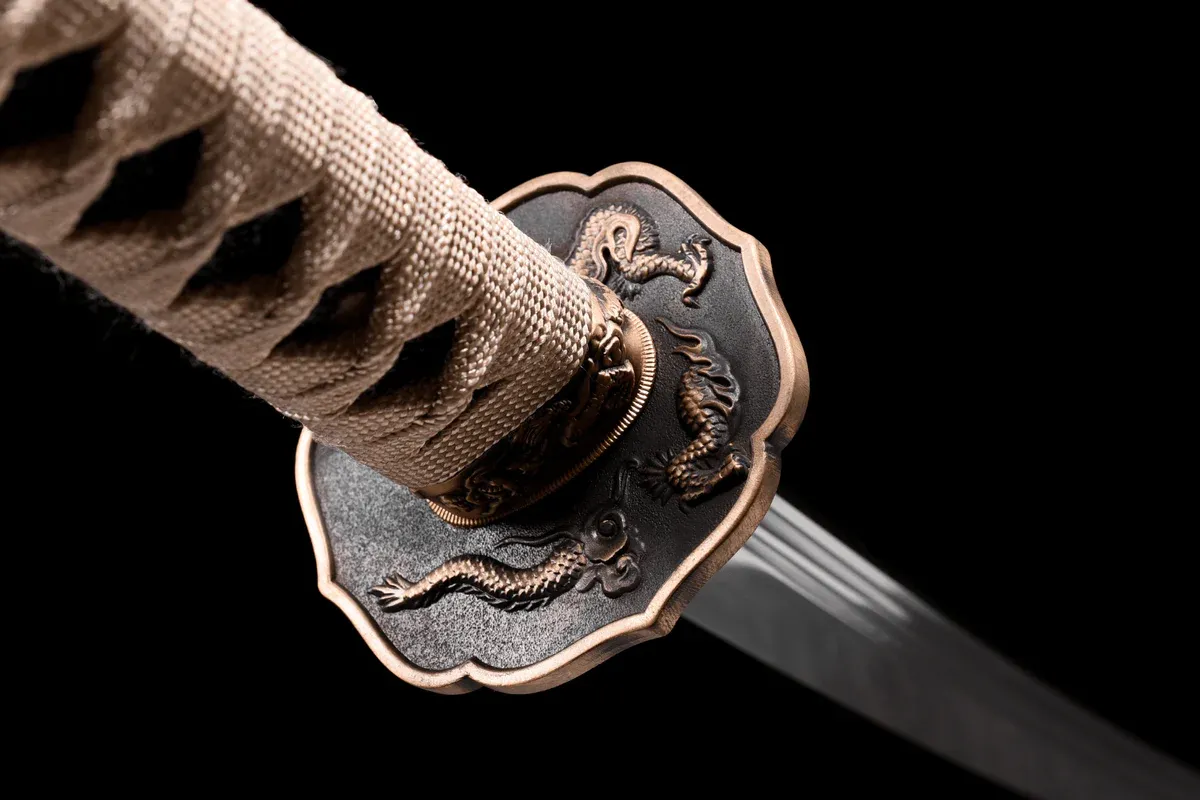
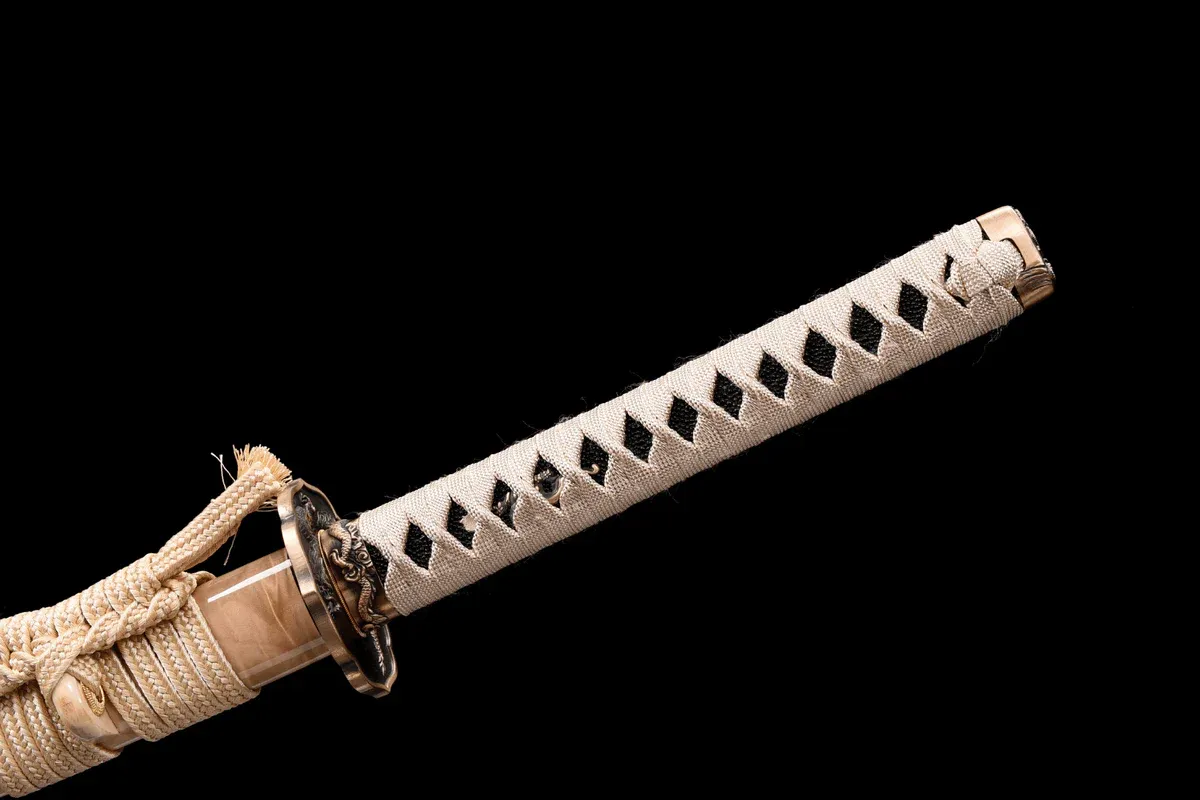
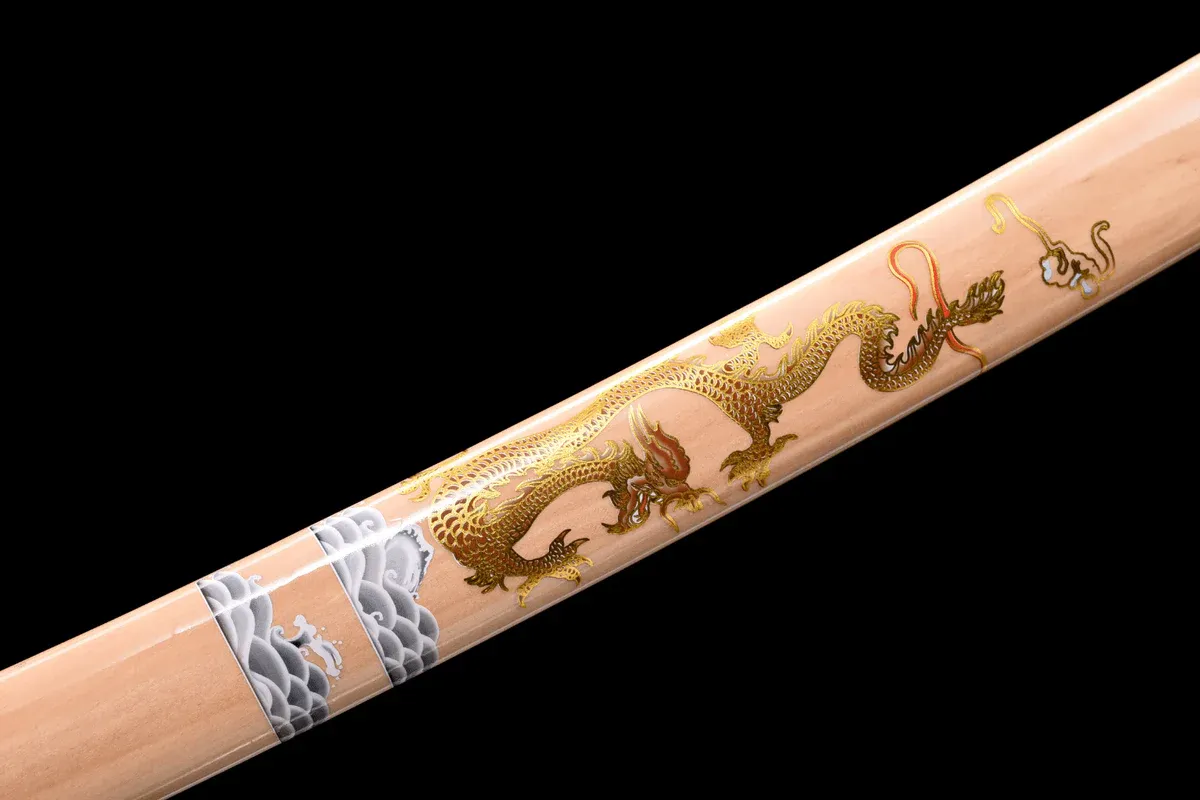
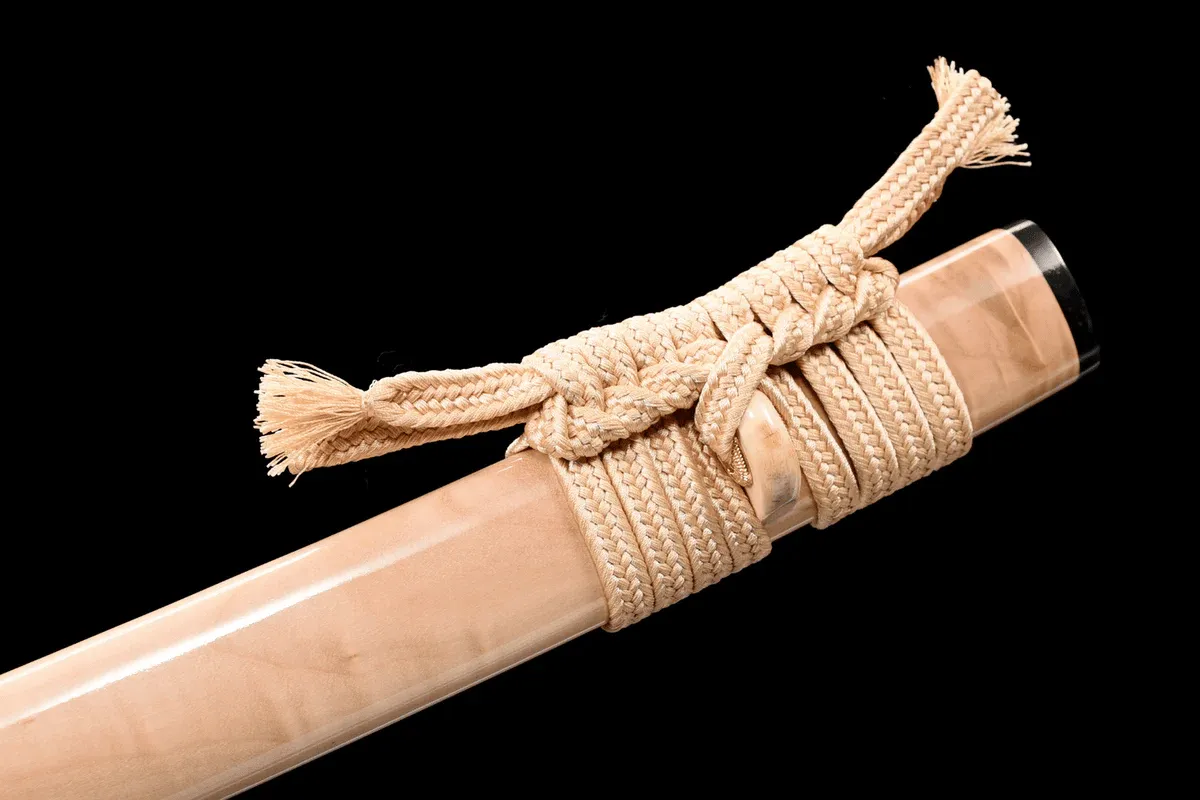
The mounts are finely sculpted copper throughout, from the tsuba to the menuki seated under a genuine white shagreen (galuchat) tsuka. The saya is lacquered wood with a dragon motif and a cotton sageo.
Specifications
| Blade steel | Flexible steel with two bo-hi |
|---|---|
| Tsuba & fittings | Finely sculpted copper |
| Saya | Lacquered wood, dragon motif, cotton sageo |
| Tsuka | Genuine white shagreen (galuchat) |
| Menuki | Copper menuki |
Dimensions
| Total length | 103 cm |
|---|---|
| Blade length | 71 cm |
| Handle length | 26 cm |
| Blade width | 3.2 cm |
| Blade thickness | 0.75 cm |
Is it battle-ready?
The Kamon is built as a functional training katana — the flexible blade and twin bo-hi are designed for repetition, form work and edge-alignment drills in kendo and iaido. For a heavier-cutting alternative, compare the T10 Katana Nami or the resilient Katana Rei, and see the wider katana collection.

 Verified owner