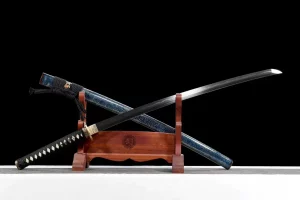
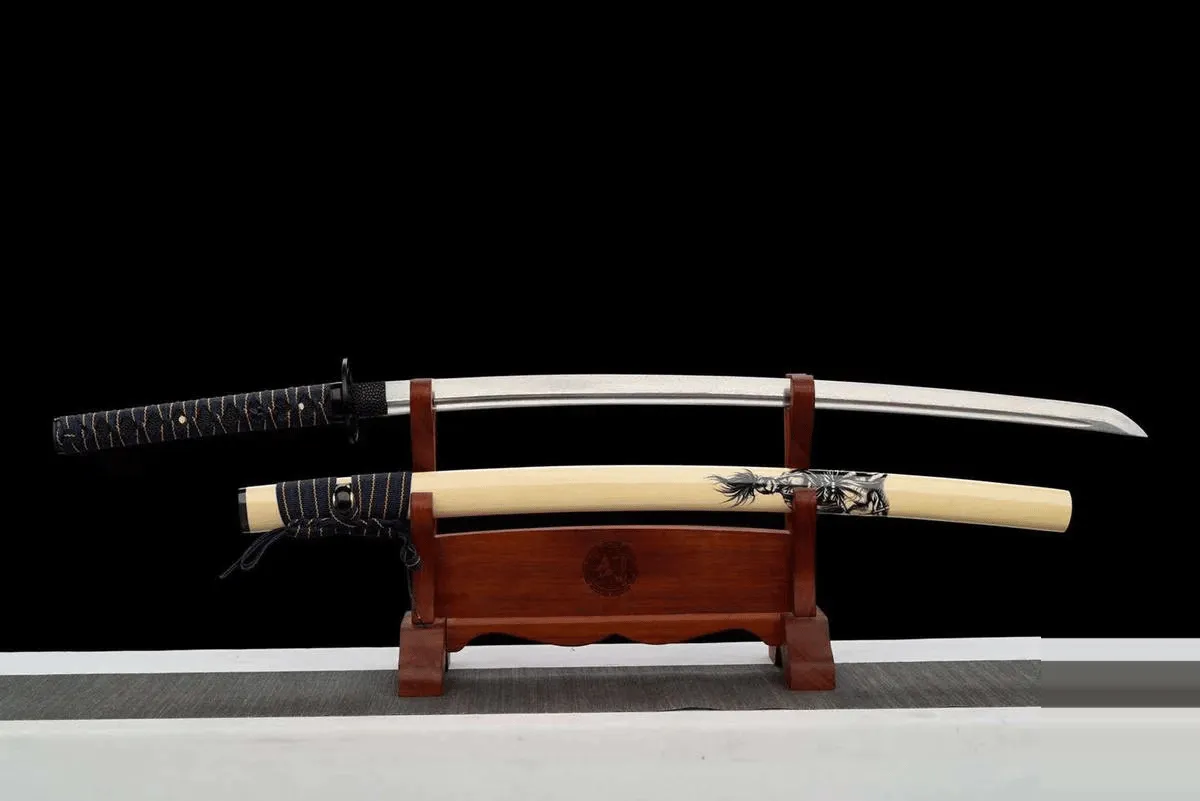
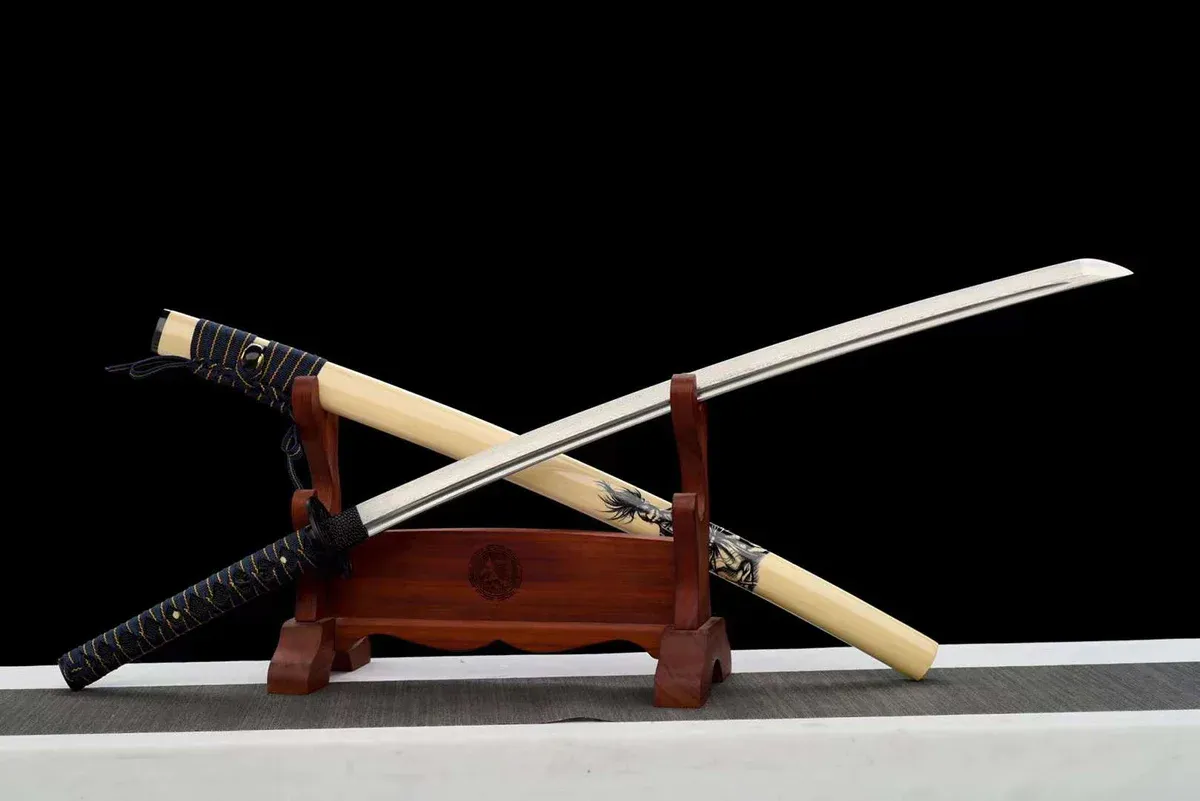
Musashi needs no translation to anyone who has held a sword — Miyamoto Musashi, the duelist who never lost, the master who wrote that the way is in the training. This katana is an entry-level homage to that name: robust, honest, and built to be used rather than admired from a distance.
Forging & Steel
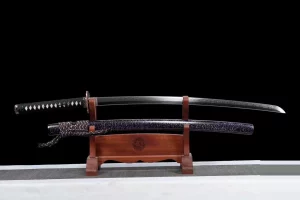
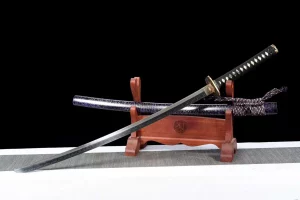
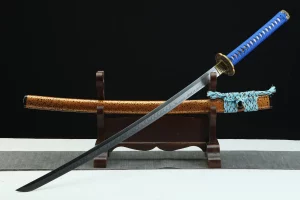
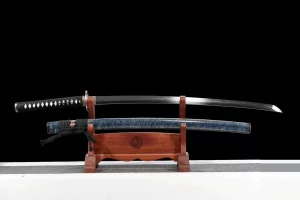
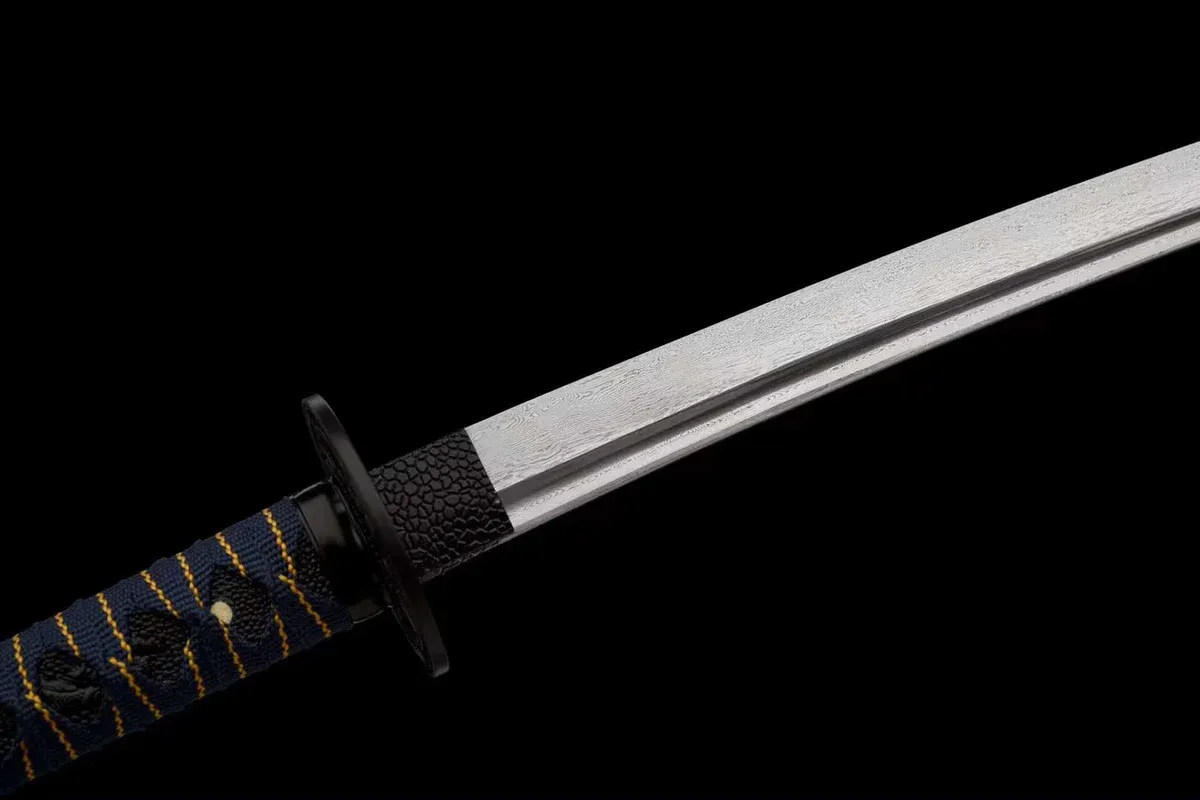
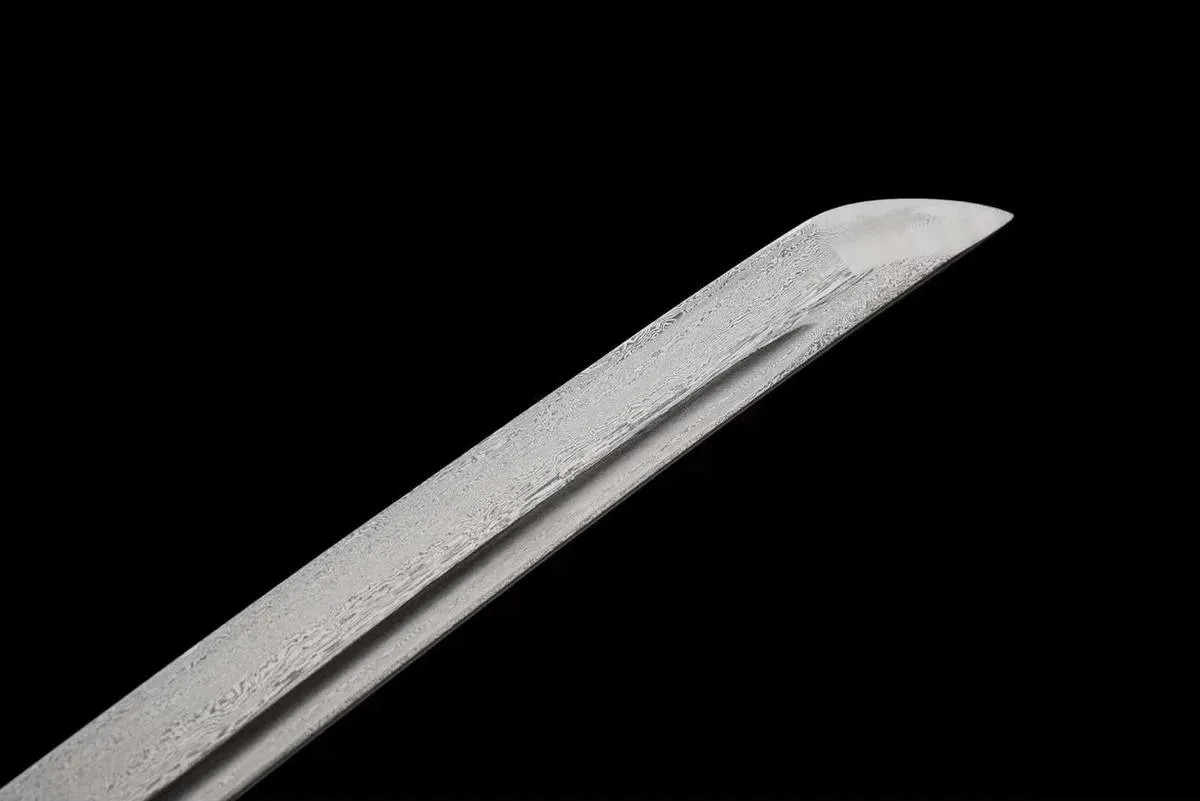
The blade is forged from folded Damascus steel, its wave-patterned grain rising from the layered fold the way only forge-welded steel can. Cut into the flat is a bo-hi — the long fuller groove that lightens the blade, shifts the balance back toward the hand, and gives that low singing draw as it clears the saya. The bo-hi also sharpens feedback in the cut without sacrificing structural integrity, which is exactly what a practitioner wants from a training blade.
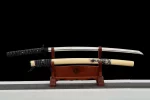
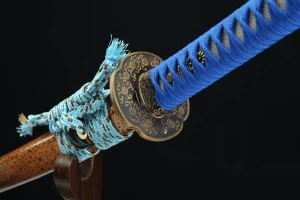
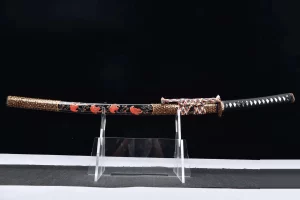
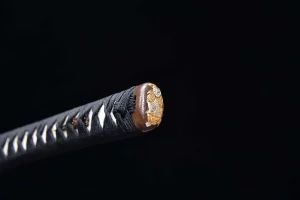
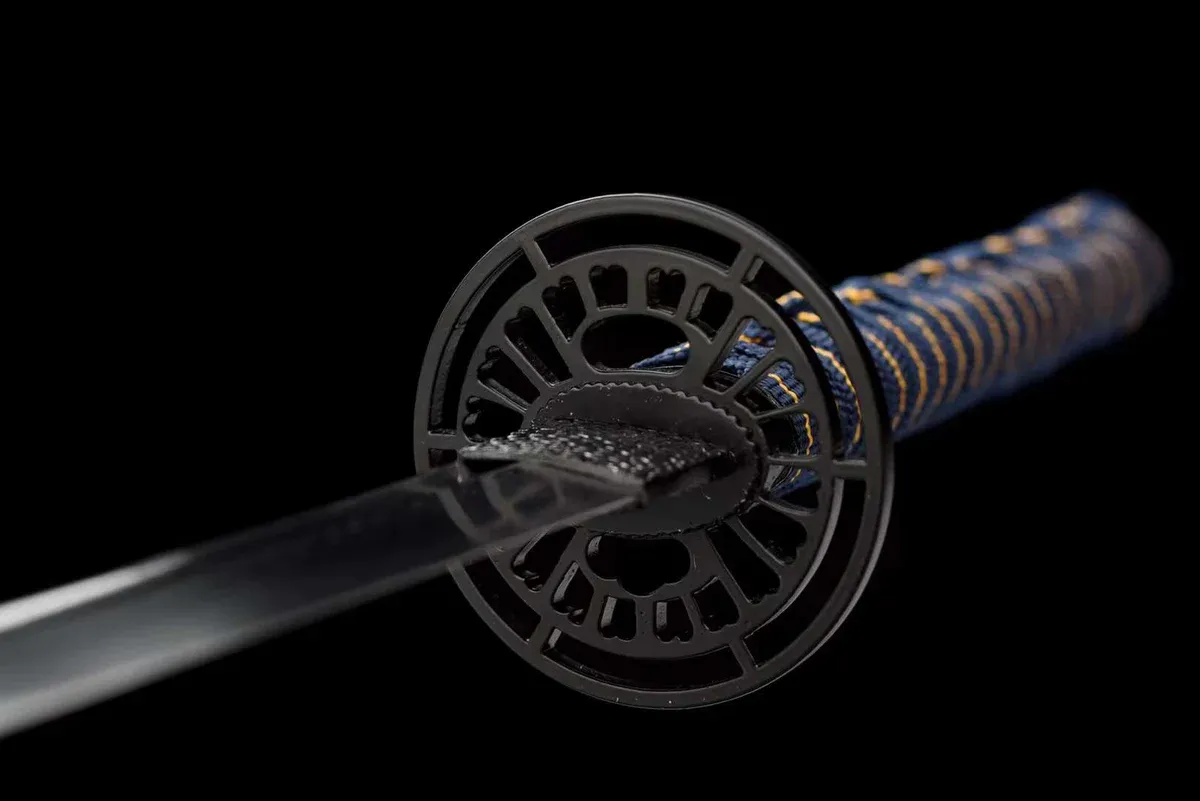
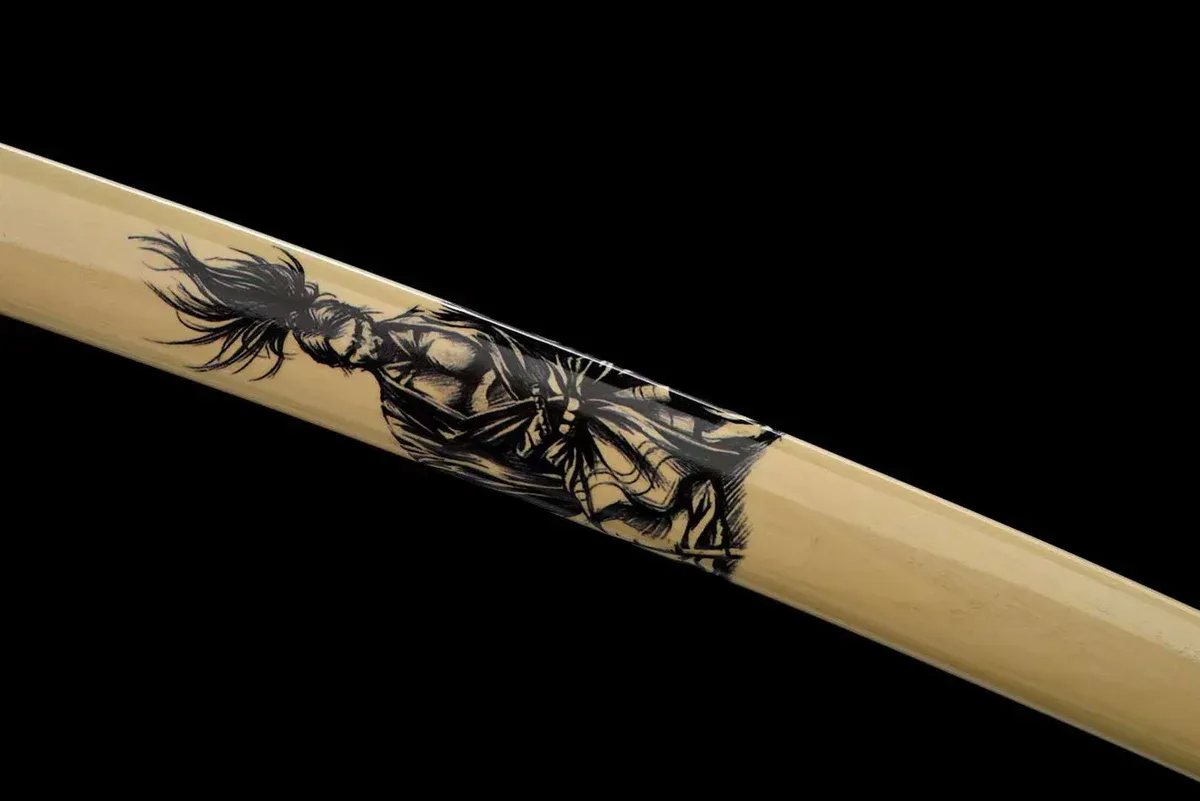
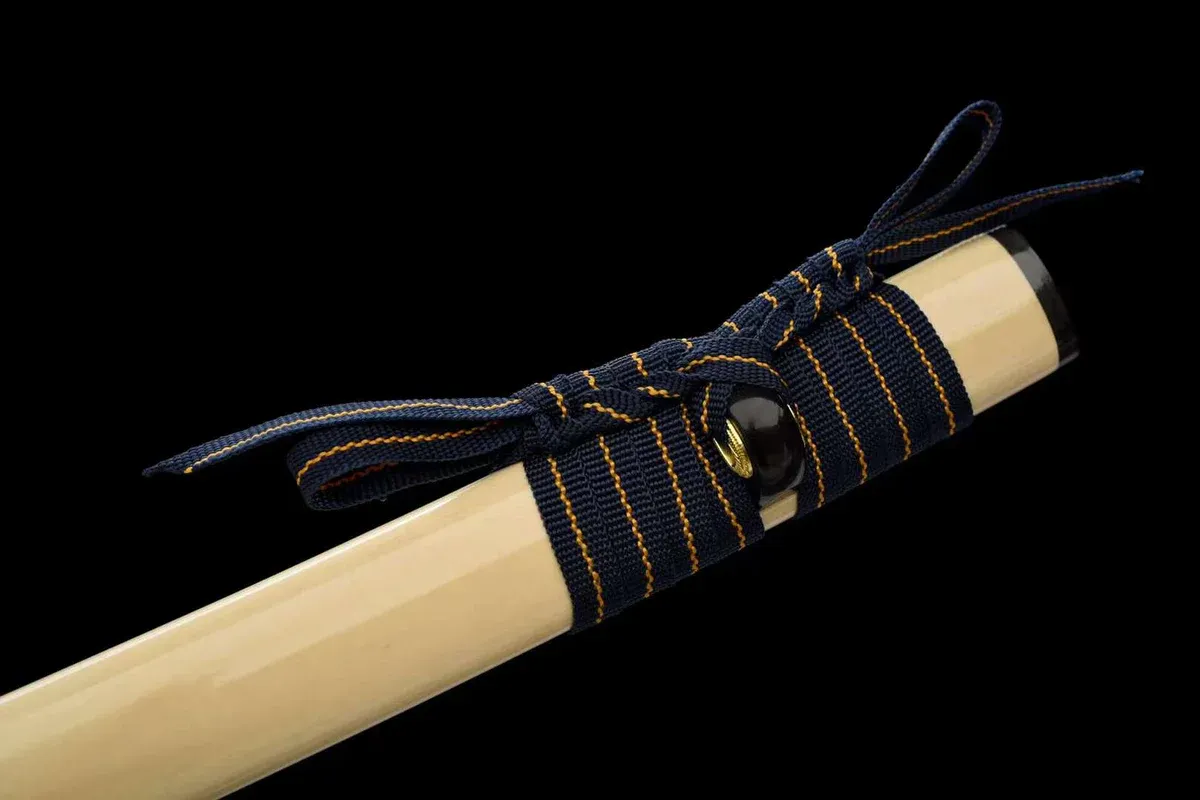
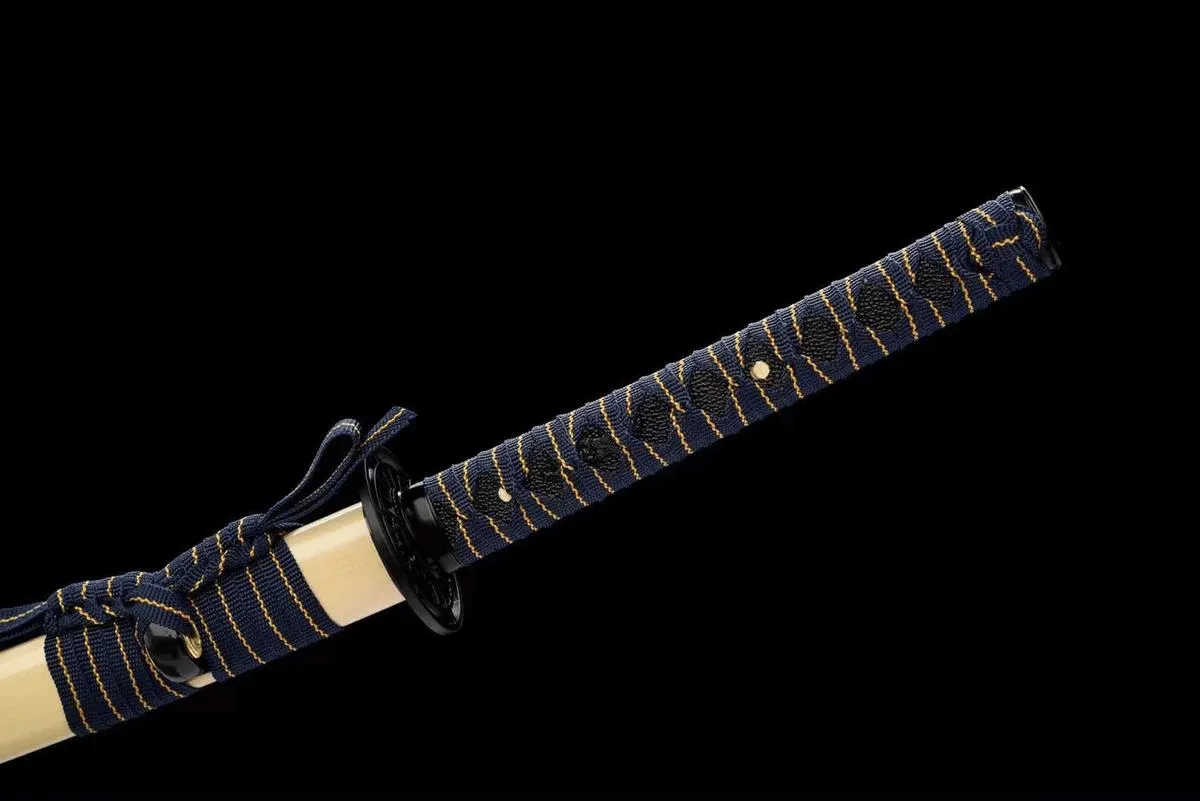
The mounts keep the discipline. A black sculpted-iron tsuba guards the hand, the beige lacquered saya is dressed with a dark-blue sageo and gold stitching, and the genuine black shagreen tsuka carries iron menuki over two bamboo mekugi pinning a full tang.
Specifications
| Blade steel | Damascus steel with bo-hi on the blade |
|---|---|
| Tsuba | Black sculpted iron |
| Saya | Beige lacquered wood with dark-blue sageo and gold stitching |
| Tsuka | Genuine black shagreen |
| Menuki | Iron |
| Mekugi | 2 bamboo |
Dimensions
| Total length | 103 cm |
|---|---|
| Blade length | 72 cm |
| Blade width | 3.2 cm |
| Blade thickness | 0.7 cm |
| Handle length | 27 cm |
| Weight | 1.2 kg |
Is it good for beginners?
Yes. The Musashi is light at 1.2 kg, and the bo-hi pulls the balance back toward the hand, making it forgiving to swing and easy to control — a strong entry-level cutting katana. It is full-tang and functional with a genuine sharp edge, sold for trained, responsible use.
For more folded steel near this level, see the lotus Katana Rōtasu and the Katana Gaiyo, or browse the full katana collection.

 Verified owner