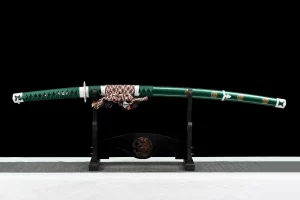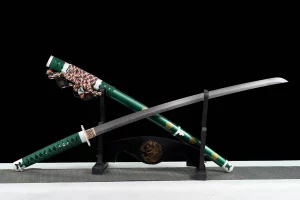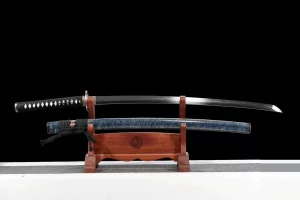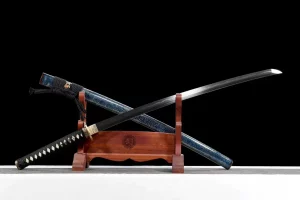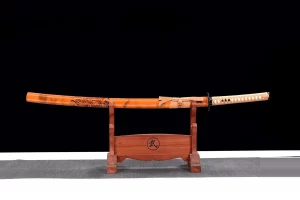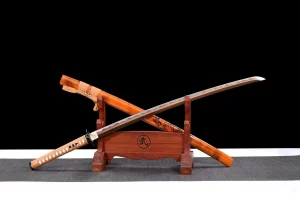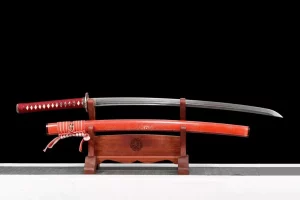
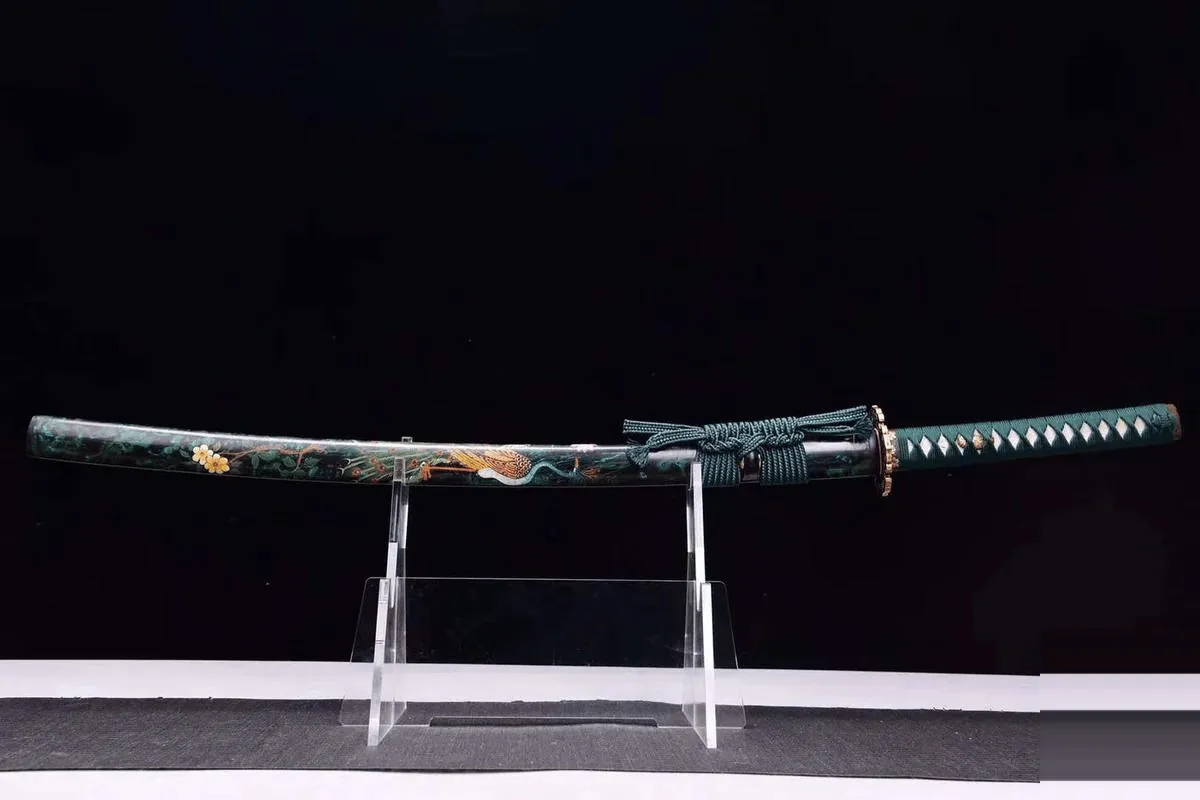
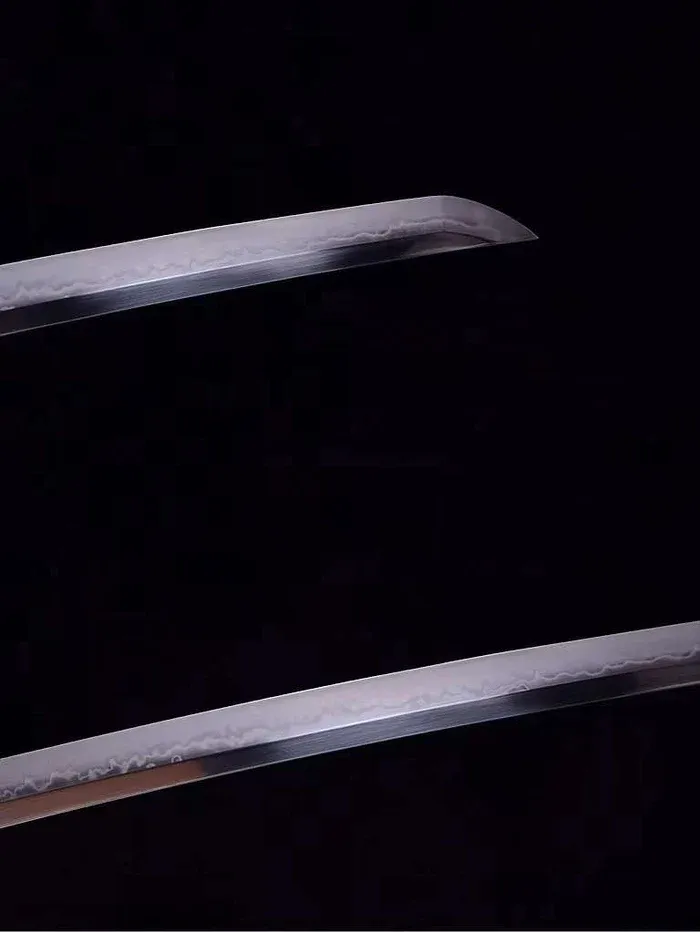
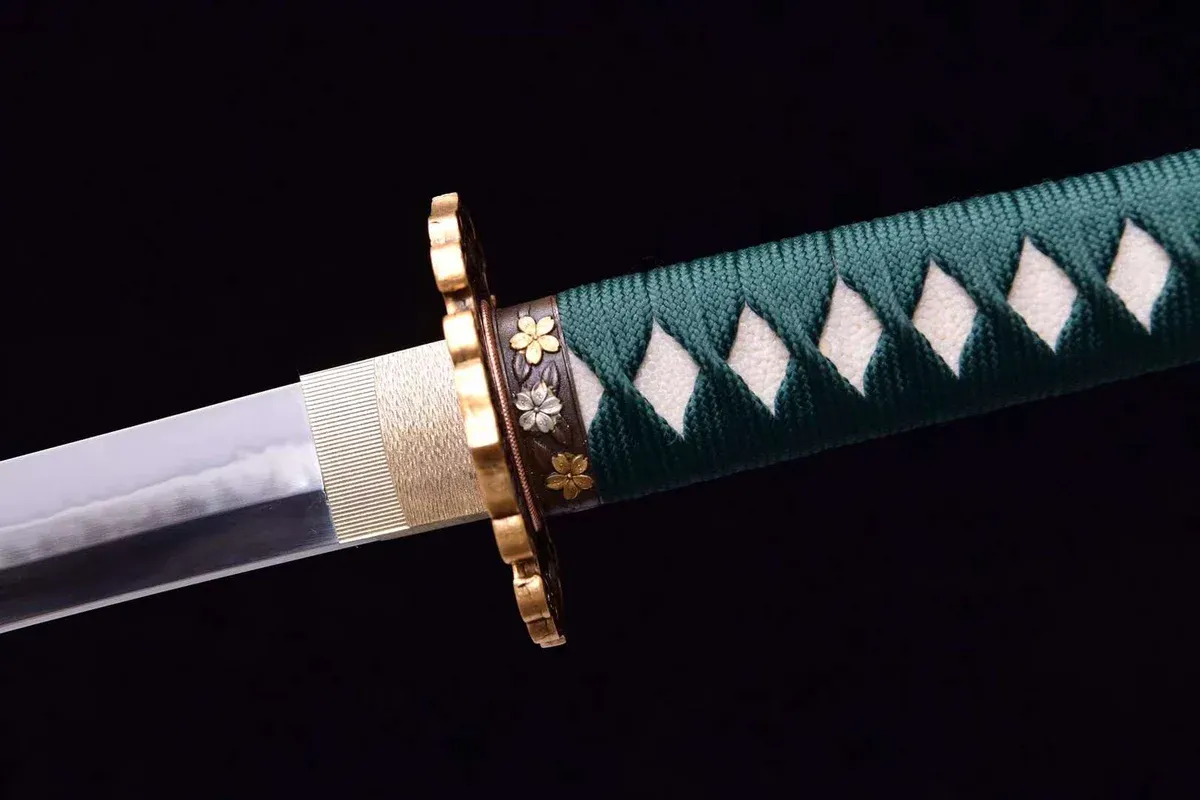
Pikokku — the peacock — and like the bird, this katana was built to be seen and to perform. The plumage shows in the steel: a vivid choji hamon blooming in clove-shaped tufts down the edge, the fingerprint of a differential quench that hardens the edge while leaving the spine resilient. Nothing here is printed or etched. The line is born in the fire.
Forging & Steel
The blade is forged from high-carbon T10 tool steel, clay-tempered and water-quenched so the cutting edge reaches a high Rockwell hardness while the body keeps the toughness a working katana demands. T10 holds its edge through repeated cutting and resists chipping under stress — the steel a collector graduates to once wall-hangers no longer satisfy. The differential temper is what gives the choji line its life: only the edge takes the full hardness, so the spine can flex and absorb shock instead of cracking. The blade is sharpened and ready out of the box.
Fittings
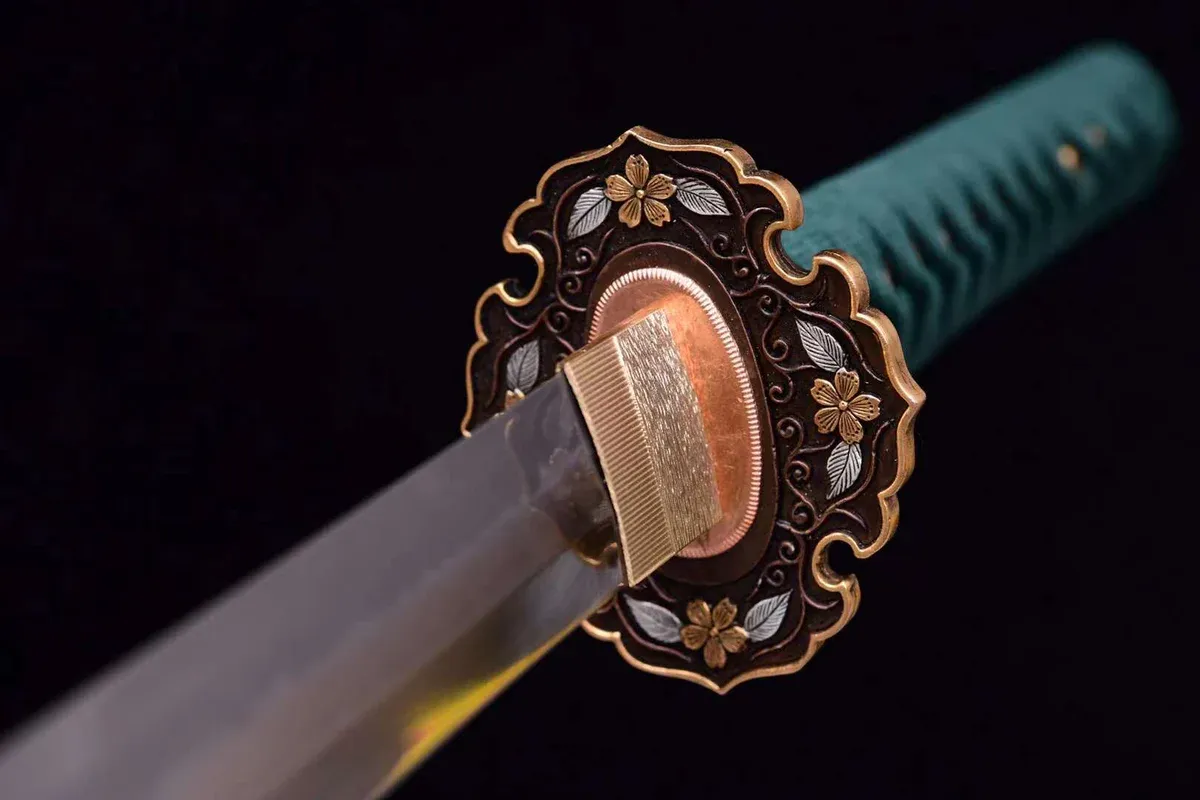
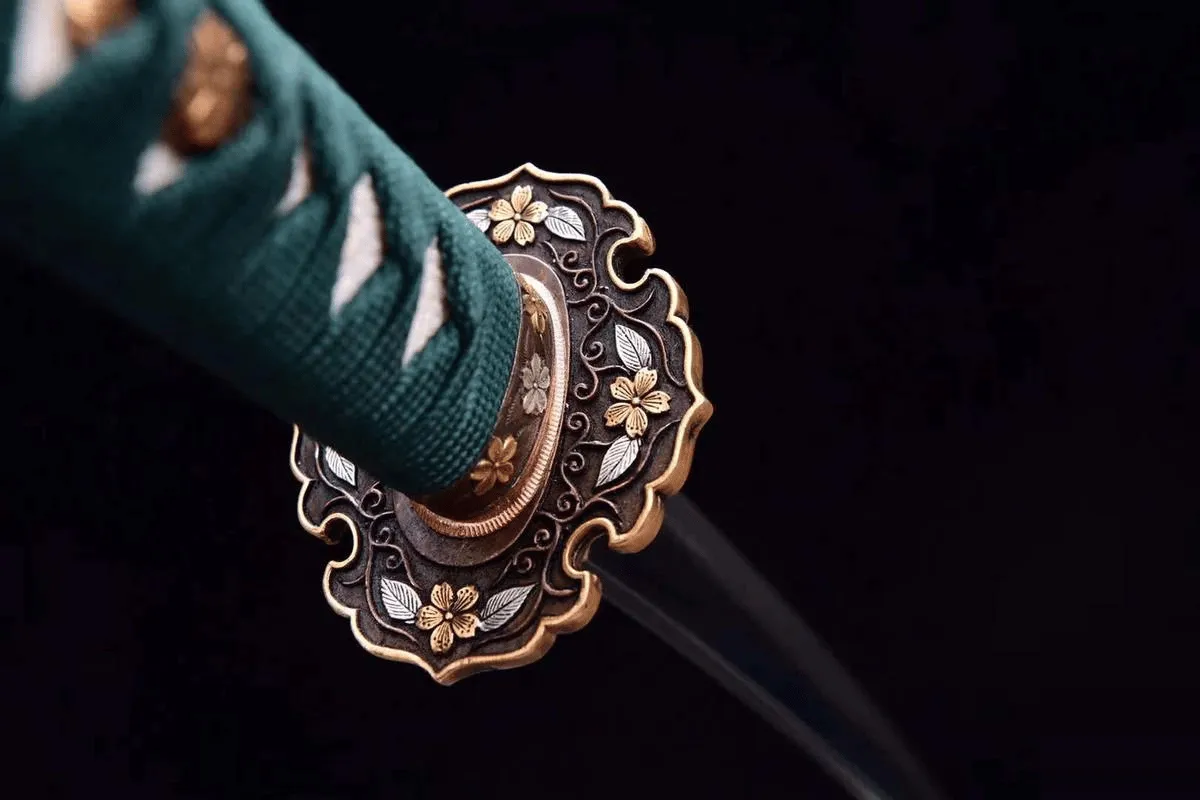
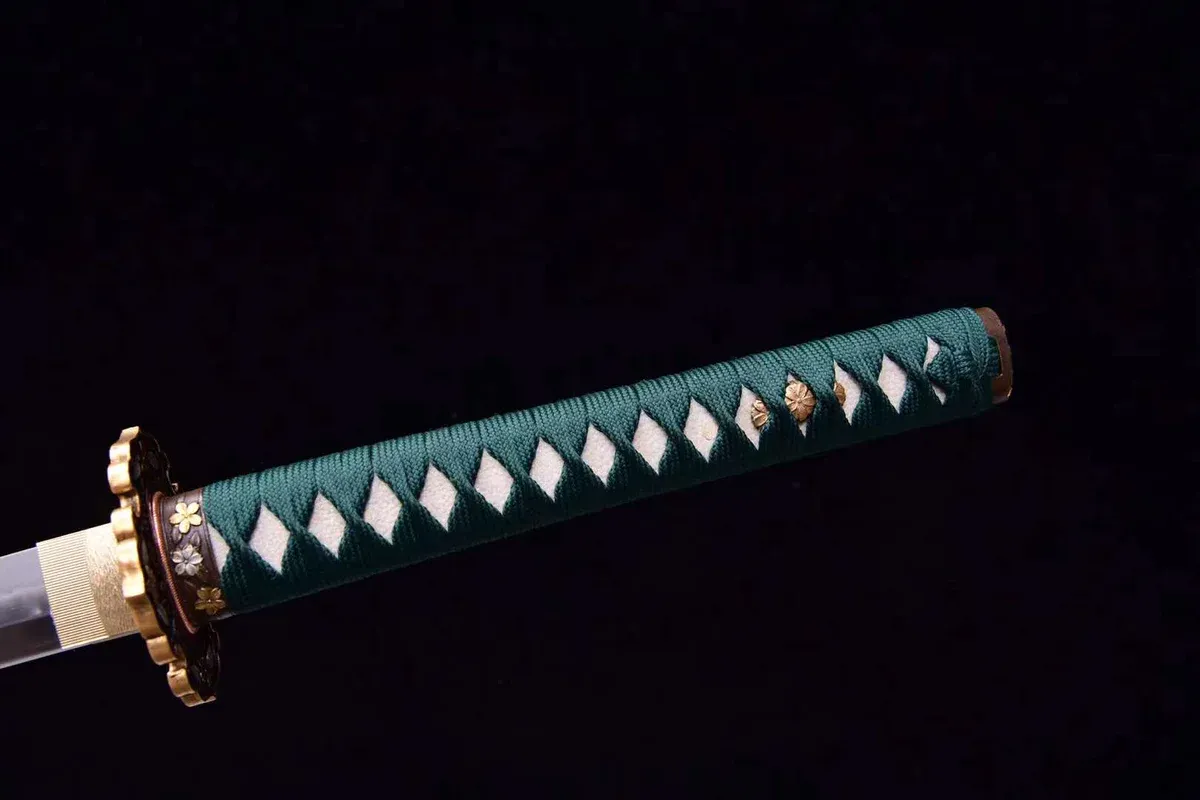
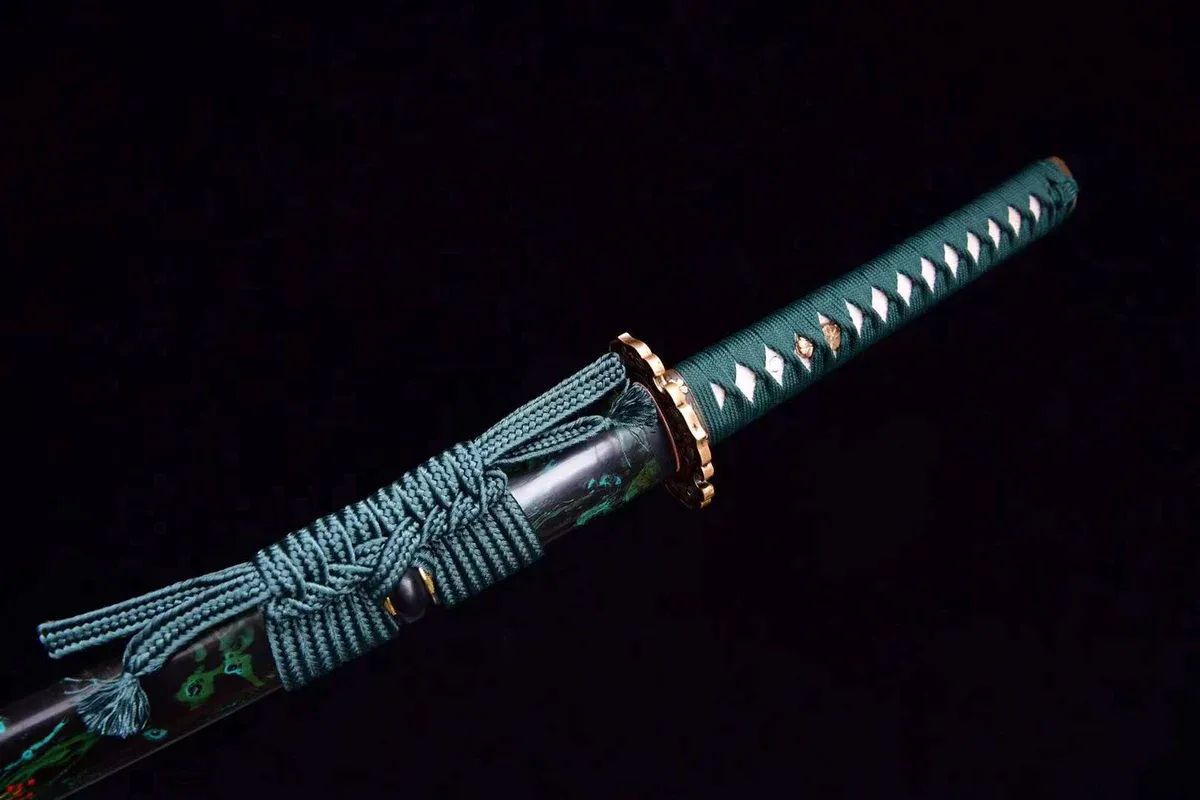
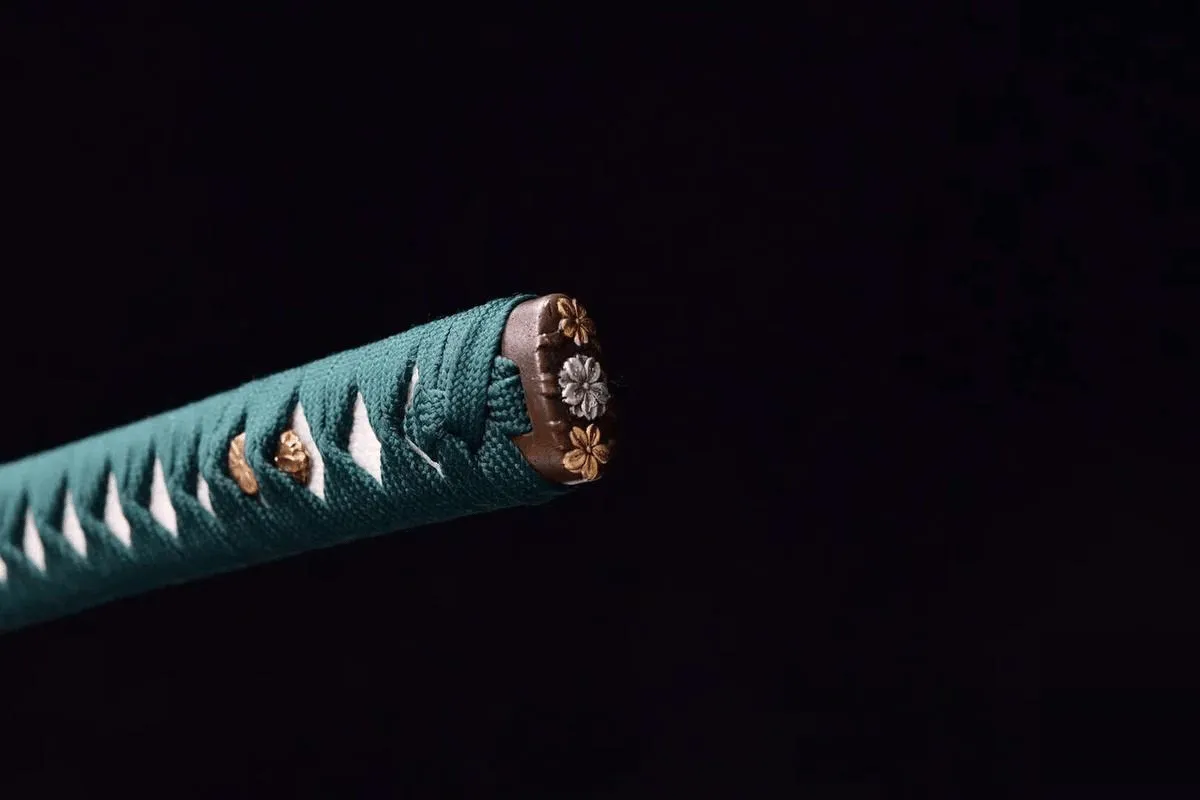
The tsuba is carved gilded copper, set as the balance point and shielding the hand. The saya is lacquered and painted wood finished with a green sageo, and the tsuka is wrapped in genuine white shagreen under a diamond-pattern ito, dressed with a copper menuki kit and pinned by two bamboo mekugi. Every fitting is chosen to match the showpiece blade, so the sword reads as one considered object from tsuba to kashira rather than a parts list.
Specifications
| Blade steel | T10 steel, choji hamon, sharpened |
|---|---|
| Tsuba | Carved gilded copper |
| Saya | Lacquered & painted wood, green sageo |
| Tsuka | Genuine white shagreen, diamond wrap |
| Menuki | Copper menuki kit |
| Mekugi | 2 bamboo mekugi |
Dimensions
| Total length | 103 cm |
|---|---|
| Blade length | 72 cm |
| Handle length | 27 cm |
| Blade width | 3.2 cm |
| Blade thickness | 0.7 cm |
| Weight | 1.2 kg |
Is it battle-ready?
Yes. The Pikokku is a sharpened, full-tang blade rated for genuine tatami cutting, not a decorative replica. Among our master-tier katana, it sits beside pieces like the Ryuza and the Nihon. Sharpen, oil, and store edge-up in the saya.

 Verified owner