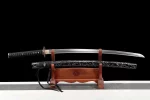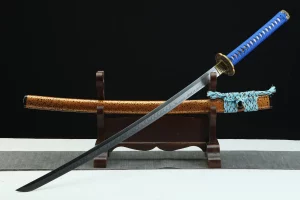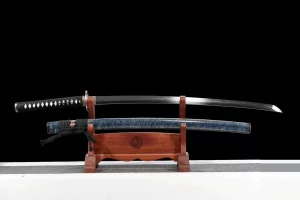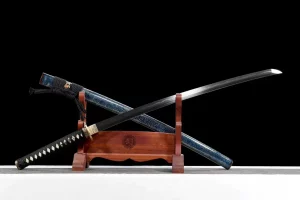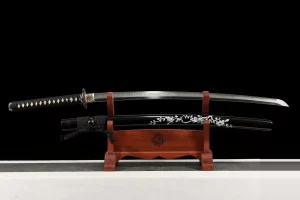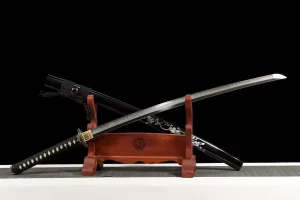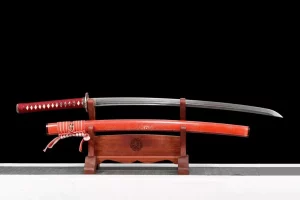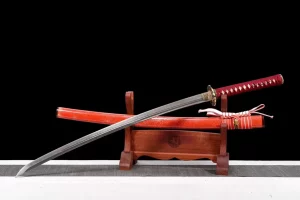
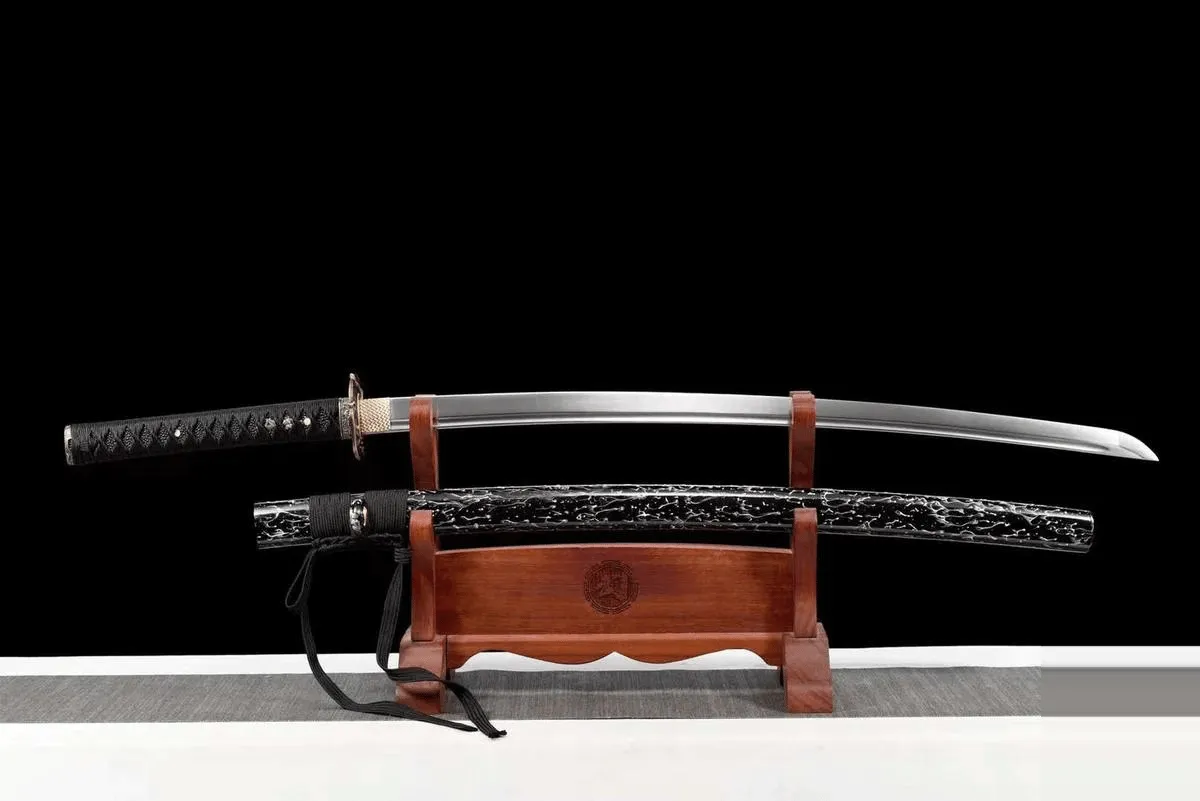
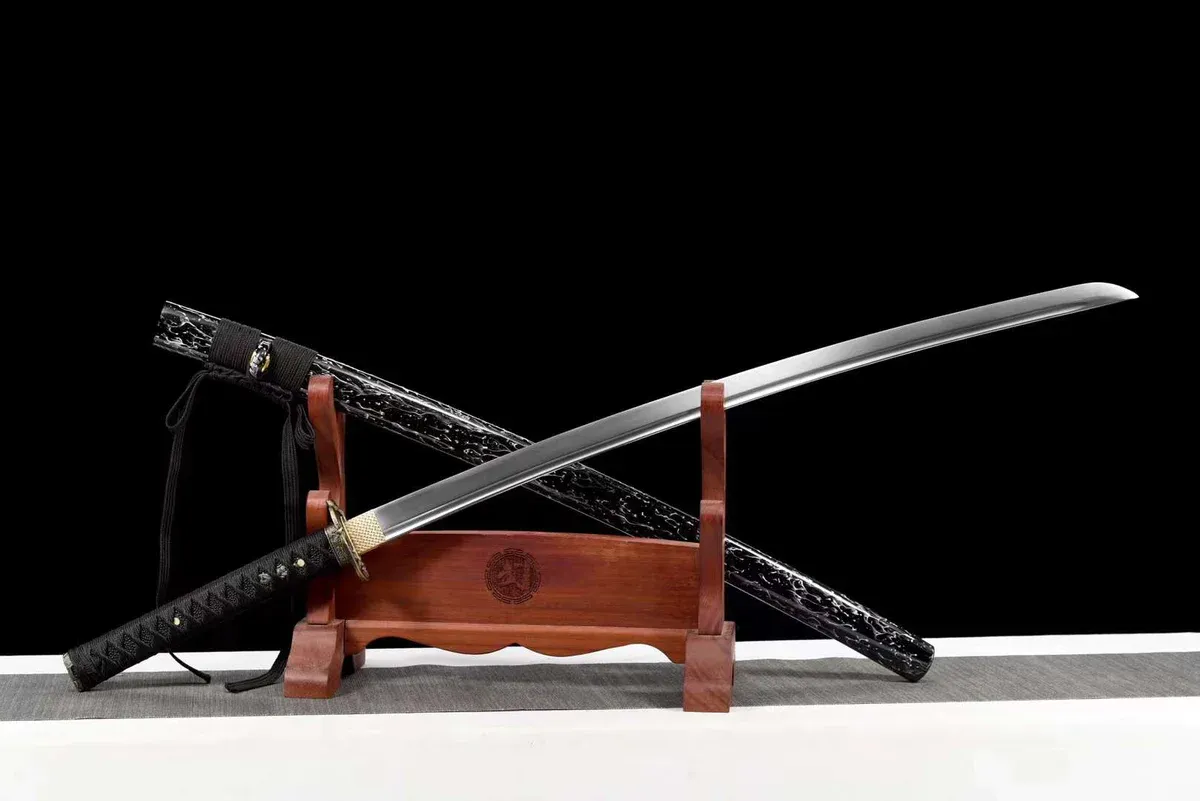
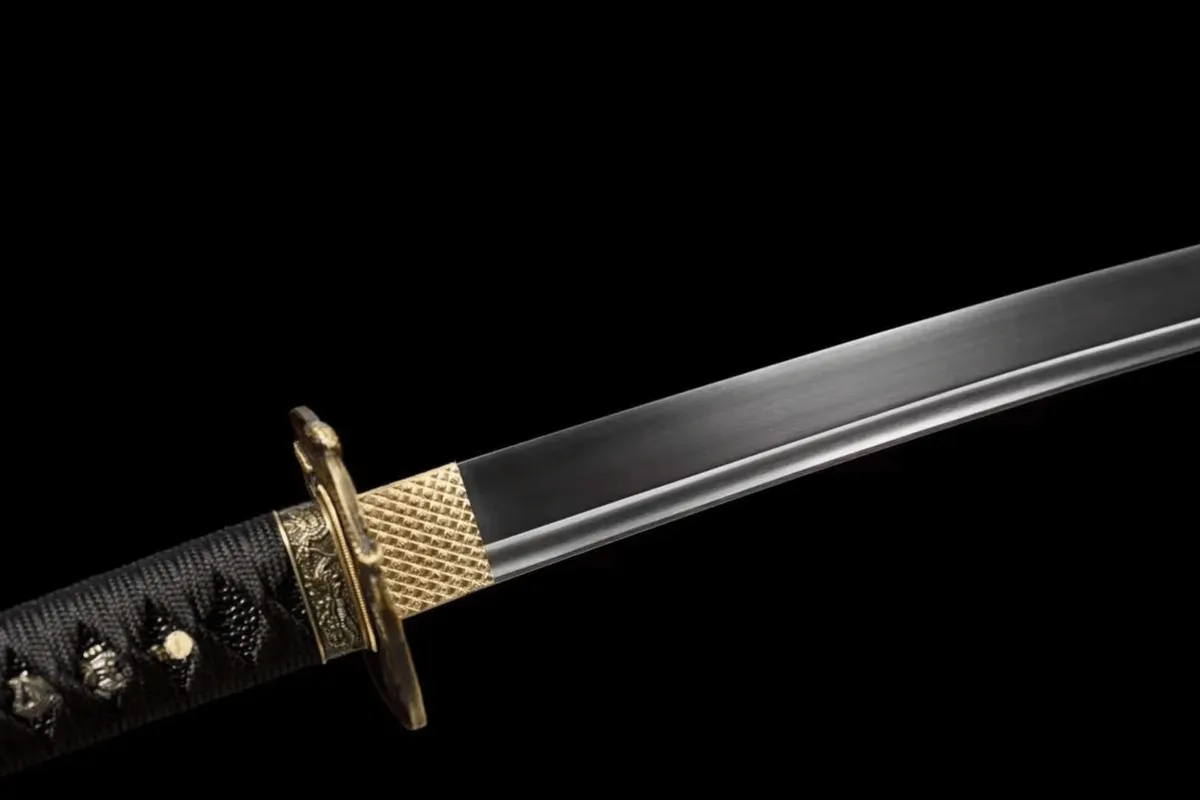
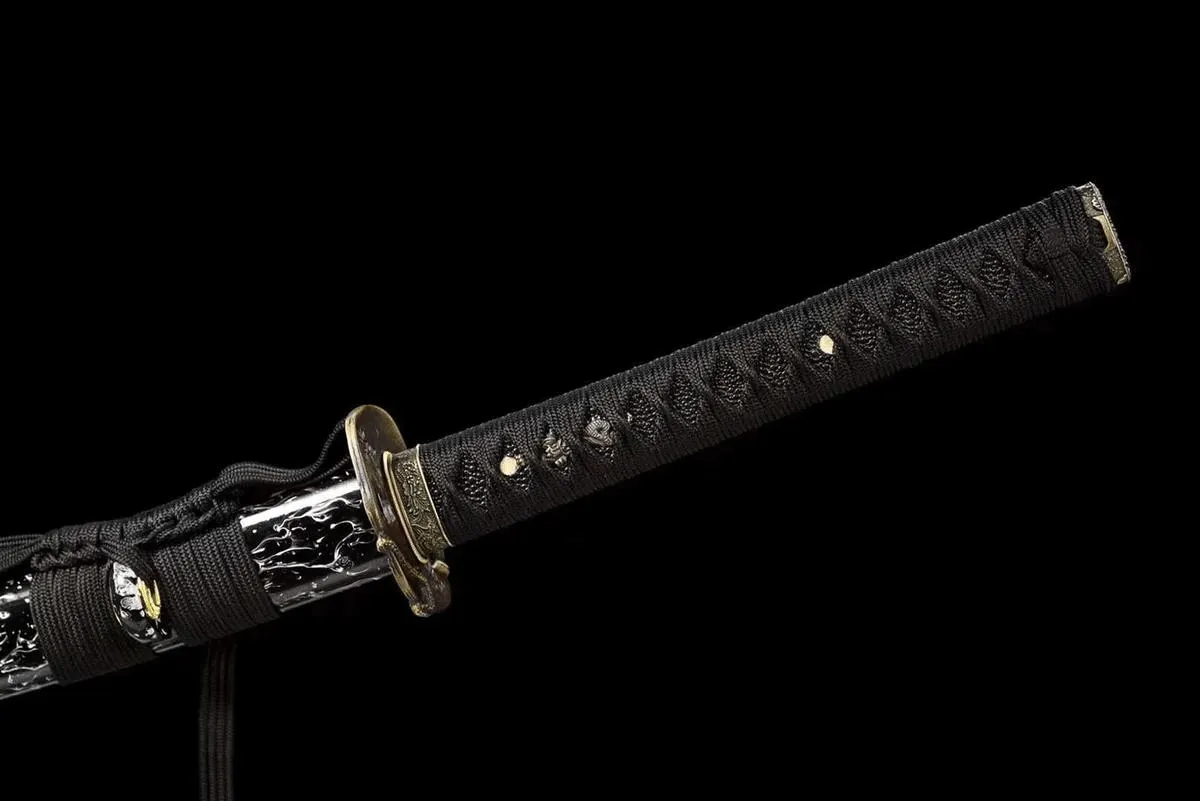
Saru means monkey — quick, cunning, light on its feet — and this katana is themed around that totem of agility. Where some swords are built to feel heavy and grave, the Saru spring steel katana is tuned for finesse: fast in the hand, forgiving on impact, made to move.
Forging & steel
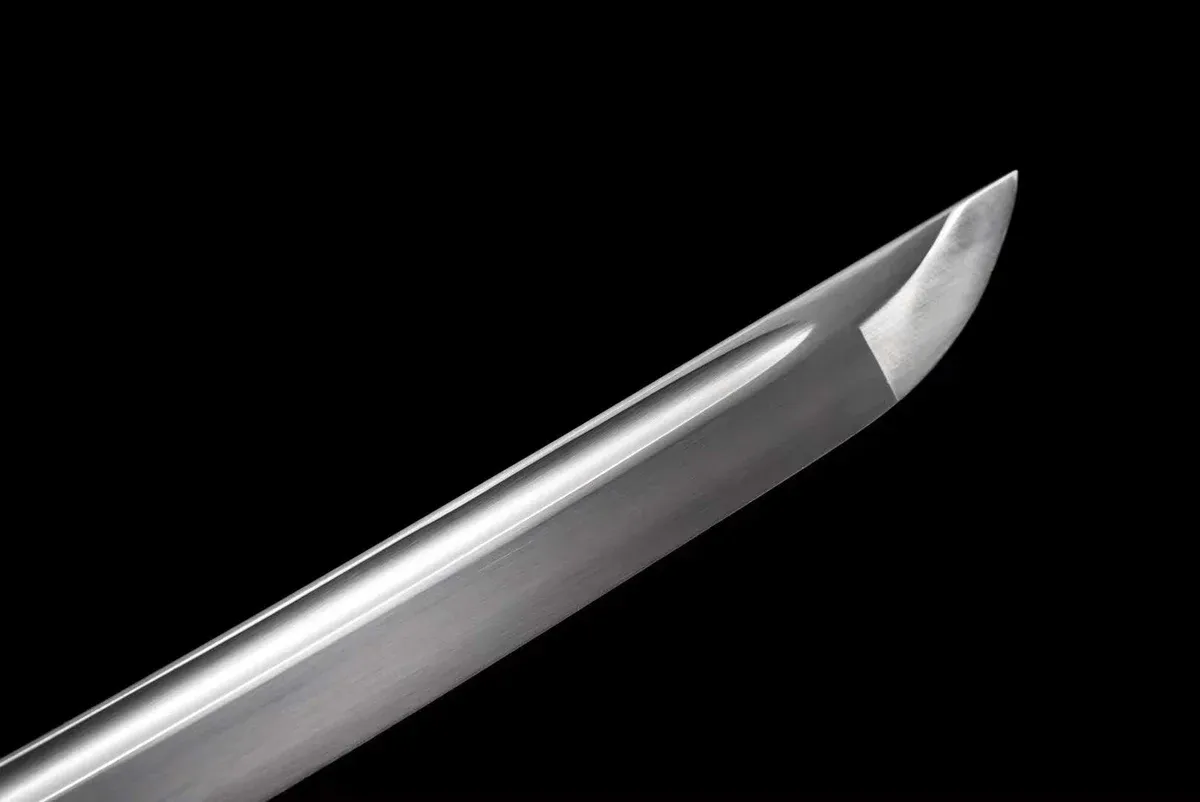
The blade is forged from spring steel, chosen for flexibility and shock resistance — it flexes under stress and returns true rather than taking a set, which makes it forgiving for the practitioner still finding their line. That tolerance is exactly what you want when your angles are not yet perfect, because the steel absorbs a bad cut instead of chipping. A bo-hi groove runs the length of the blade, lightening it while keeping the spine rigid, so the handling stays fluid and precise through fast combinations. It ships sharpened as a functional cutting blade.
Fittings
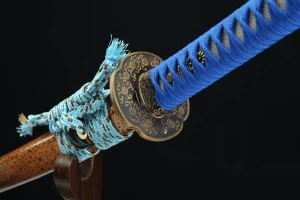
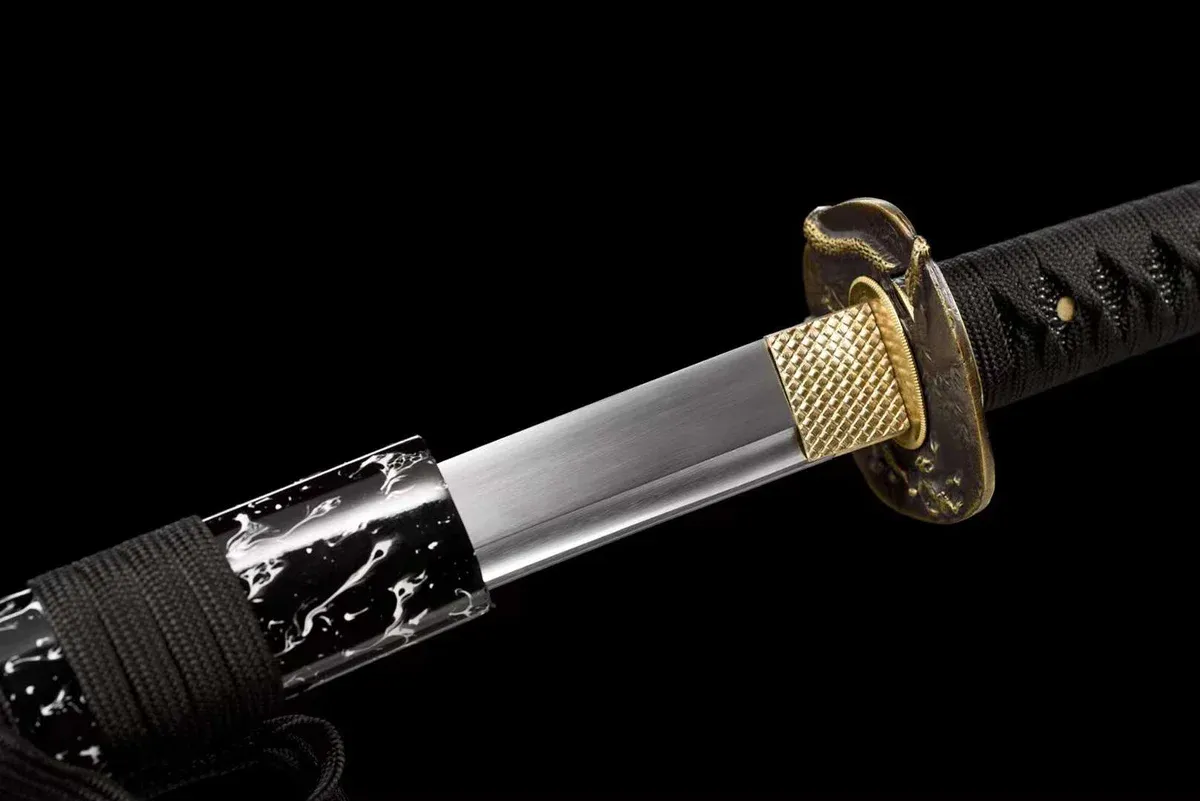
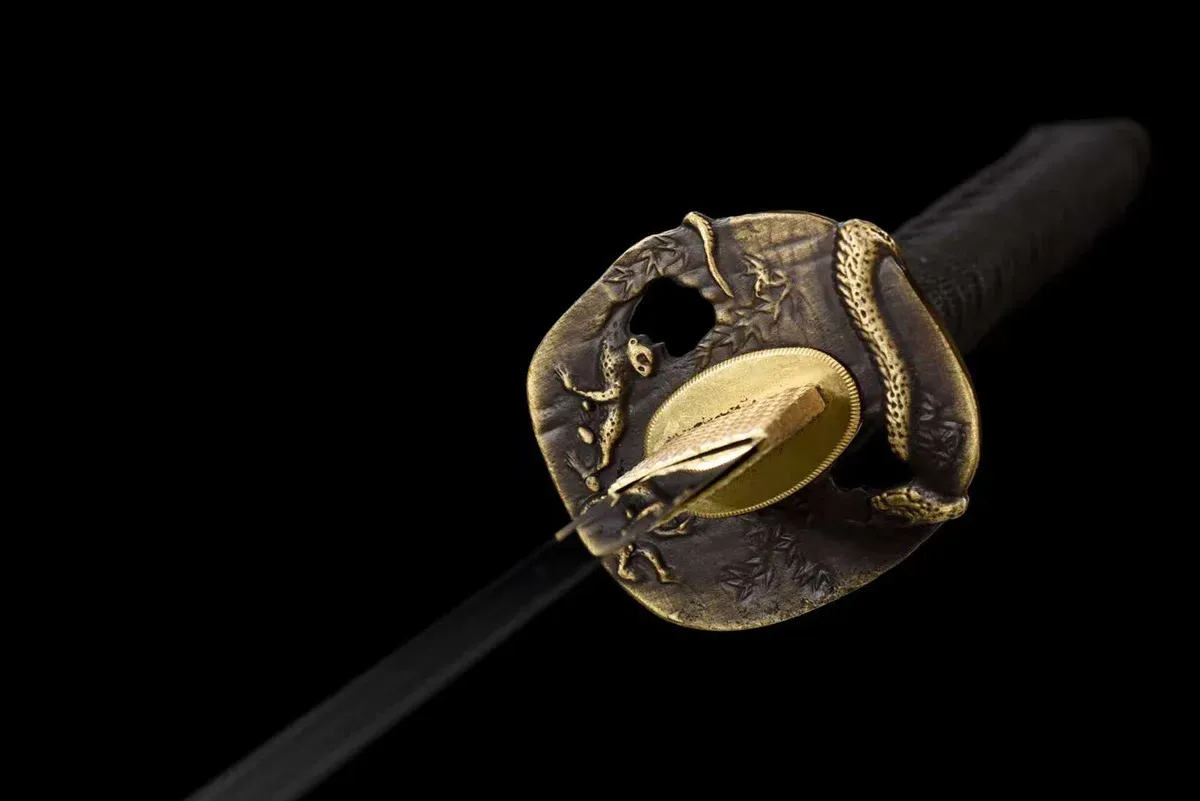
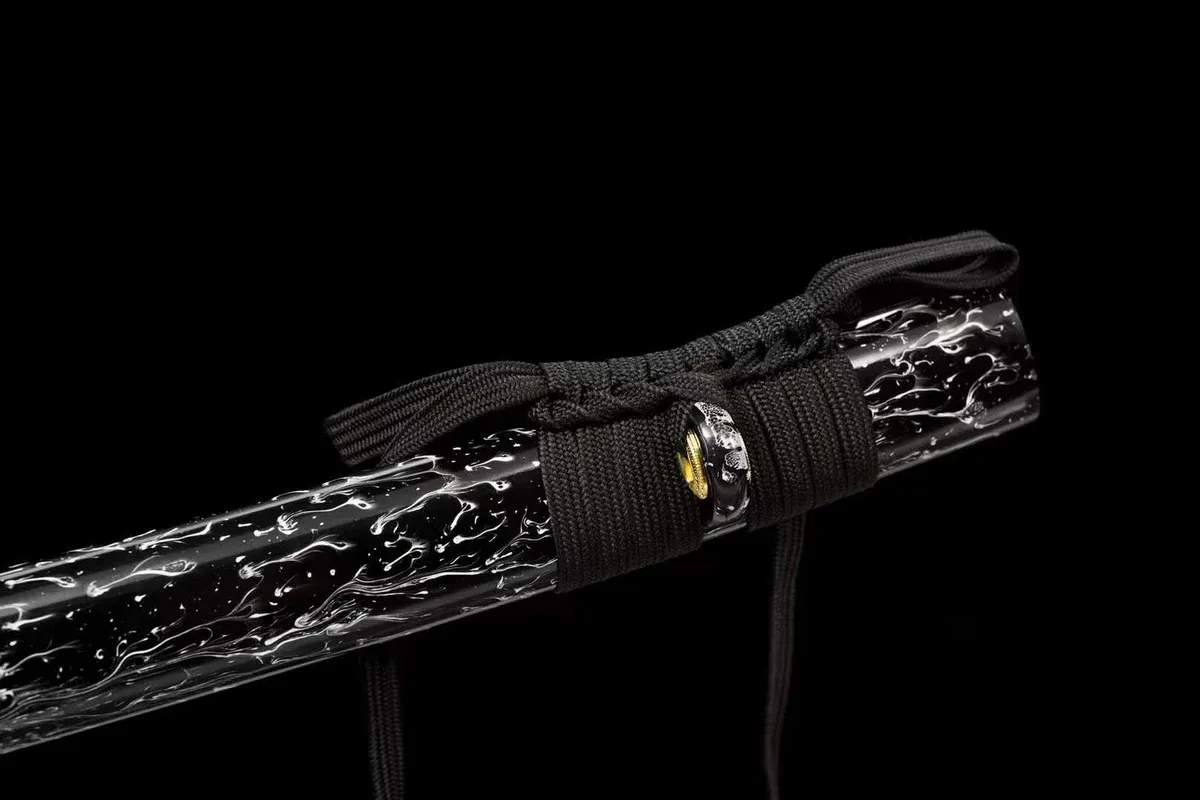
The hand is guarded by a sculpted copper tsuba. The saya is sober black lacquered wood that resists scratches and scuffs, hung with a black sageo for an understated, all-business look. The tsuka wears genuine white shagreen (ray skin) over a copper menuki kit, pinned with two bamboo mekugi for a firm, secure grip that holds through repeated draws.
Specifications
| Blade steel | Spring steel with bo-hi, sharpened |
|---|---|
| Tsuba | Carved copper |
| Saya | Black lacquered wood, black sageo |
| Tsuka | Genuine white shagreen, copper menuki, 2 bamboo mekugi |
Dimensions
| Total length | 103 cm |
|---|---|
| Blade length | 72 cm |
| Blade width | 3.2 cm |
| Blade thickness | 0.7 cm |
| Handle length | 27 cm |
| Weight | 1.2 kg |
Is it battle-ready?
Yes. Spring steel’s flex and shock tolerance make Saru one of the more forgiving cutting blades for early tatami practice, while the sharpened edge keeps it fully functional. Pair it with the Damascus Ten or the white-saya Seppaku, or explore the wider katana range.

 Verified owner