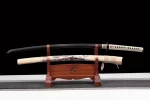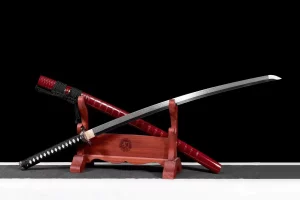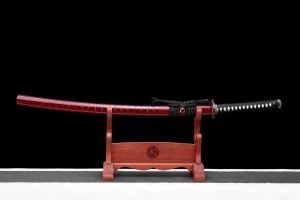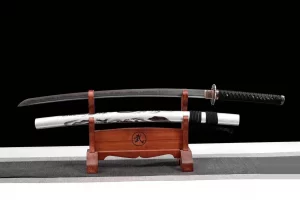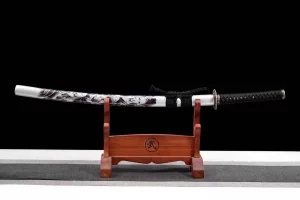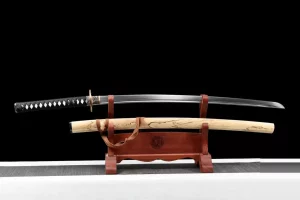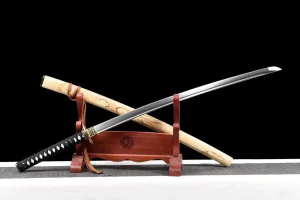
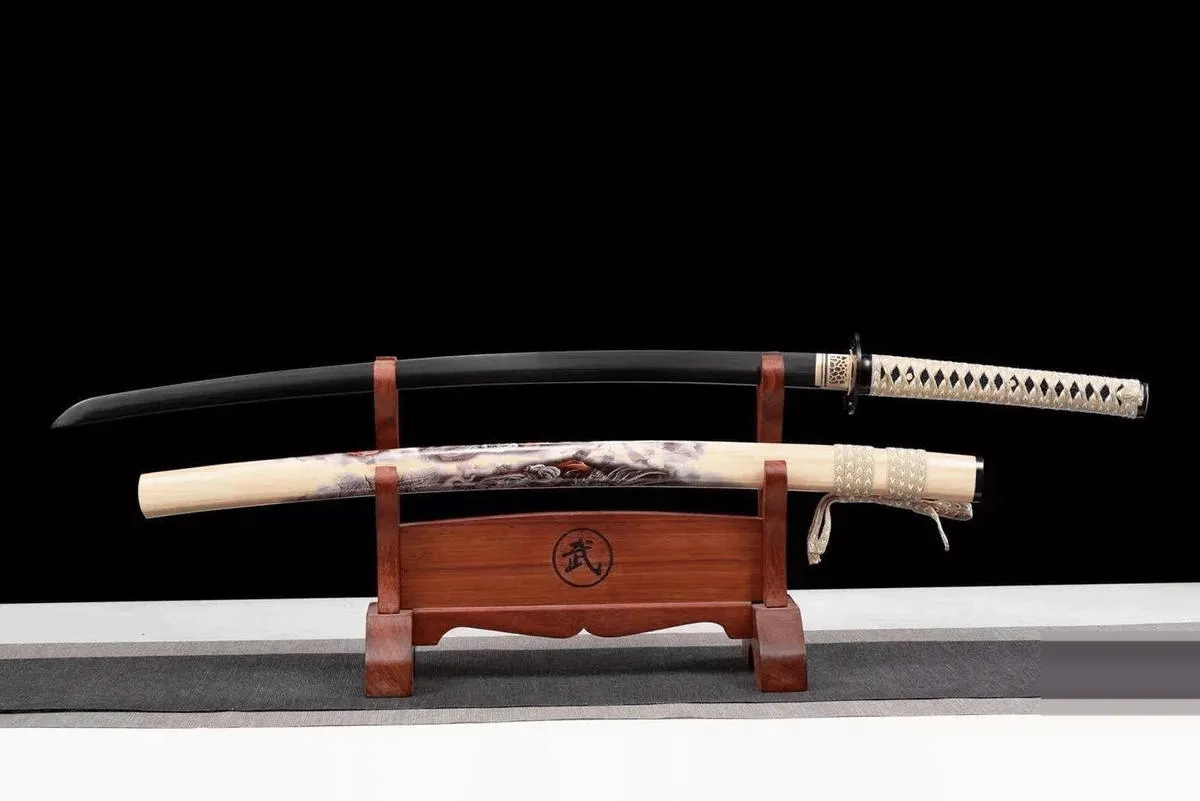
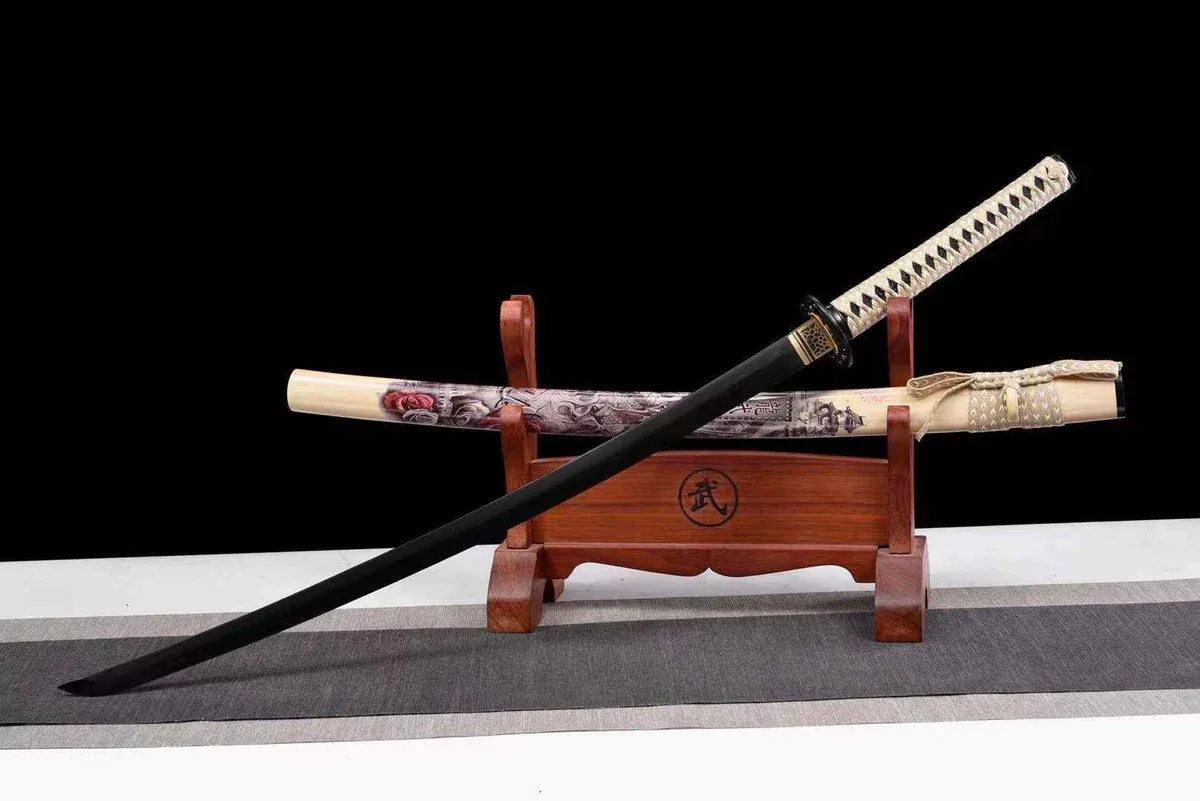
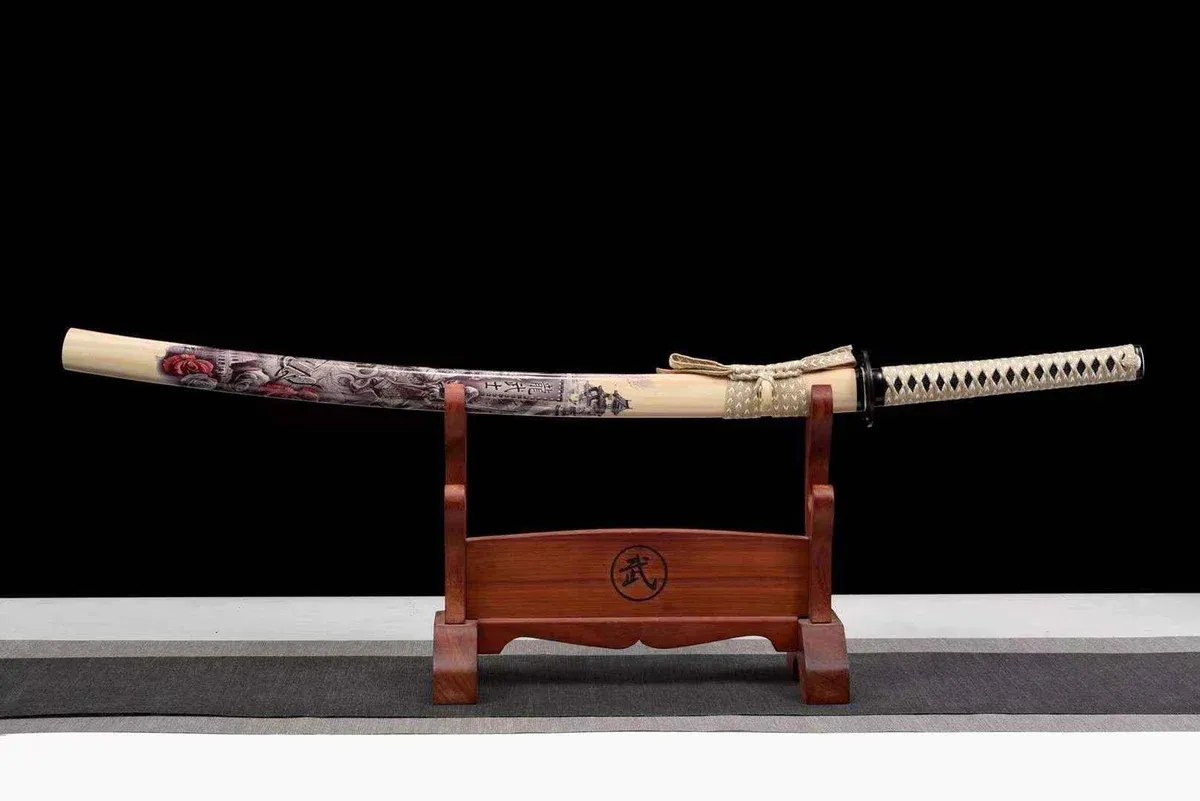
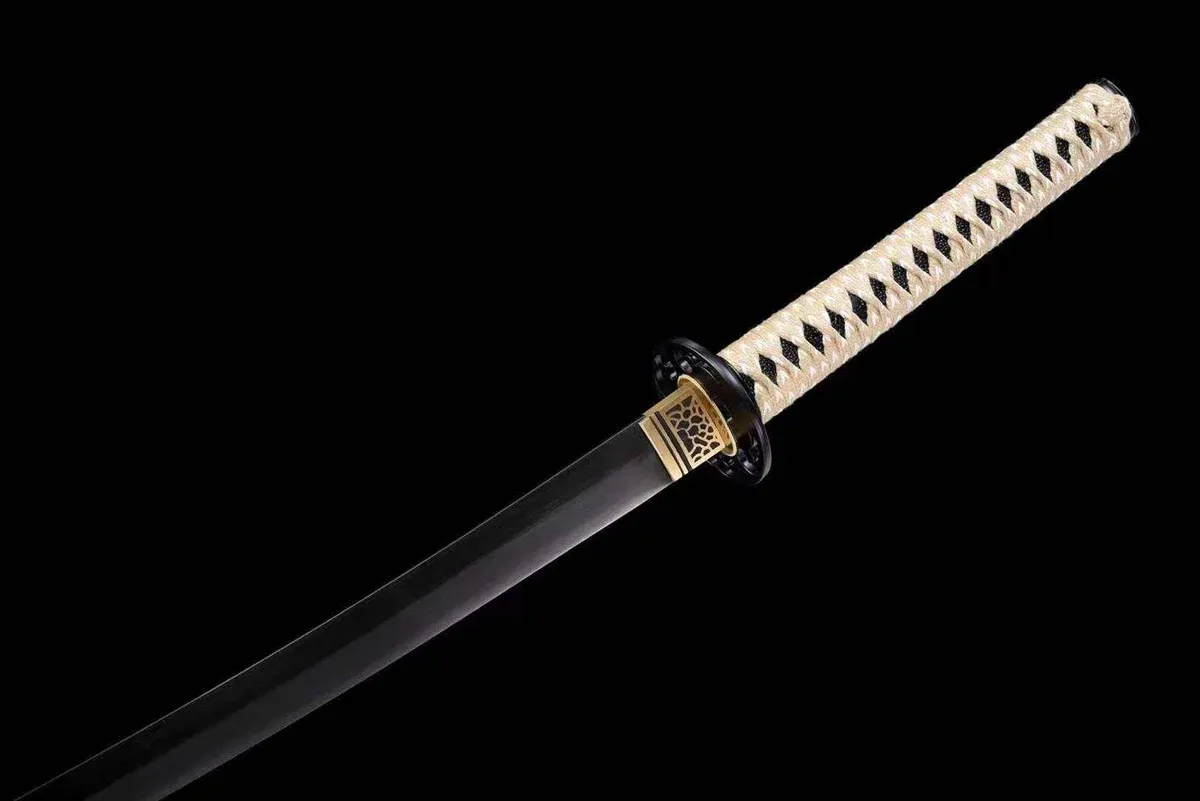
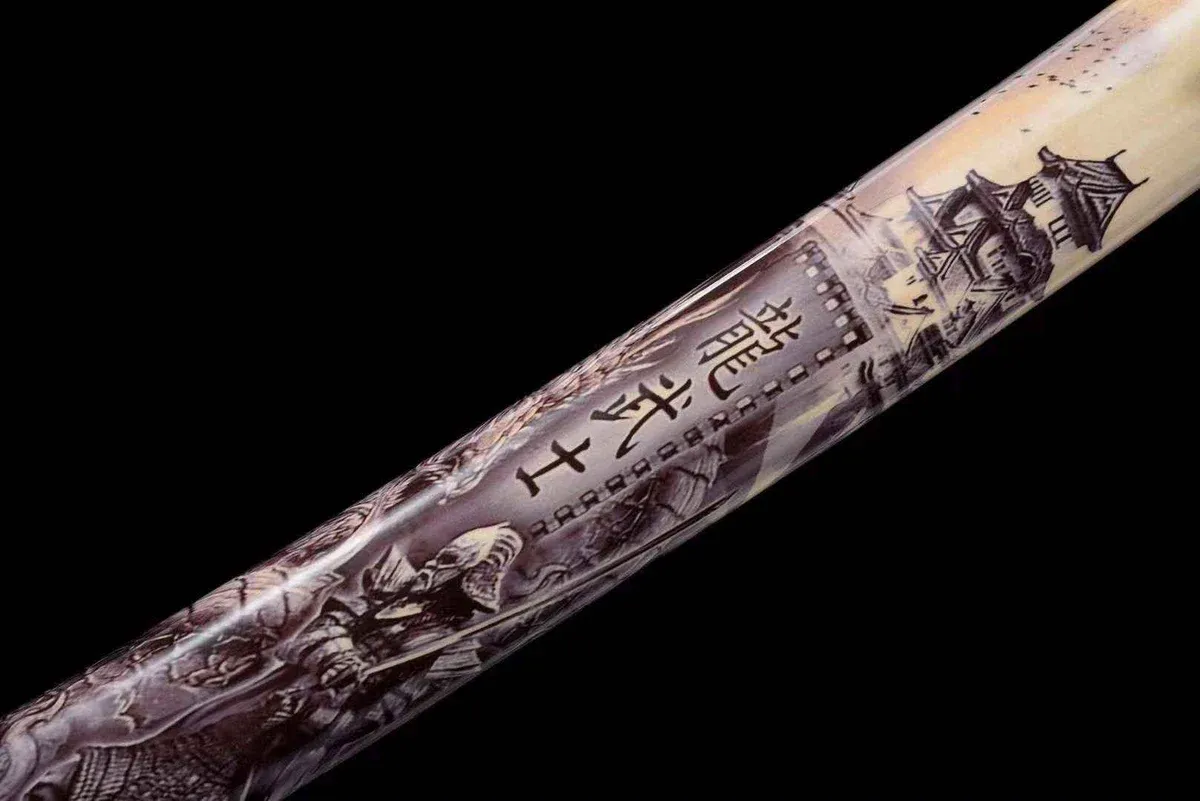
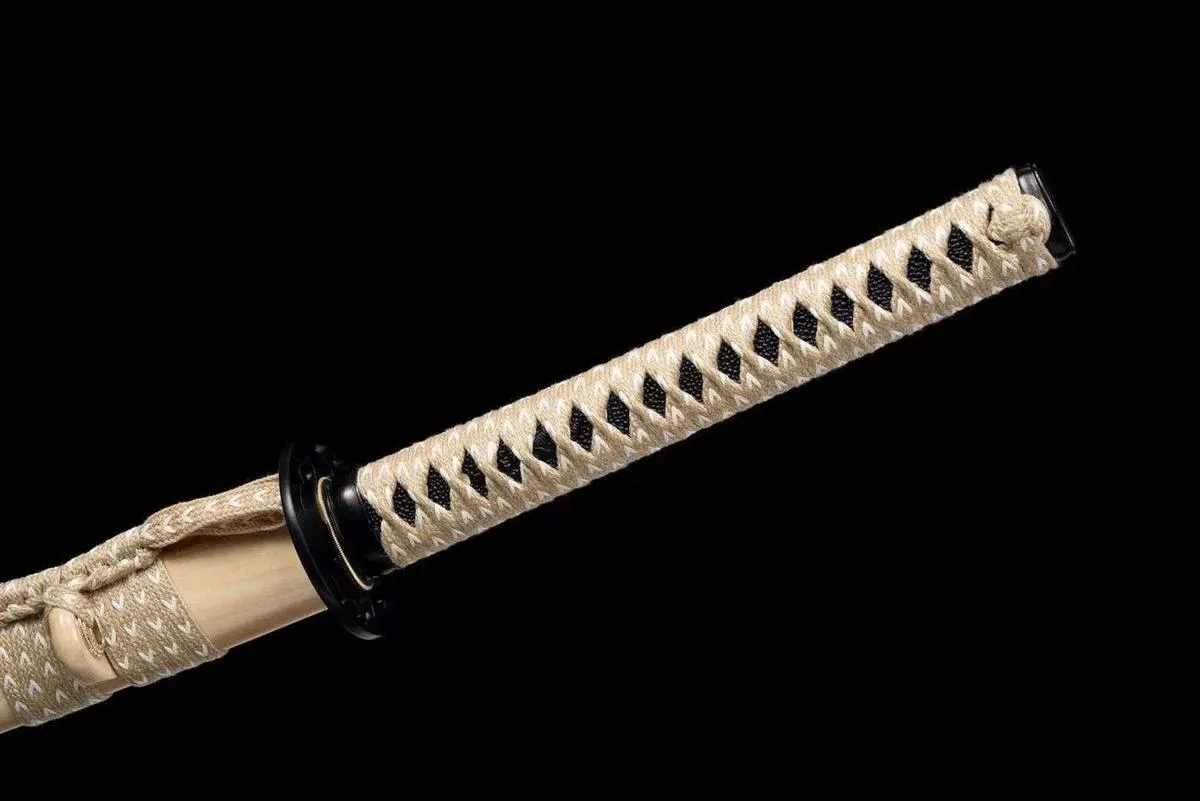
Jin reads as temple — and the Jin carries that quiet, ceremonial character in its mount. The saya is themed on the Edo period, illustrated with historical scenes that turn the scabbard itself into a small piece of storytelling. This is the katana for a beginner on a small budget who wants to discover the form without committing to a master blade.
Forging & Steel
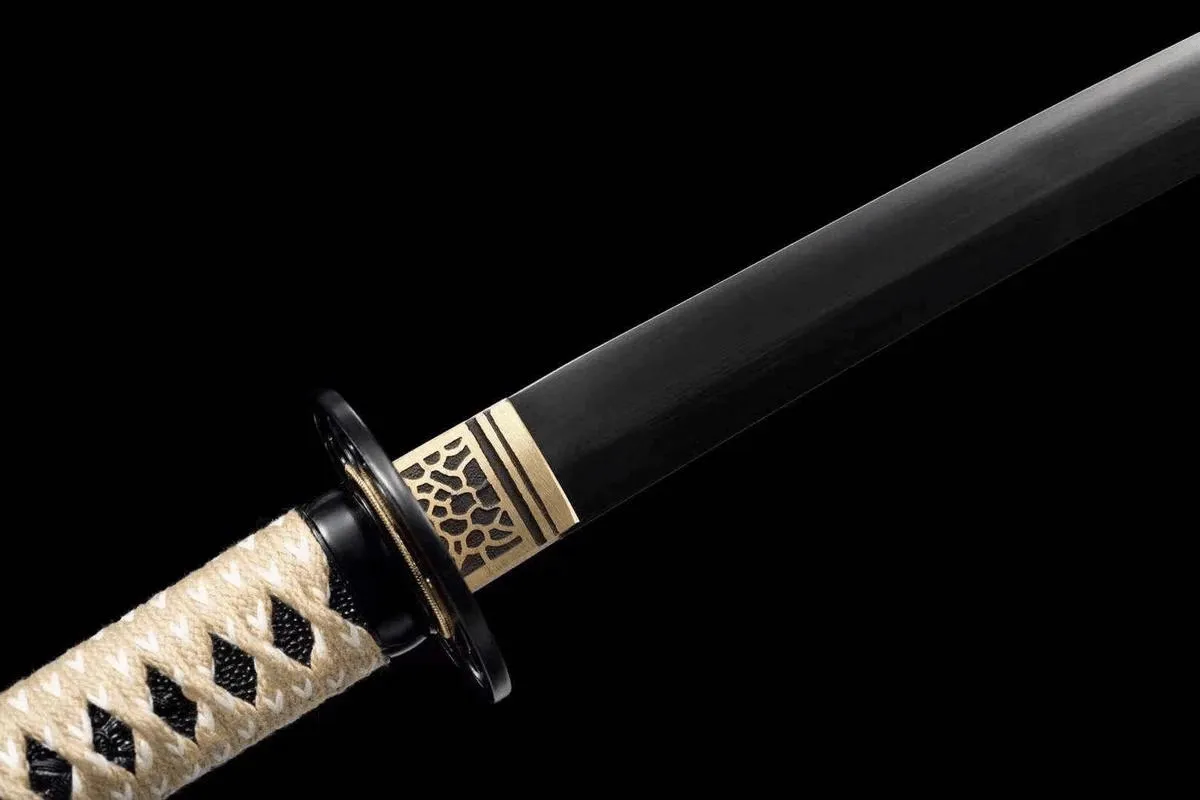
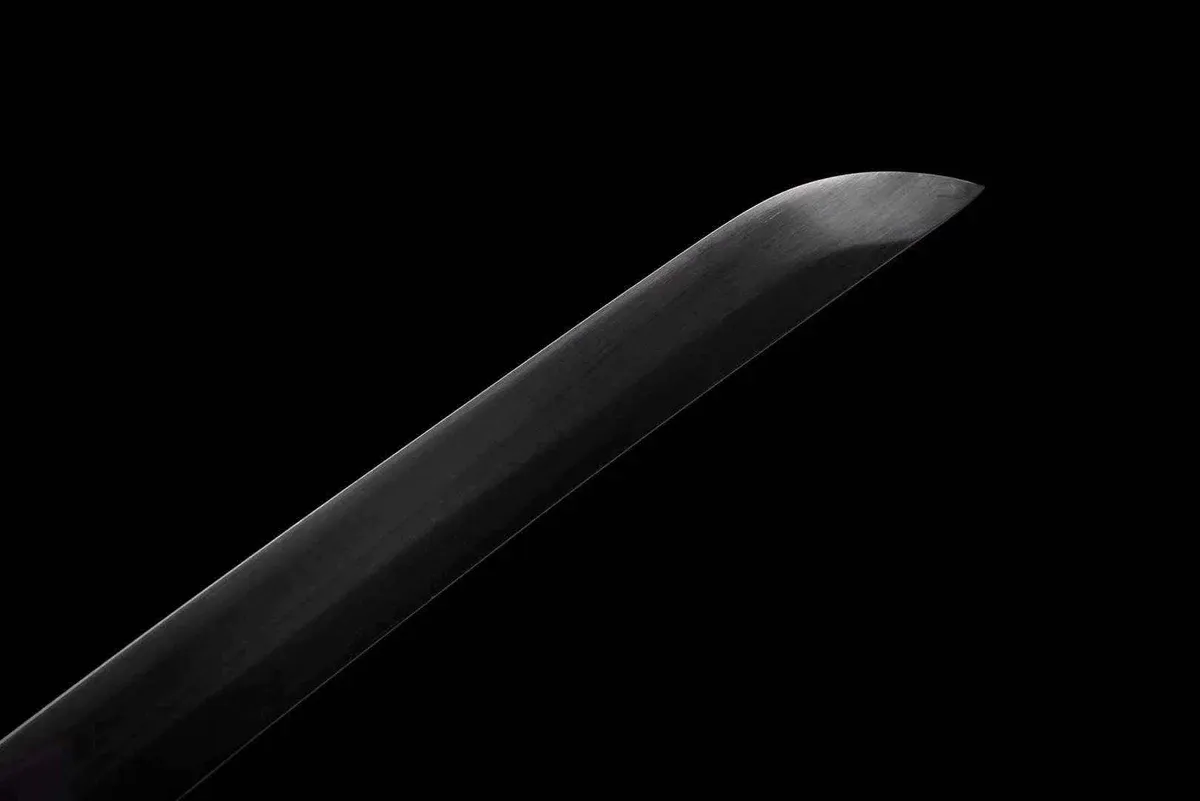
The blade is black manganese steel — tough, low-maintenance and well suited to a first sword. The Jin is positioned more toward the display and starter-collector role than toward hard cutting practice, so it is best handled with care rather than driven through tatami. The black finish keeps maintenance light, asking little of a first-time owner beyond a wipe and a film of oil.
Mount & Fittings
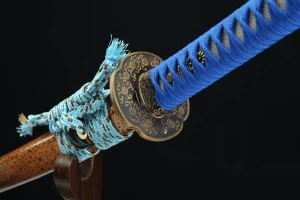
A finely carved iron tsuba sets the period tone, its weight and texture echoing the Edo theme painted down the scabbard, and the handle is wood wrapped in shagreen-imitation leather for a steady, classical grip. The real character of the Jin lives in the saya — the illustrated historical scenes give a starter sword a presence on the shelf that its price would not normally buy, turning a budget blade into a small narrative object that rewards a closer look.
Specifications
| Blade steel | Manganese steel |
|---|---|
| Blade colour | Black |
| Tsuba | Finely sculpted iron |
| Saya | Lacquered wood, Edo-period illustrated scenes |
| Tsuka | Wood, shagreen-imitation leather |
Dimensions
| Total length | 103 cm |
|---|---|
| Blade length | 71 cm |
| Handle length | 26 cm |
| Blade width | 3.2 cm |
| Blade thickness | 0.75 cm |
Usage
The Jin is best understood as a starter collector’s and decorative piece — an affordable way into the world of the katana, leaning toward display rather than cutting. For a sharper entry-level option see the Katana Yoru, or move up to the folded steel of the Katana Midori no yoru. The full katana collection spans entry to master.

 Verified owner