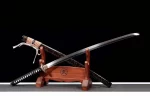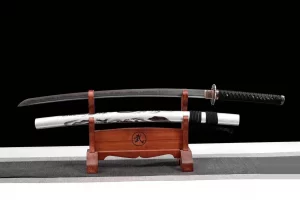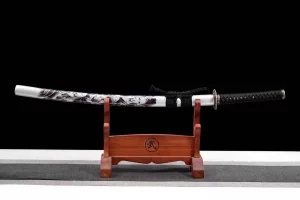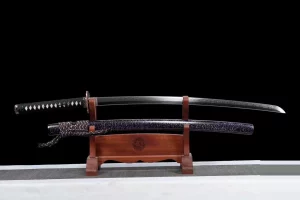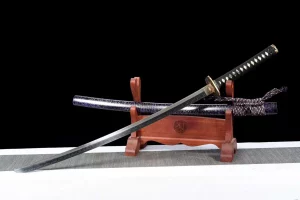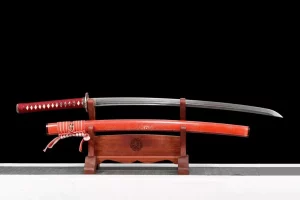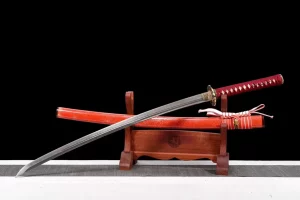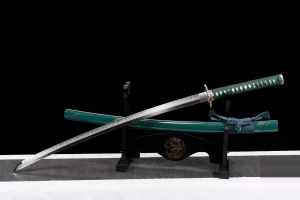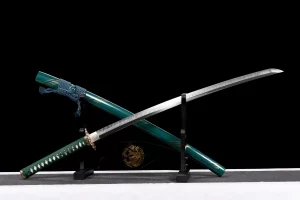
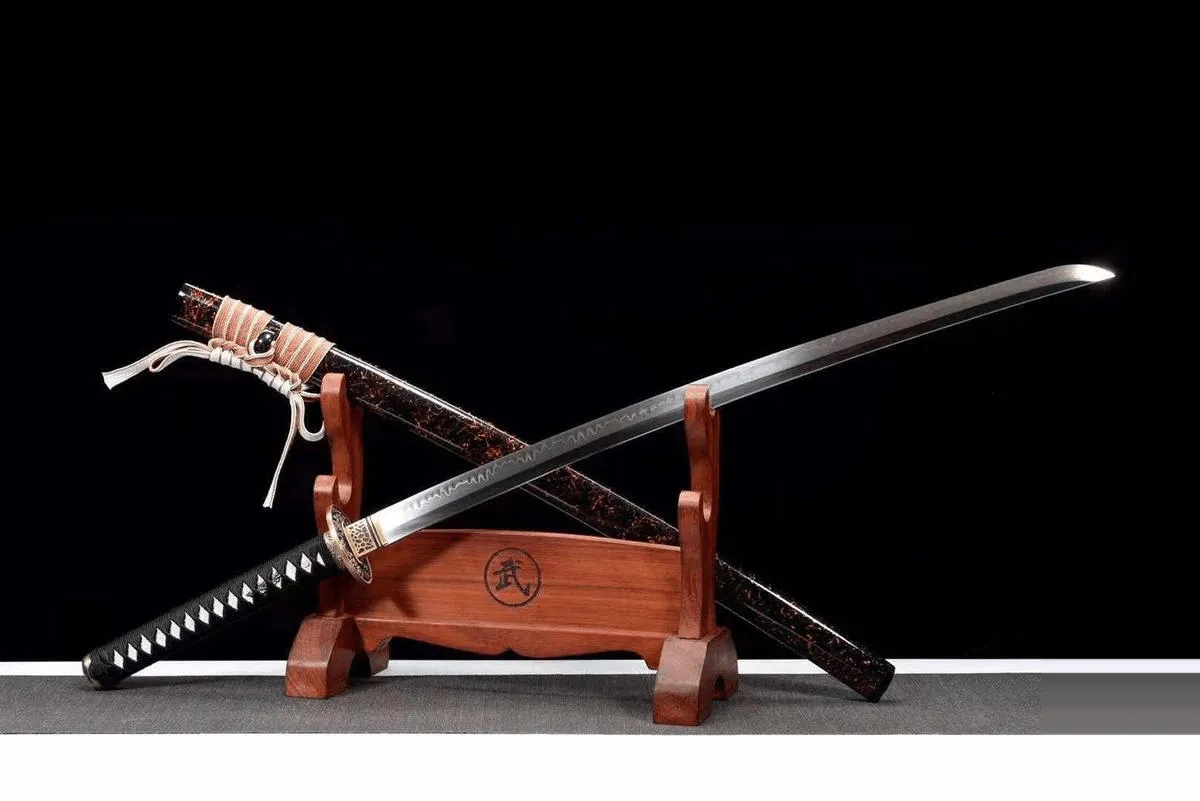
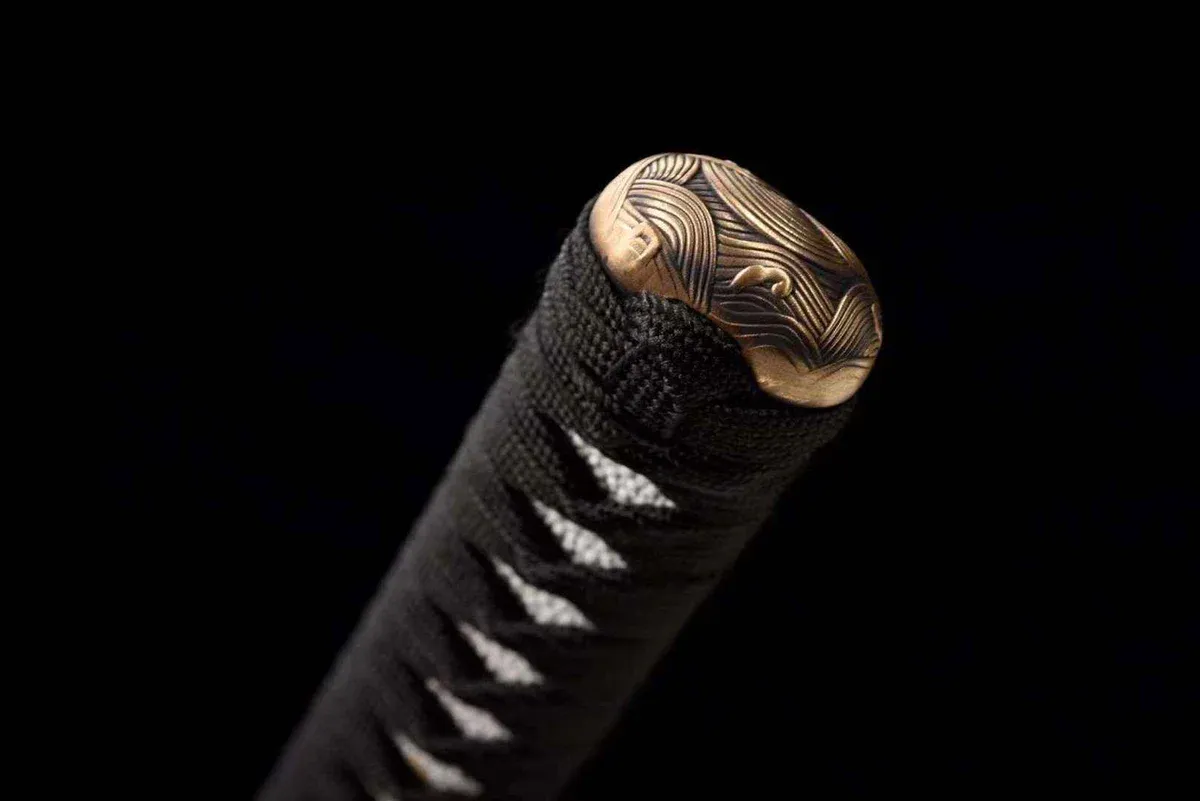
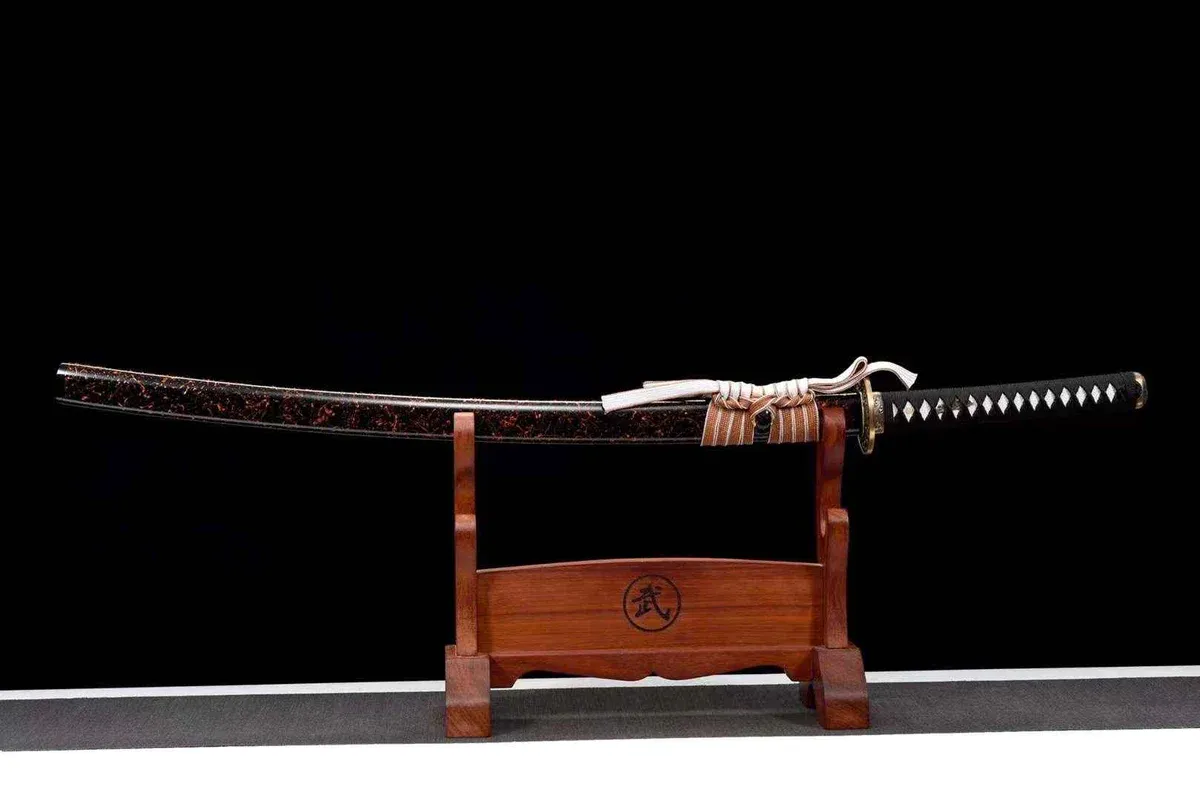
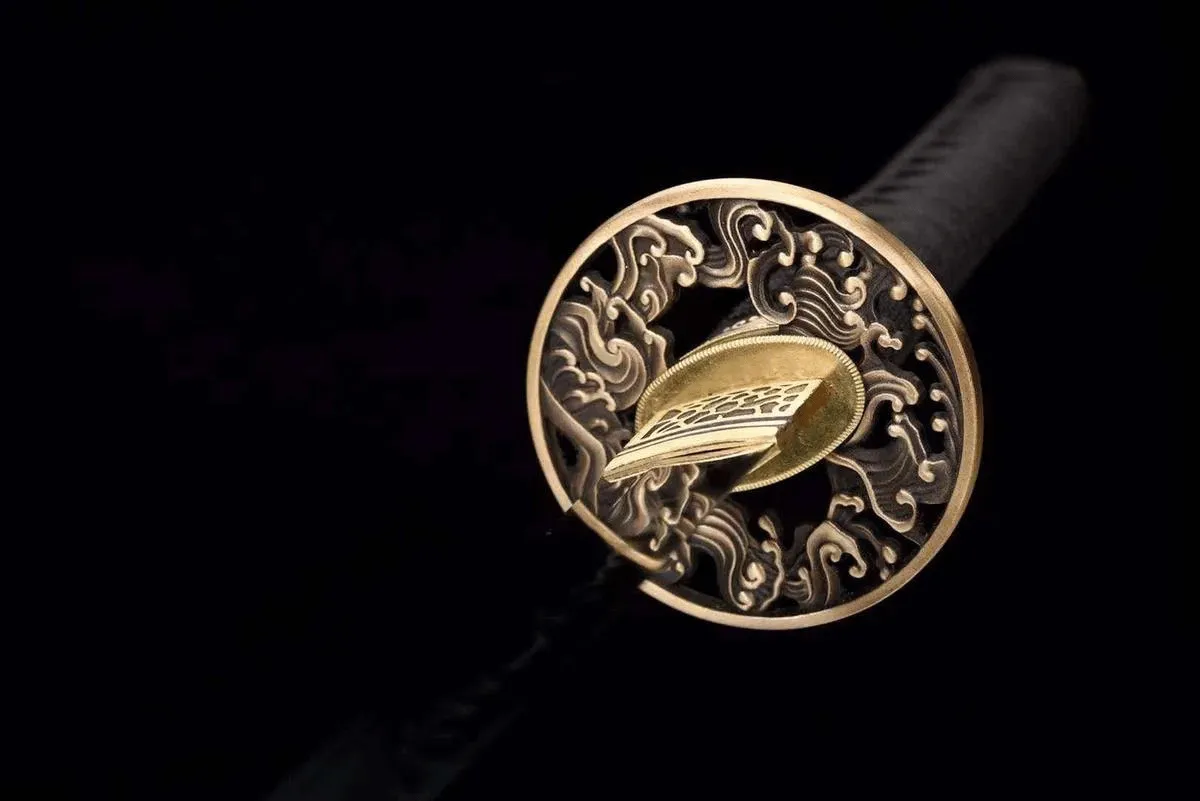
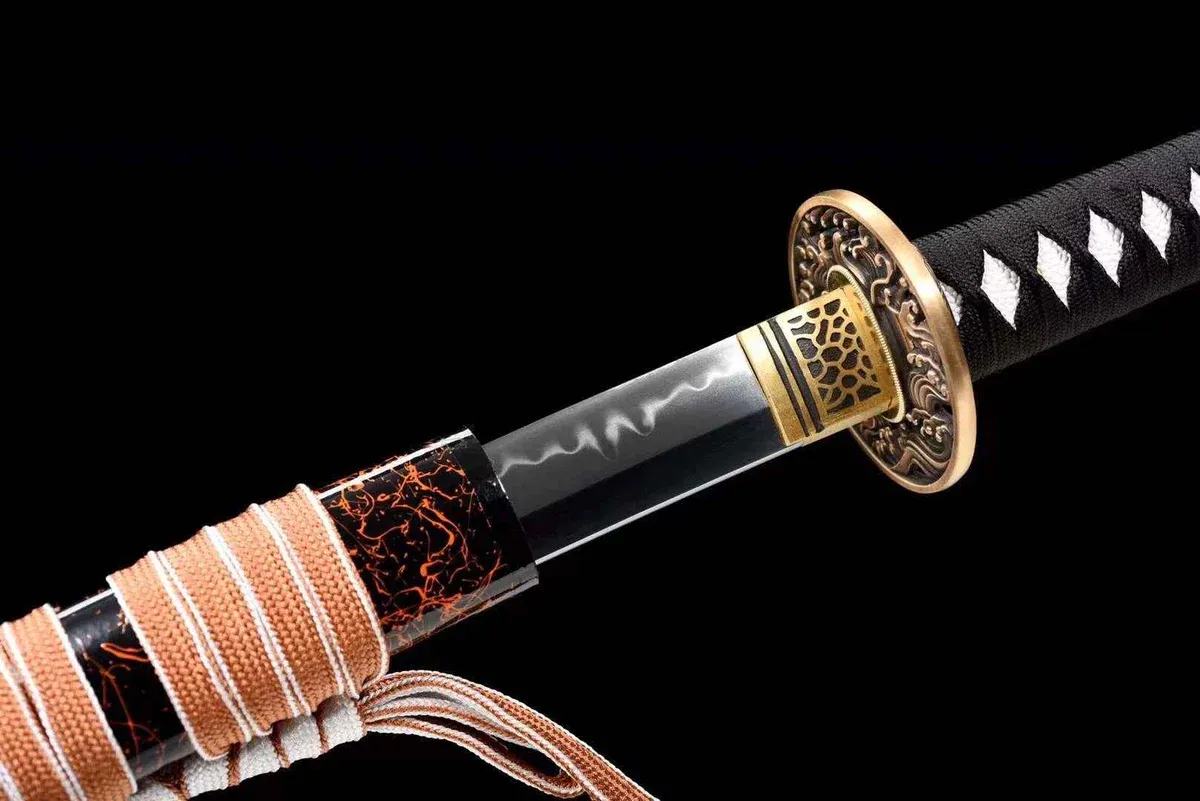
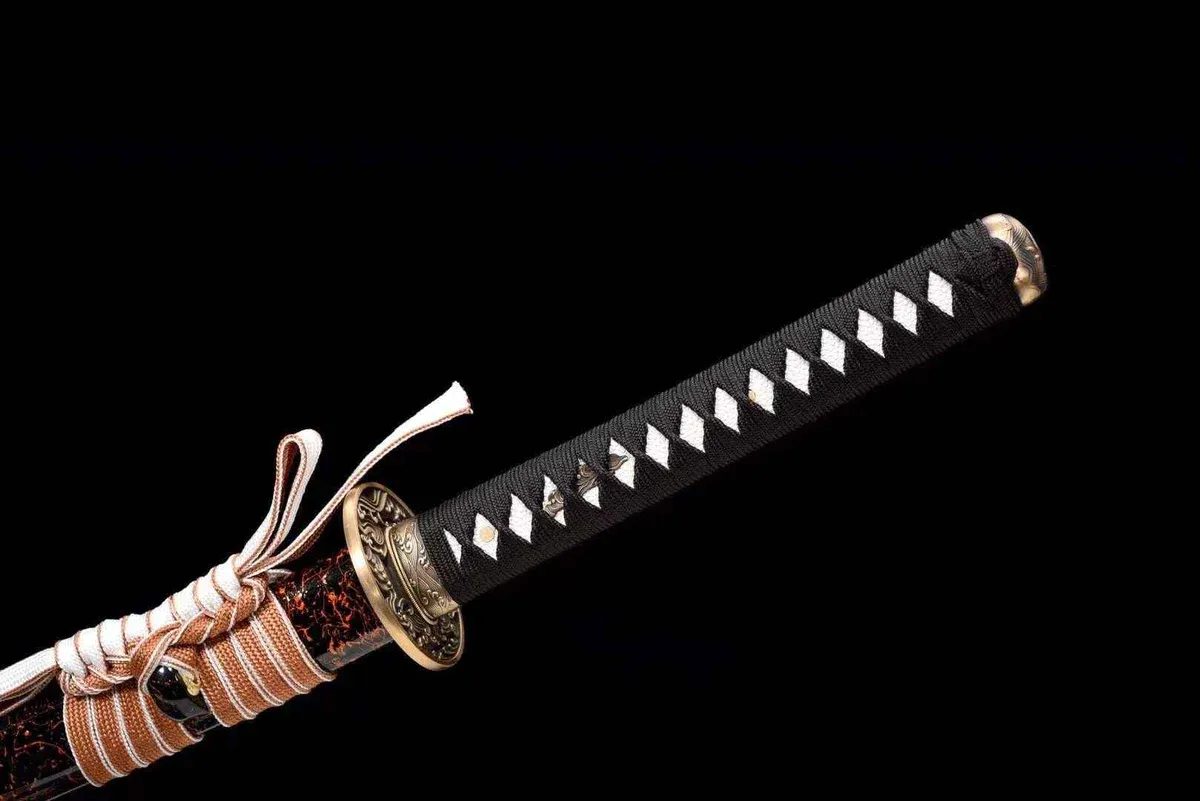
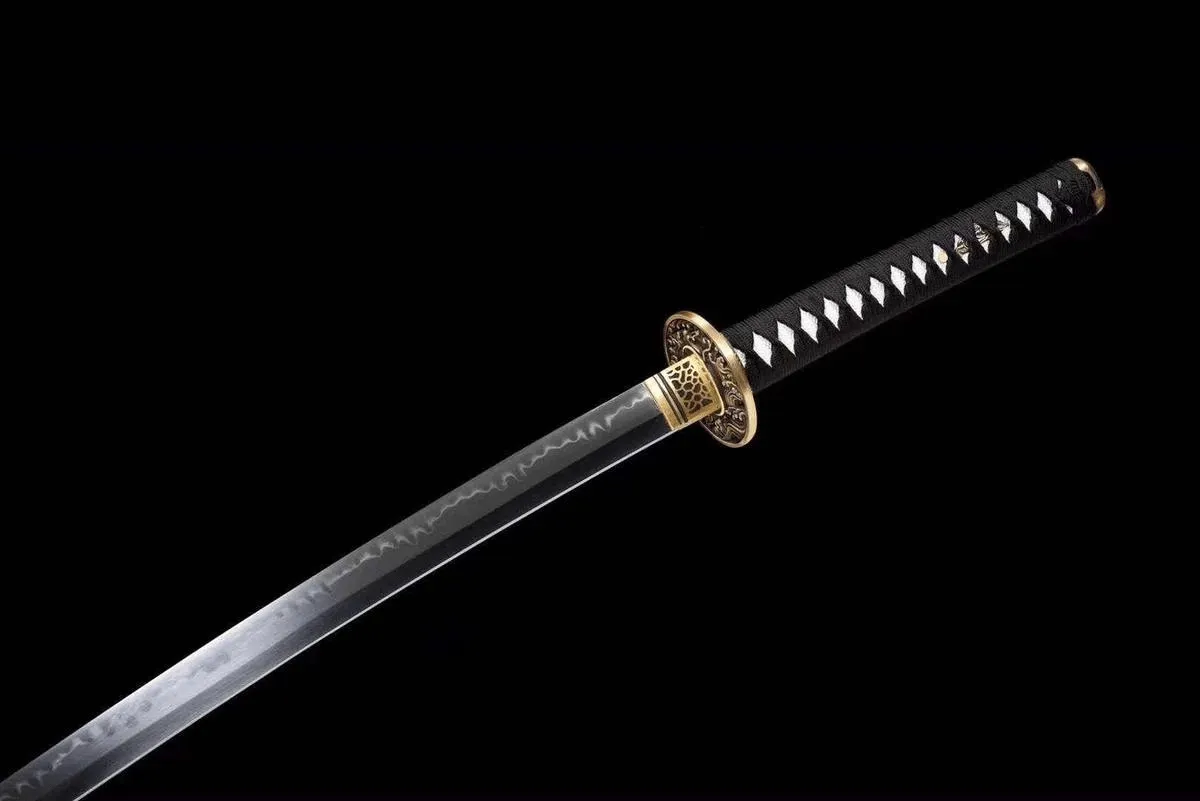
Ōchō (王朝) means dynasty — the long, noble line of an imperial house. This katana carries that weight of bearing: a mirror-polished blade and a Great Wave of Kanagawa cast into the guard, made to add a note of Japanese nobility to a room or a stand.
Forging & Steel
The Ōchō is forged from T10 tool steel and brought to a full mirror polish, so the surface reads like still water and the hamon stands out crisp against it. Differential hardening gives the blade a hard, edge-holding cutting surface over a tougher, more forgiving spine — the classic balance that lets a T10 sword take a real cut without snapping. The polish is cosmetic, but the geometry beneath it is functional. Maintenance follows any carbon blade: a thin film of oil after handling keeps the mirror surface and the hamon free of spotting. The 0.7 cm spine keeps the sword nimble in the draw without giving up the mass a clean tatami cut needs.
Fittings & Mounts
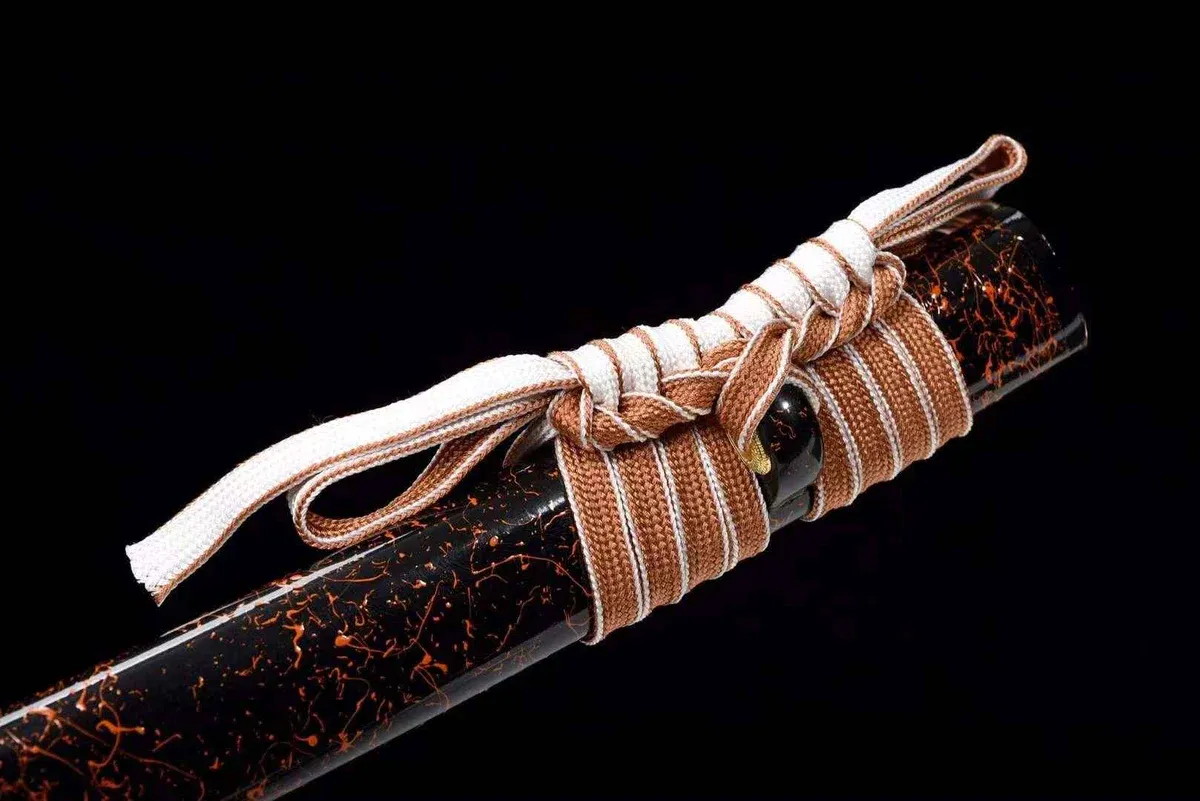
The standout fitting is a finely carved brass tsuba depicting Hokusai’s Great Wave of Kanagawa, a long-standing symbol of strength and endurance. The saya is lacquered wood, and the solid-wood tsuka is wrapped in stingray (ray-skin) leather for grip.
Specifications
| Blade steel | T10 steel with hamon, mirror-polished |
|---|---|
| Blade color | Gray (natural steel) |
| Tsuba | Finely carved brass (Great Wave of Kanagawa) |
| Saya | Lacquered wood |
| Tsuka | Stingray (ray-skin) leather over solid wood |
Dimensions
| Total length | 103 cm |
|---|---|
| Blade length | 71 cm |
| Handle length | 26 cm |
| Blade width | 3.2 cm |
| Blade thickness | 0.7 cm |
Is it battle-ready?
Yes. The differentially hardened T10 blade is sharpened and functional, which makes the Ōchō a sound choice for a serious beginner starting tameshigiri — or a striking display piece if you prefer it on the wall. Compare it with the T10 Katana Nami and the folded T10 Katana Ōkami in the full katana collection.

 Verified owner