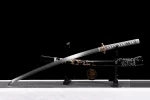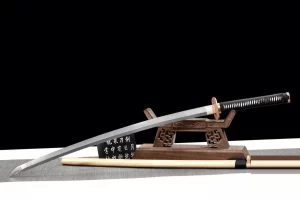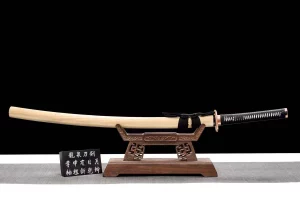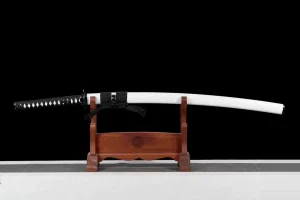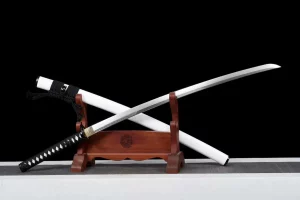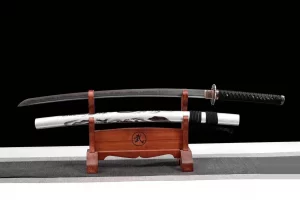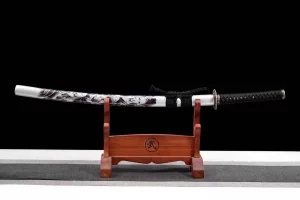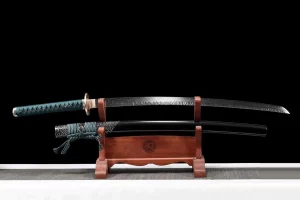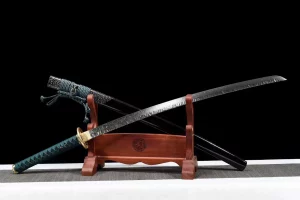
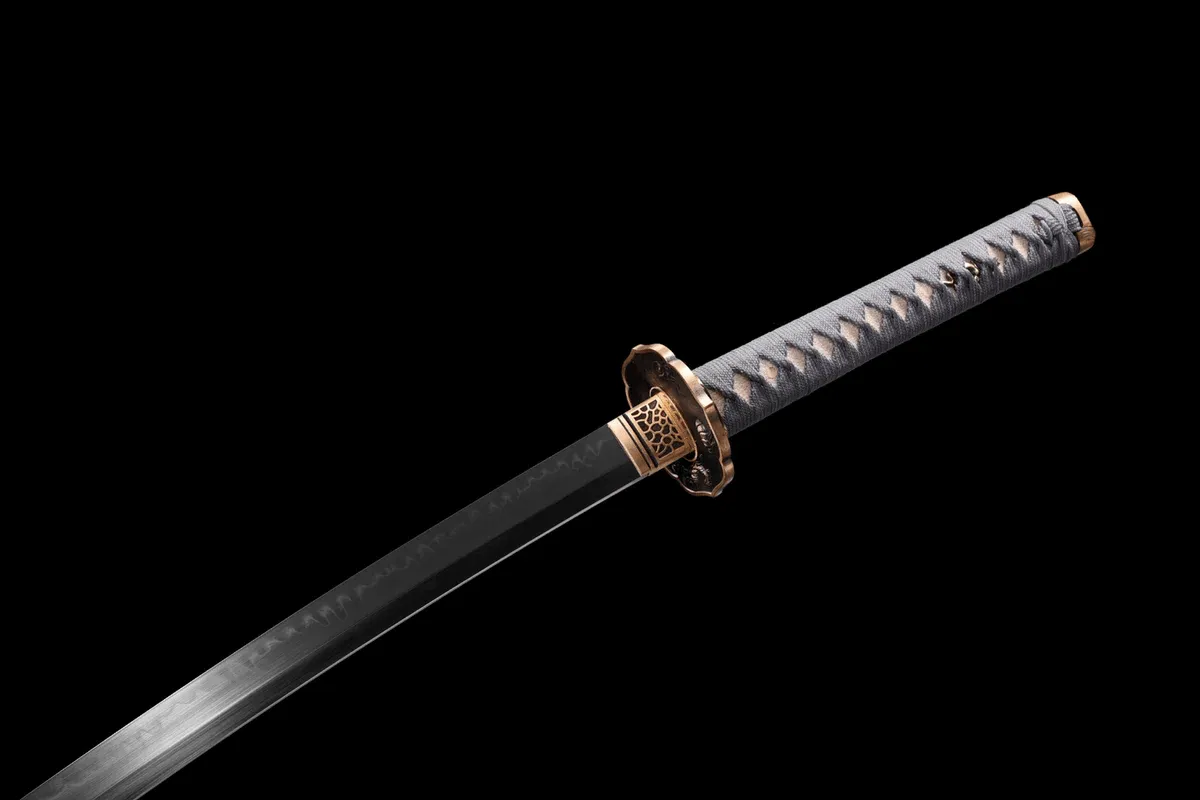
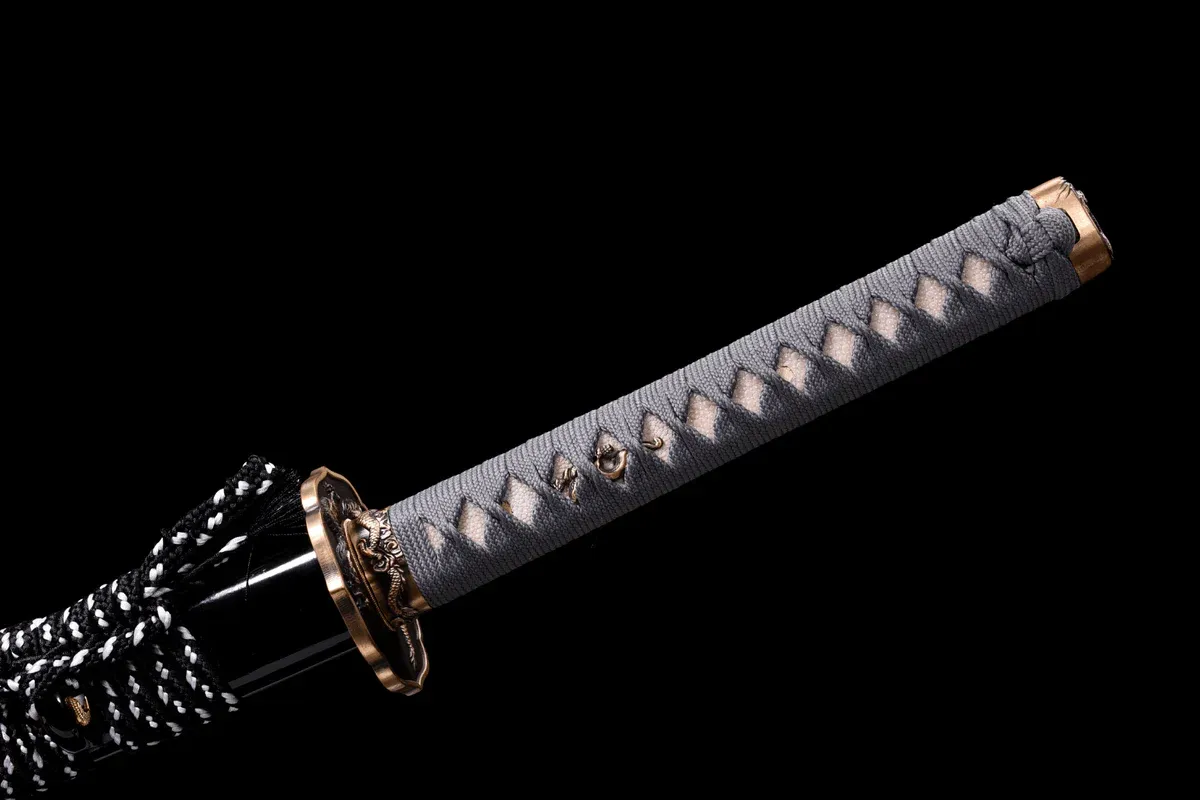
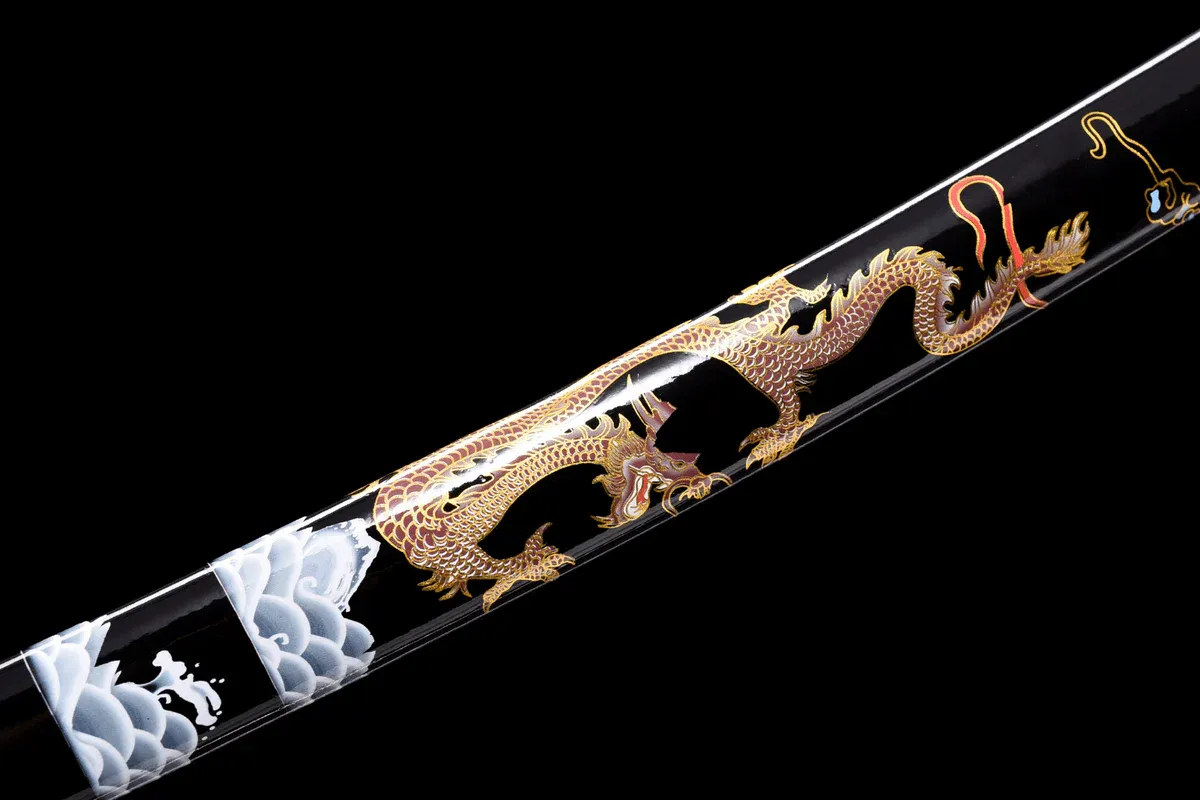
Nami (波) means wave — the breaking sea the old painters treated as raw, unbreakable power. This katana is forged in that spirit: a blade meant to flow and absorb shock the way water does, then bite clean through the cut.
Forging & Steel
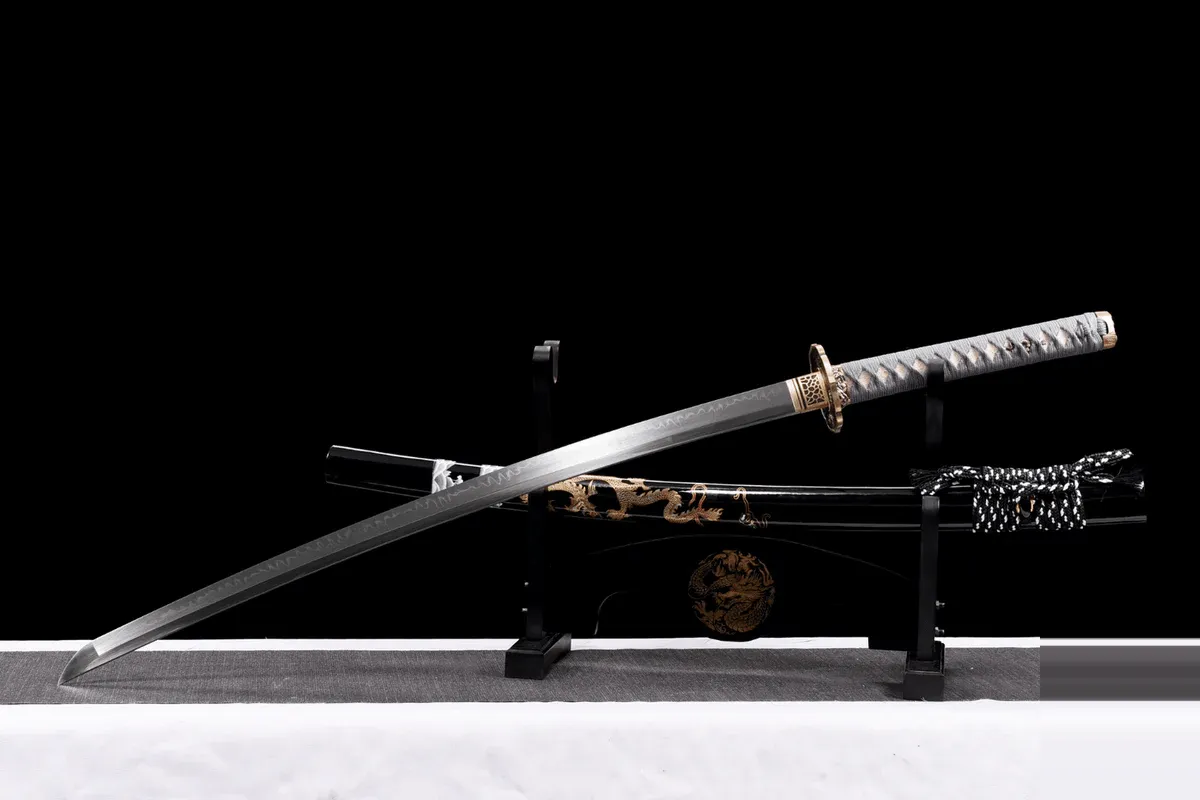
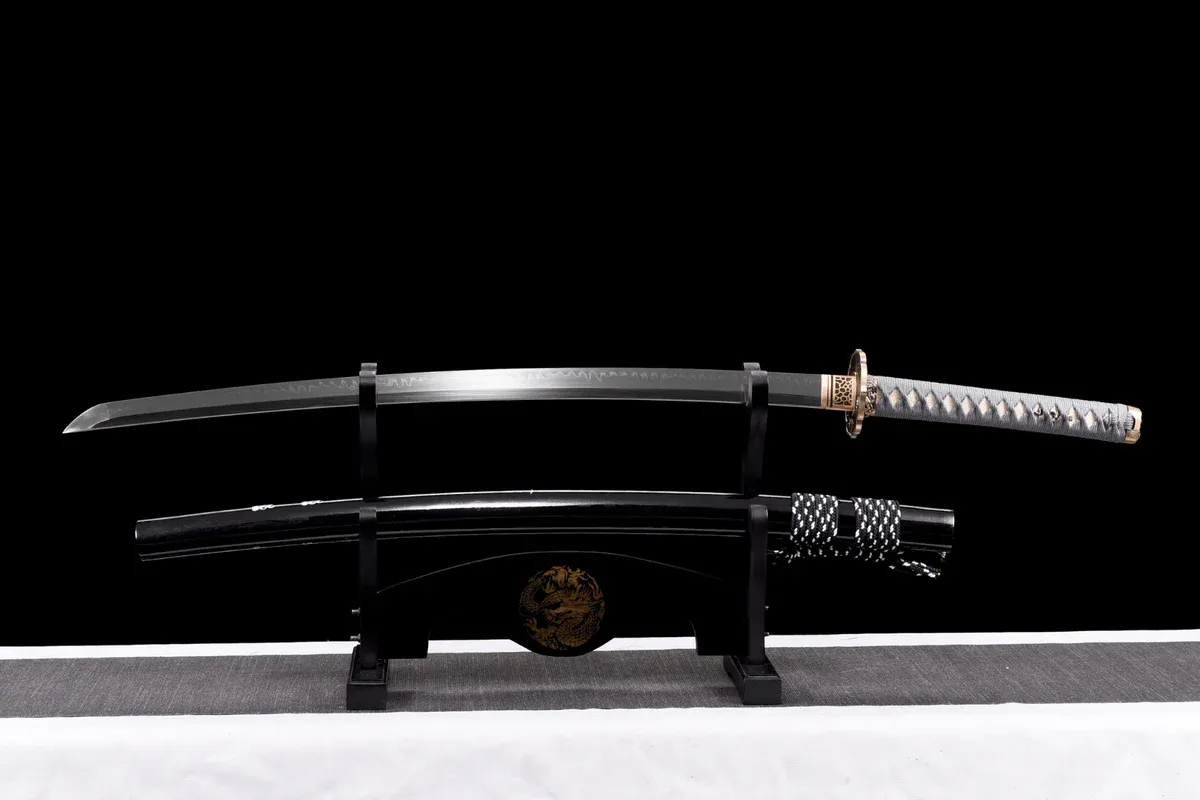
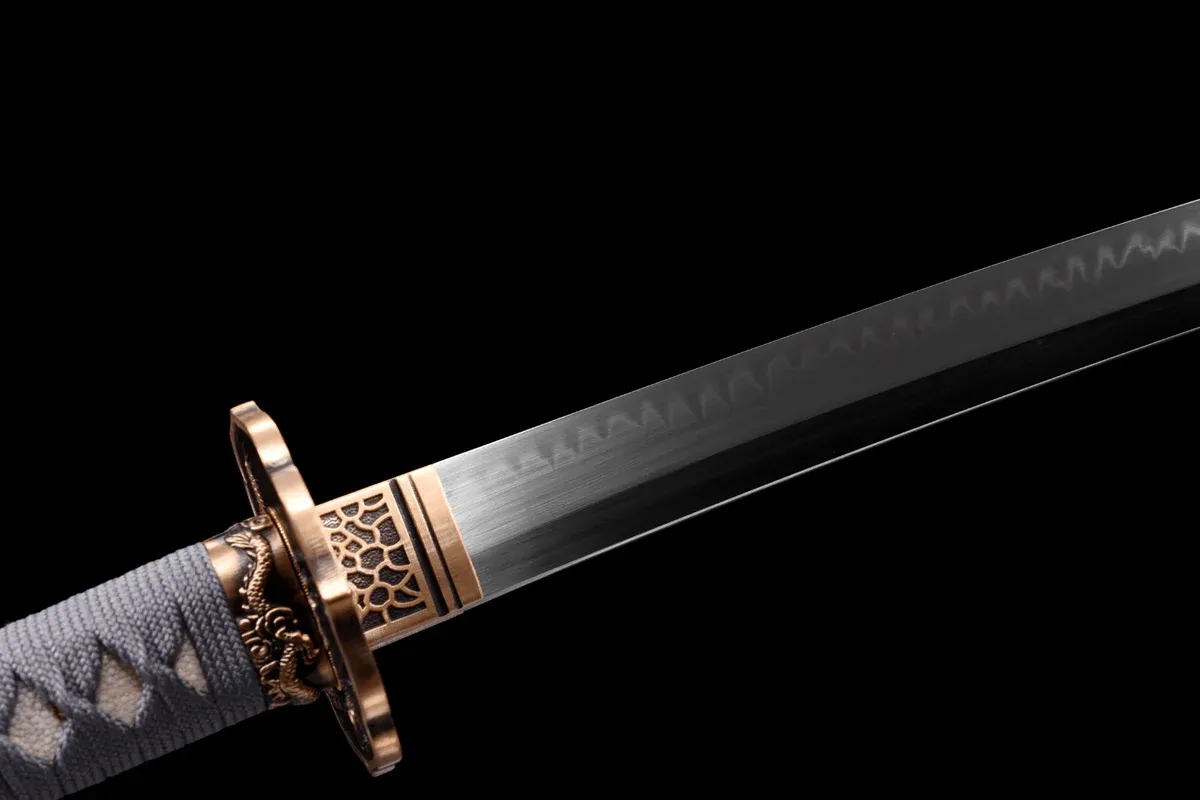
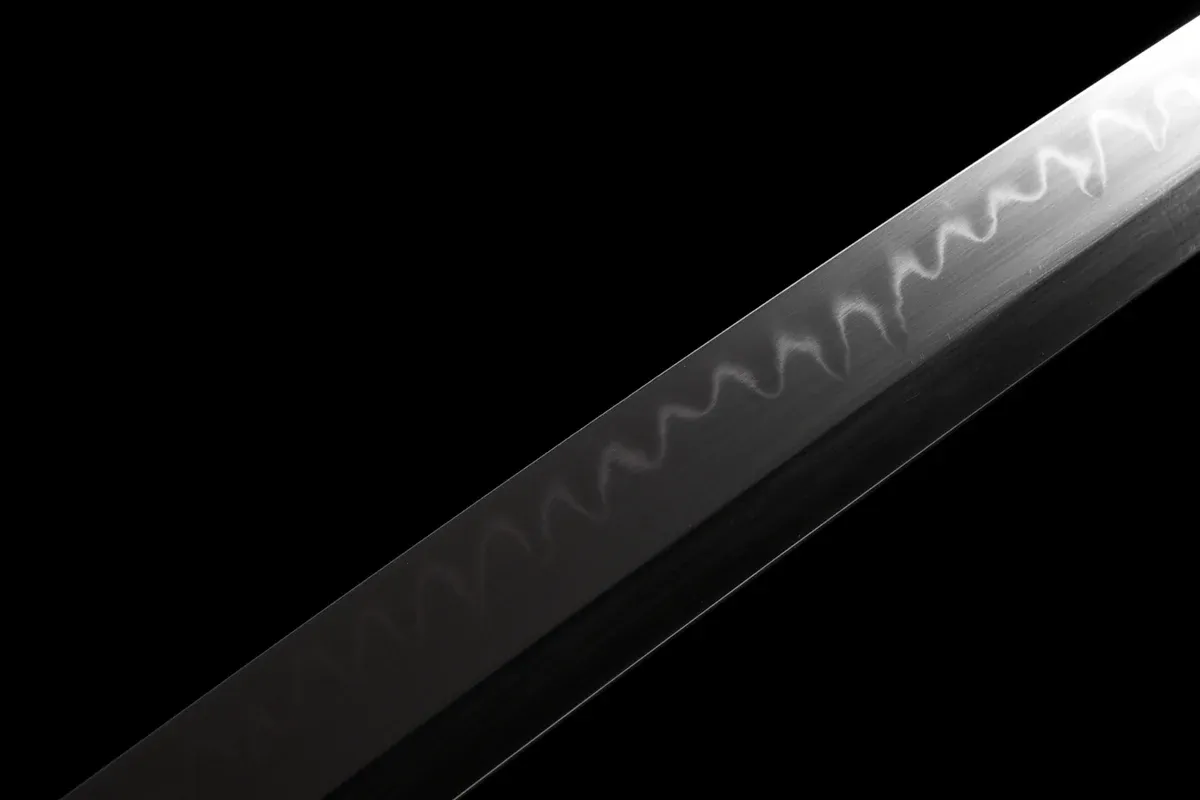
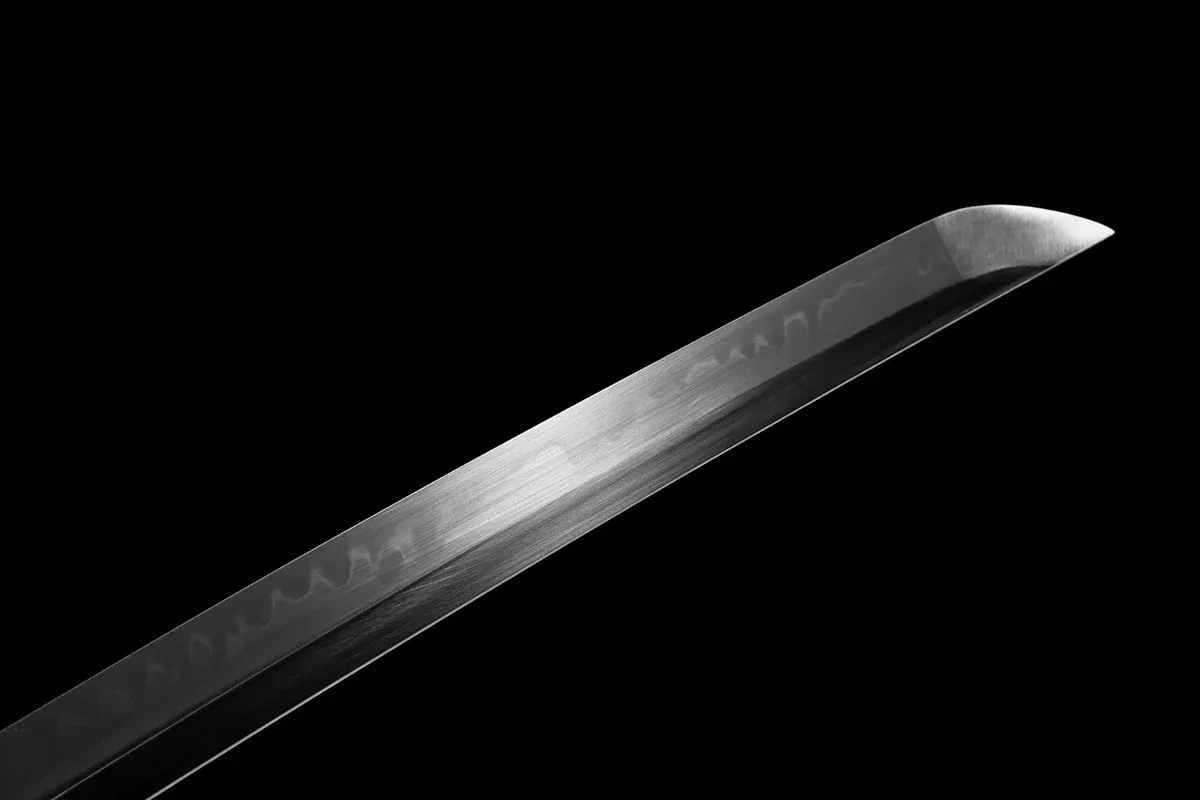
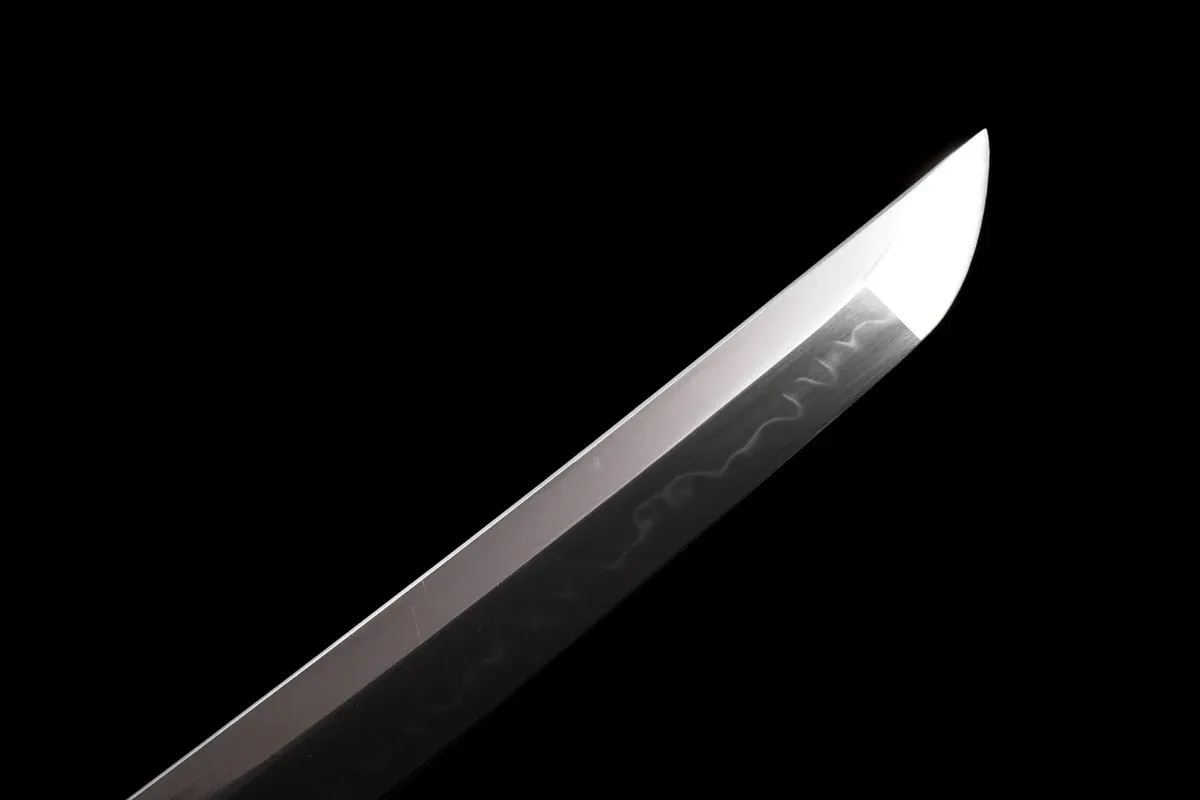
The Nami is built on T10 tool steel, a tungsten-bearing high-carbon alloy prized for its toughness and edge stability. Through differential hardening, the edge is brought to a high hardness while the spine stays softer and more forgiving — and the boundary between the two surfaces as a genuine hamon, the misty temper line that runs the length of the blade. The result is a sword that holds a precise edge yet absorbs the shock of a real cut without breaking.
Fittings & Mounts
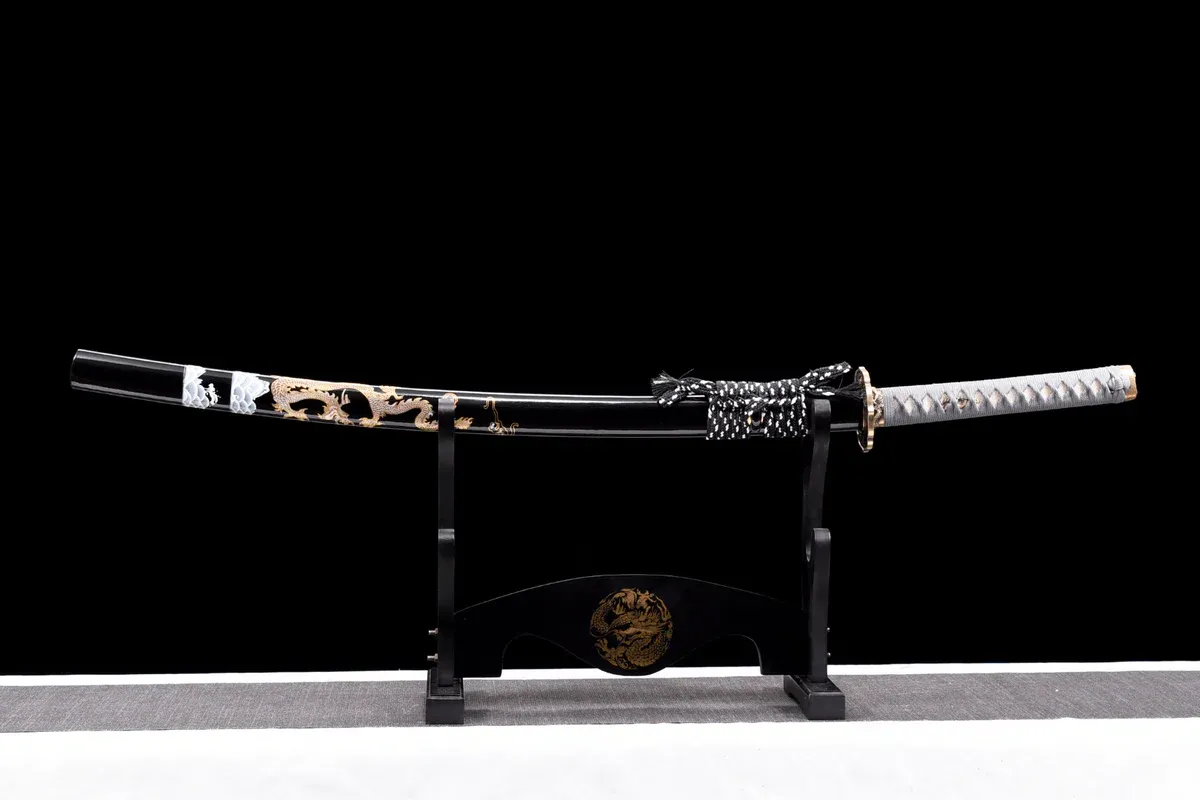
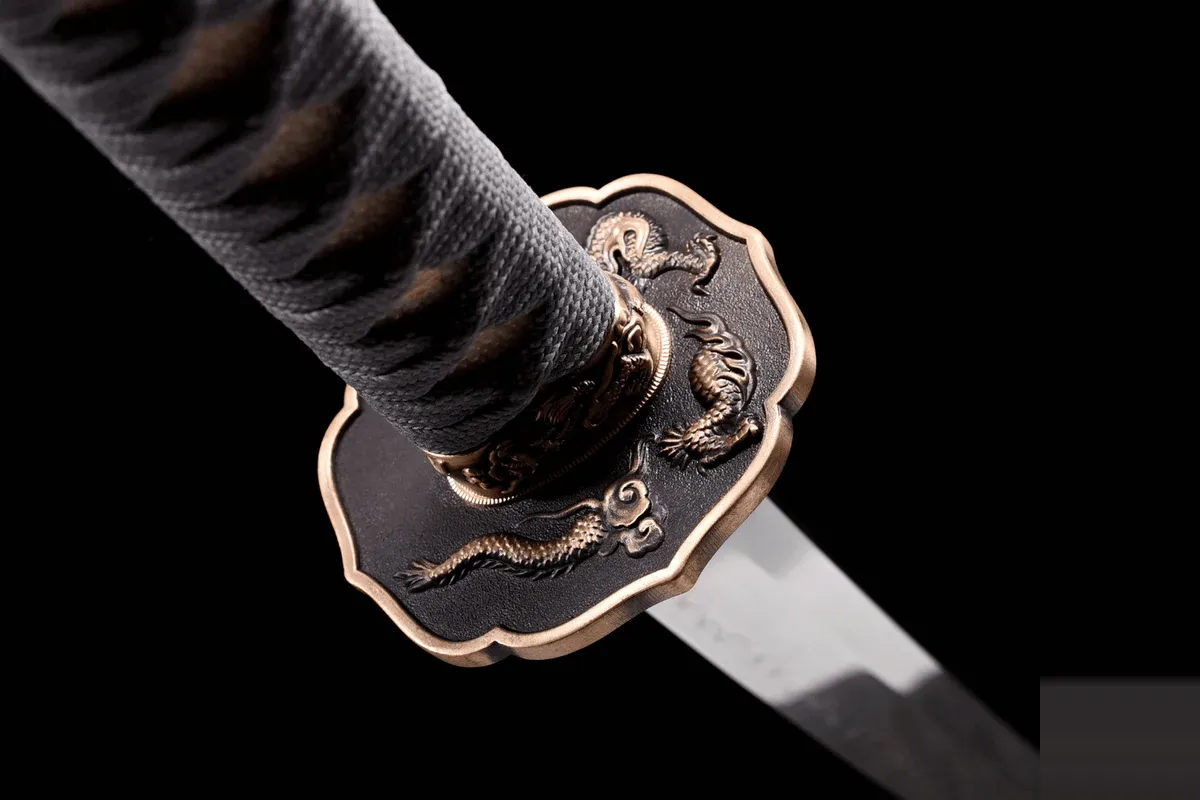
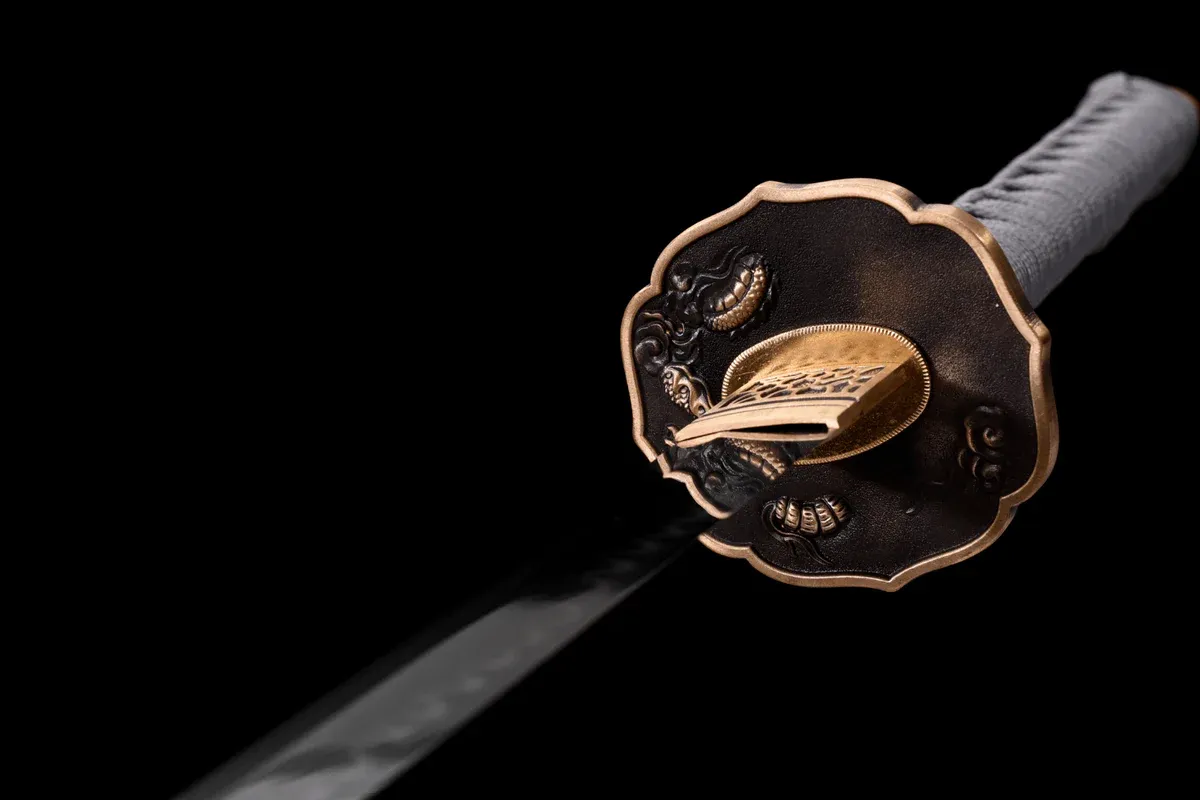
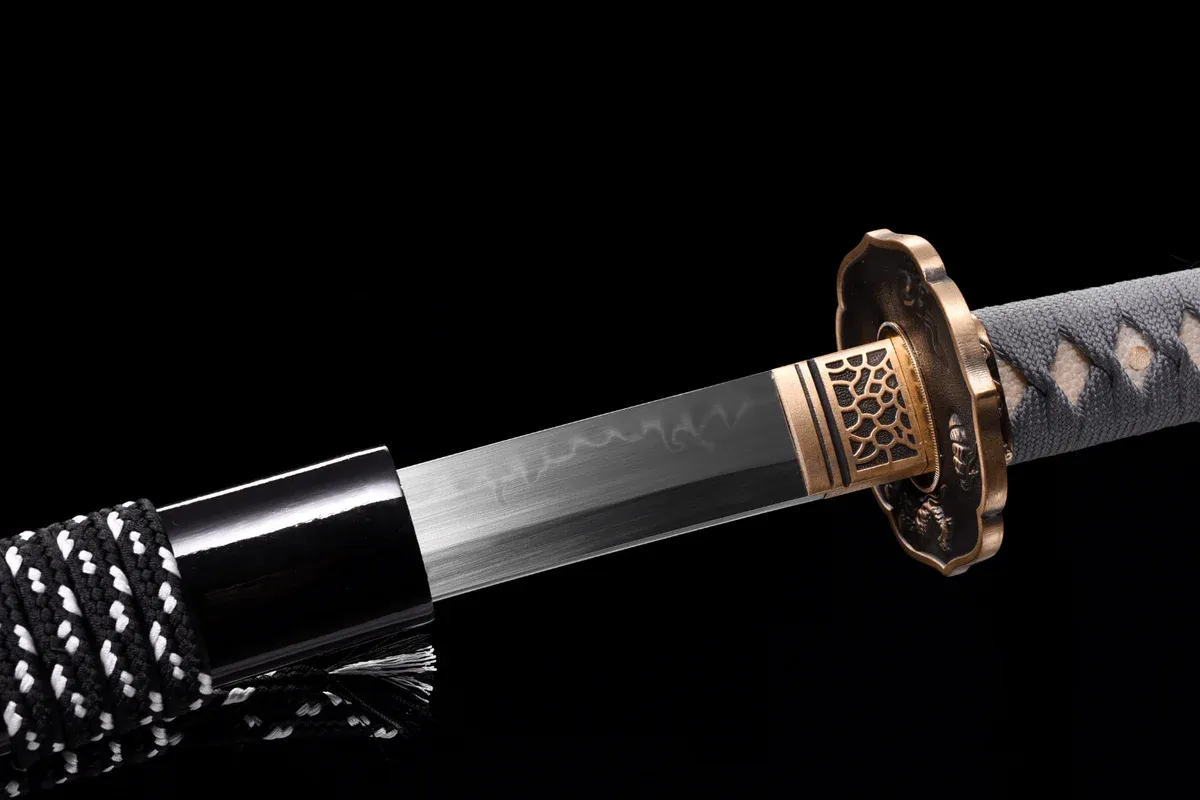
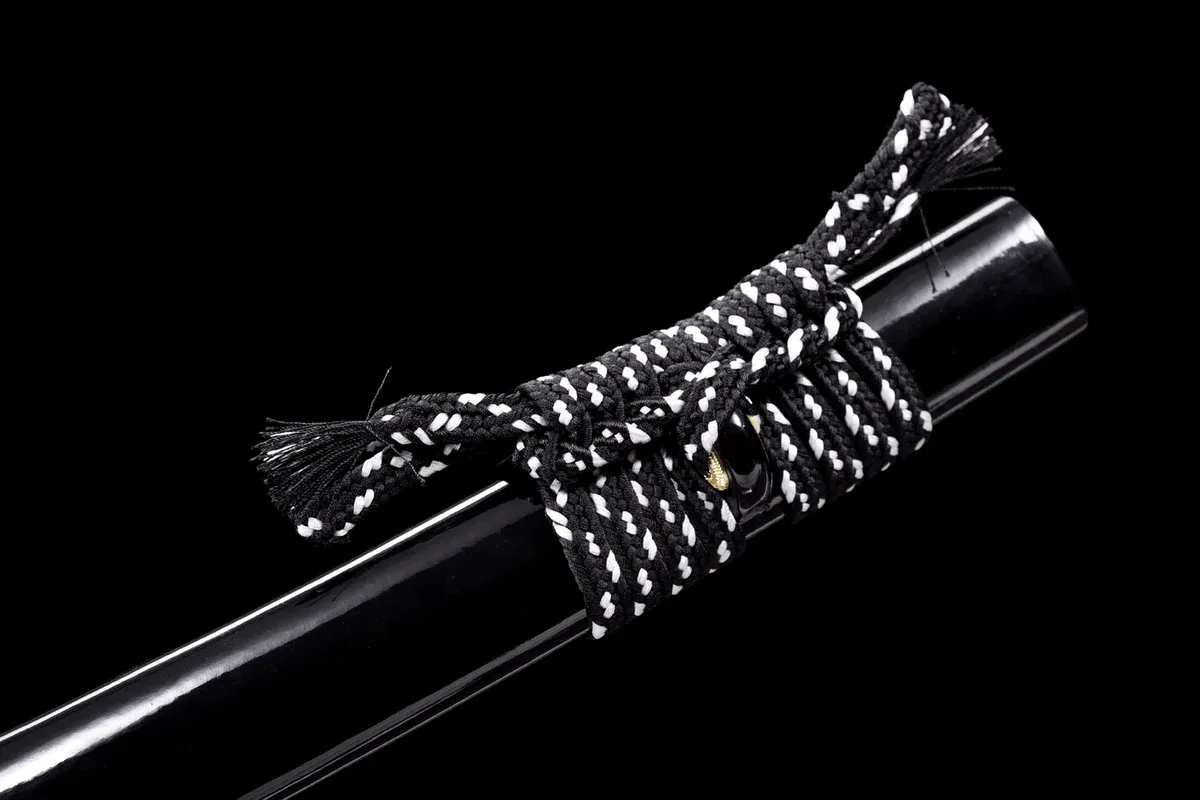
A finely carved copper tsuba sets the tone, matched by copper menuki seated under a genuine white shagreen tsuka for a secure, textured grip. The saya is lacquered wood carrying a dragon motif, finished with a cotton sageo for wear and display.
Specifications
| Blade steel | T10 steel with hamon |
|---|---|
| Tsuba | Finely carved copper |
| Saya | Lacquered wood, dragon motif, cotton sageo |
| Tsuka | Genuine white shagreen |
| Menuki | Copper menuki |
Dimensions
| Total length | 103 cm |
|---|---|
| Blade length | 71 cm |
| Handle length | 26 cm |
| Blade width | 3.2 cm |
| Blade thickness | 0.75 cm |
Is it battle-ready?
Yes. The differentially hardened T10 blade is sharpened and functional, making the Nami a true cutting katana for tatami practice and dedicated training. Care is straightforward: keep the carbon edge lightly oiled and the saya dry, and the blade rewards you season after season. In the hand the Nami feels lively rather than heavy, the kind of balance that teaches clean draw and recovery. It is a sound first cutter for a student moving past wall-hangers and ready to learn edge alignment on a blade that answers honestly. For comparison within the entry tier, look at the Katana Rei and the clay-tempered Katana Ōchō, or explore the whole katana range.

 Verified owner