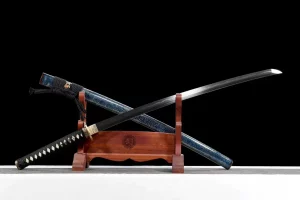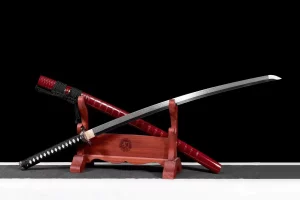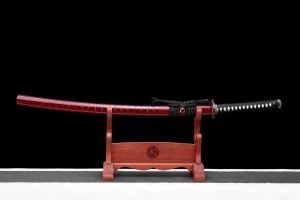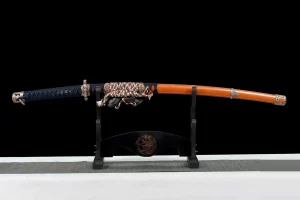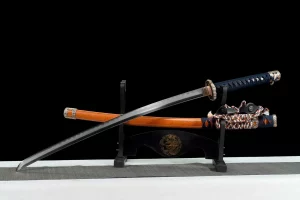
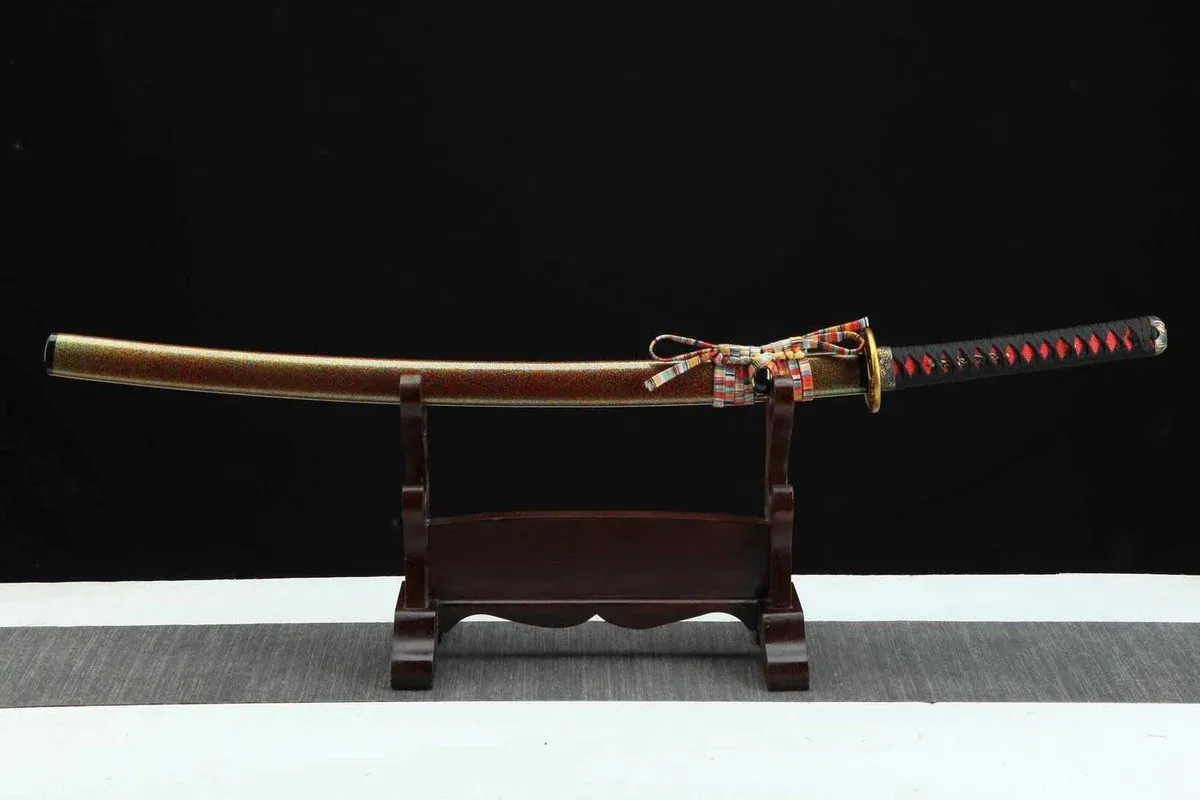
The Tokugawa (徳川) shogunate ruled Japan for over two and a half centuries — the long peace of the Edo period, when the sword became as much a mark of status as a weapon. This katana carries that dual character: prestige on the rack, performance in the hand, at a price that keeps it within reach.
Forging & Steel
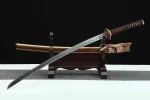
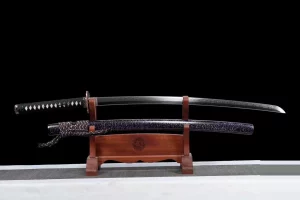
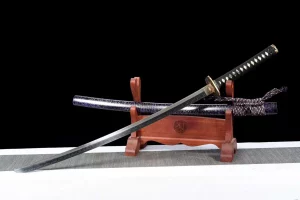
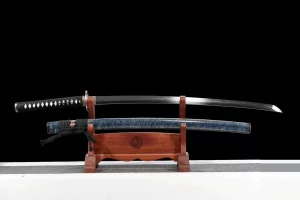
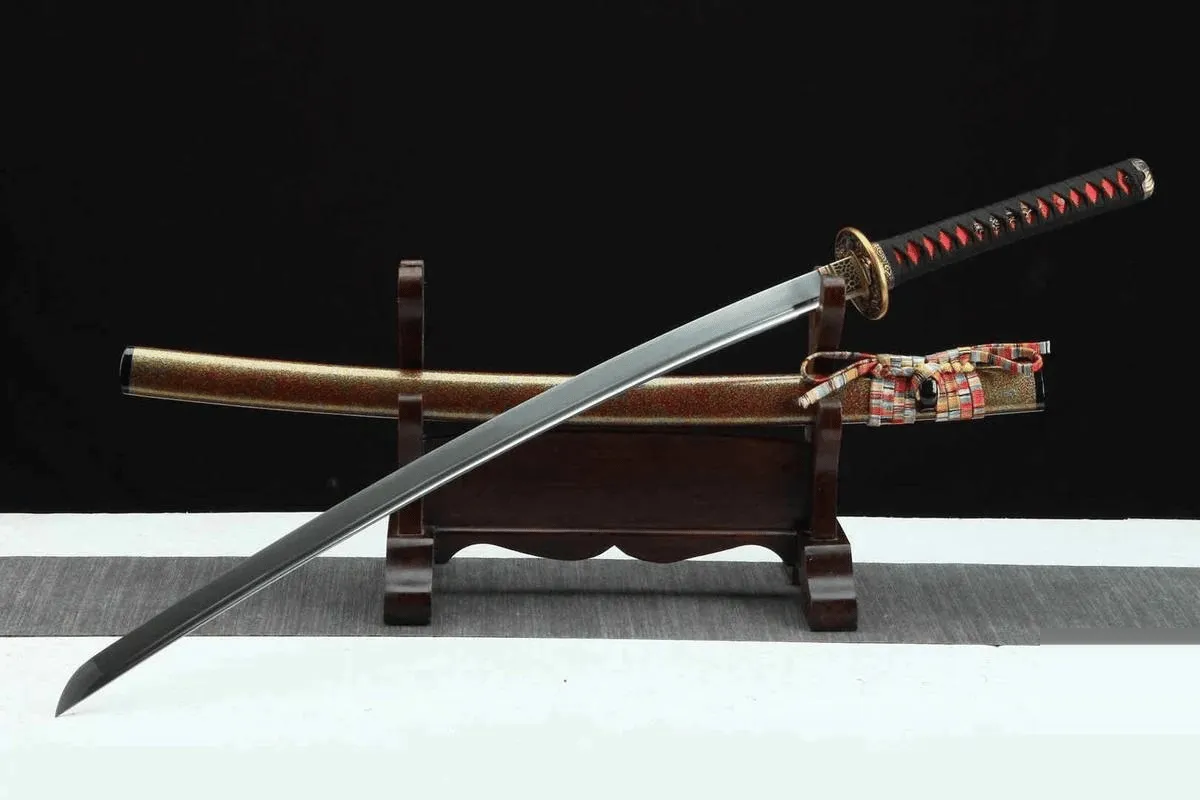
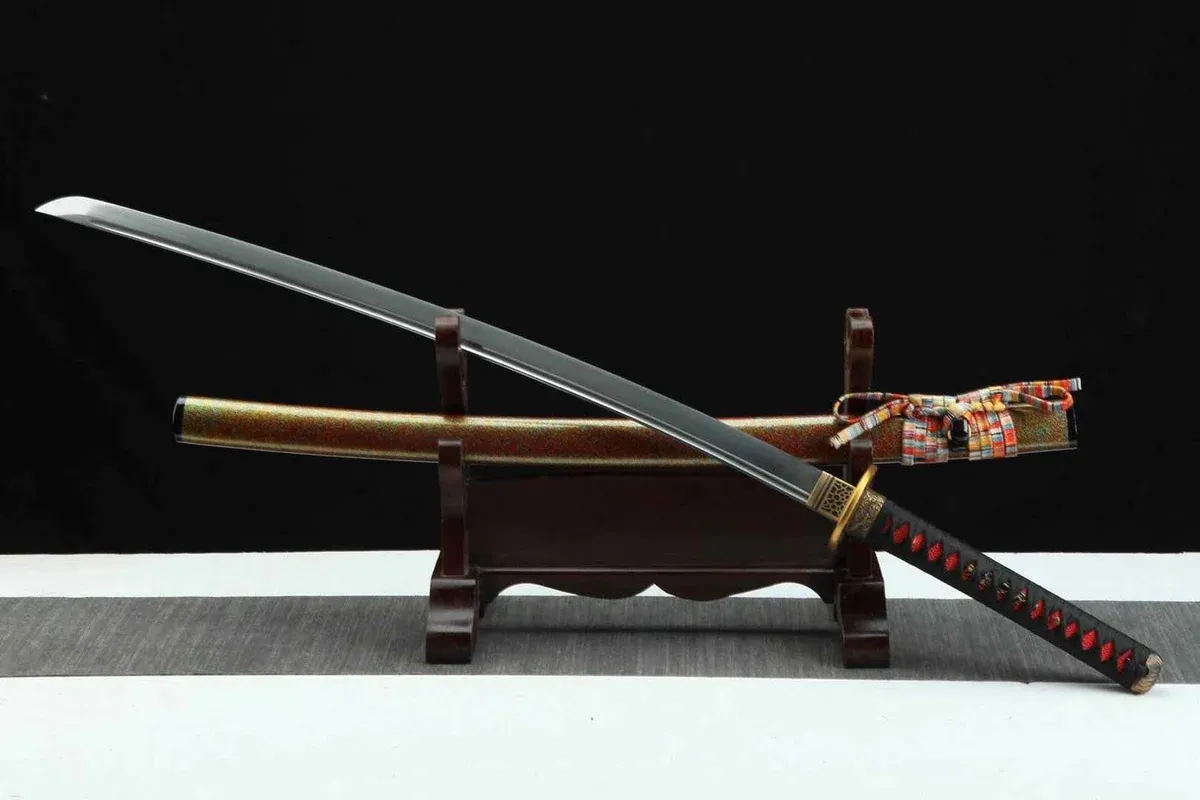
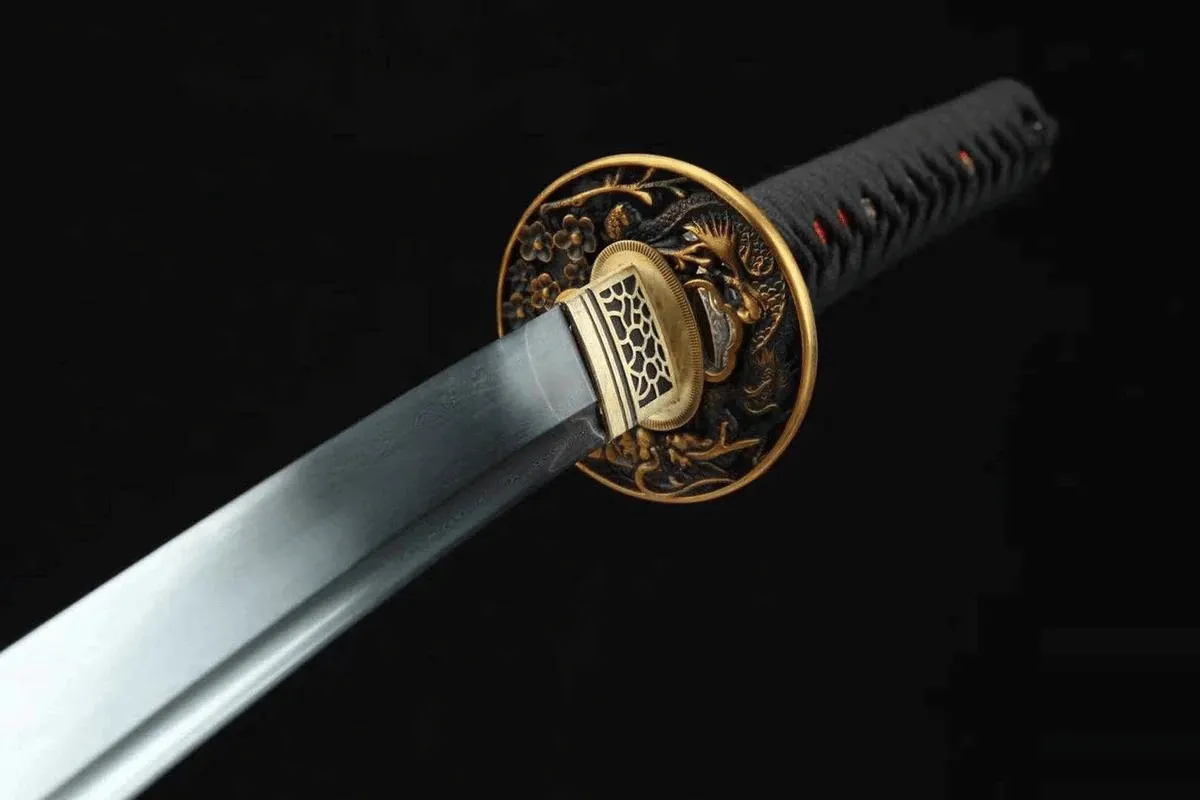
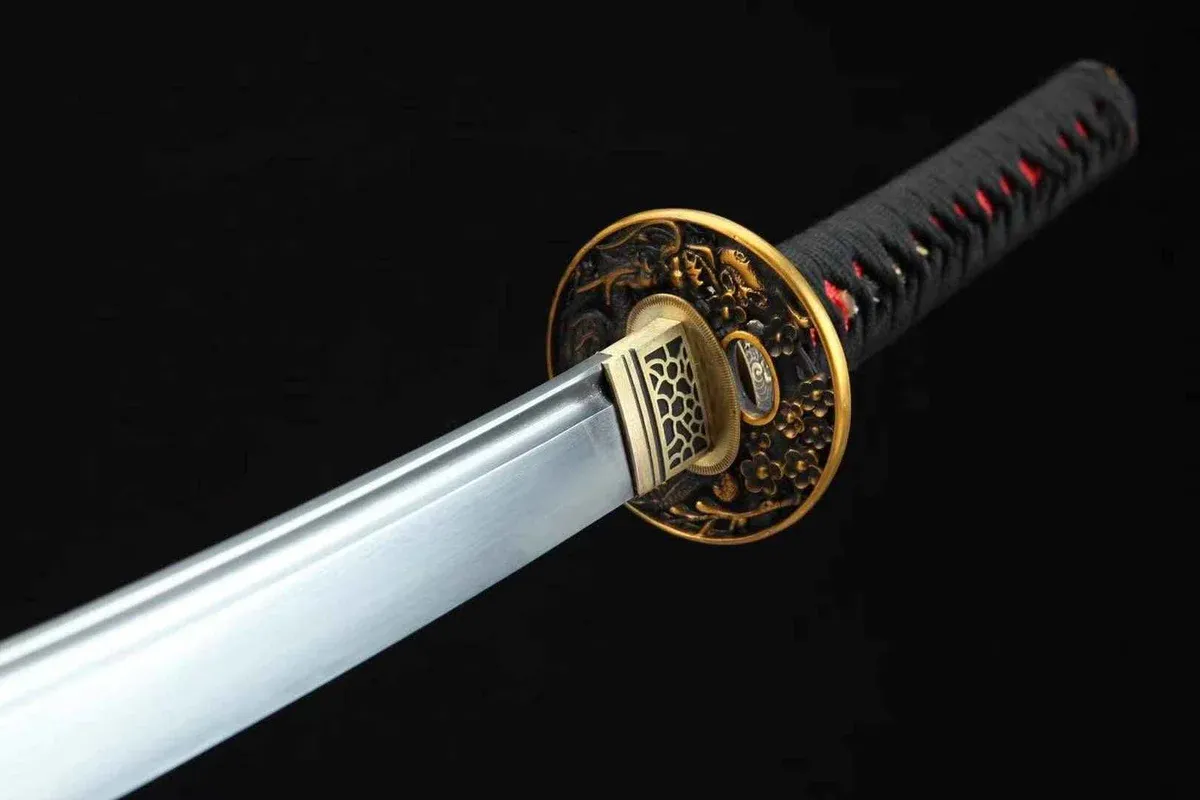
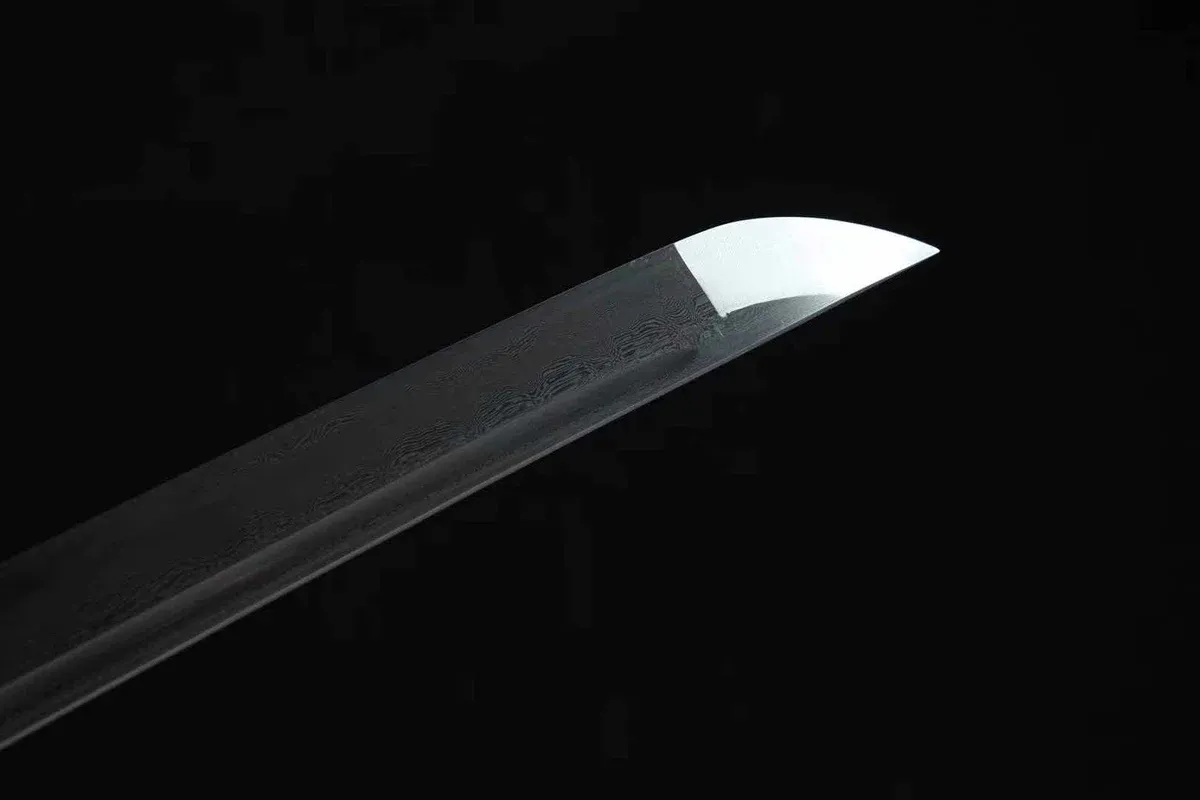
The blade is forged from Damascus steel, each blade unique in its wave pattern because the folded layers surface differently every time. Folded Damascus is known for bend resistance and a durable edge — strength and flexibility worked into the steel at the forge, so the edge holds while the body keeps enough give to absorb a cut. The grey blade reads as quietly authoritative rather than flashy, a tool first and an ornament second, and the layered grain gives it depth that reveals itself under good light.
Fittings
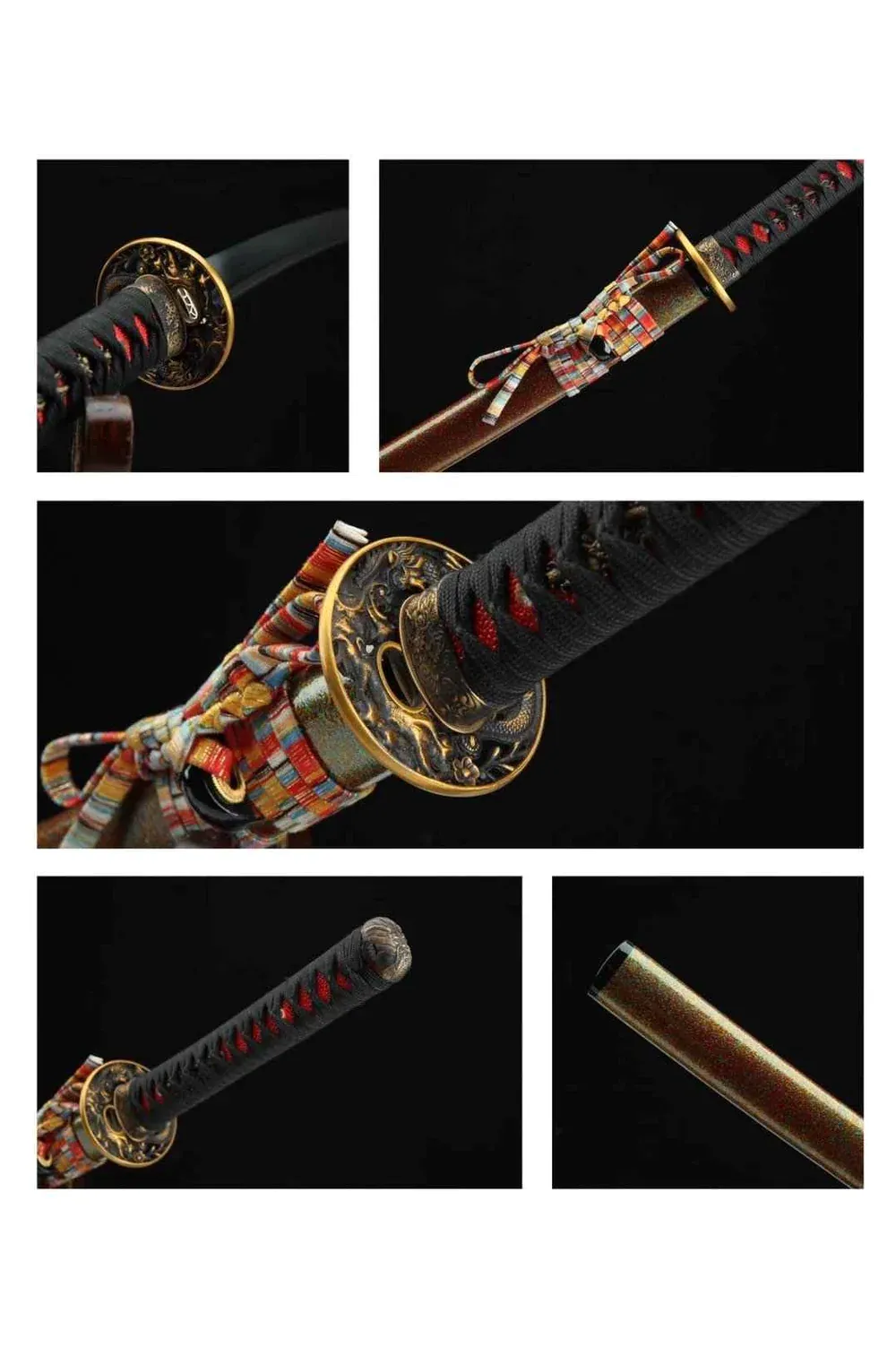
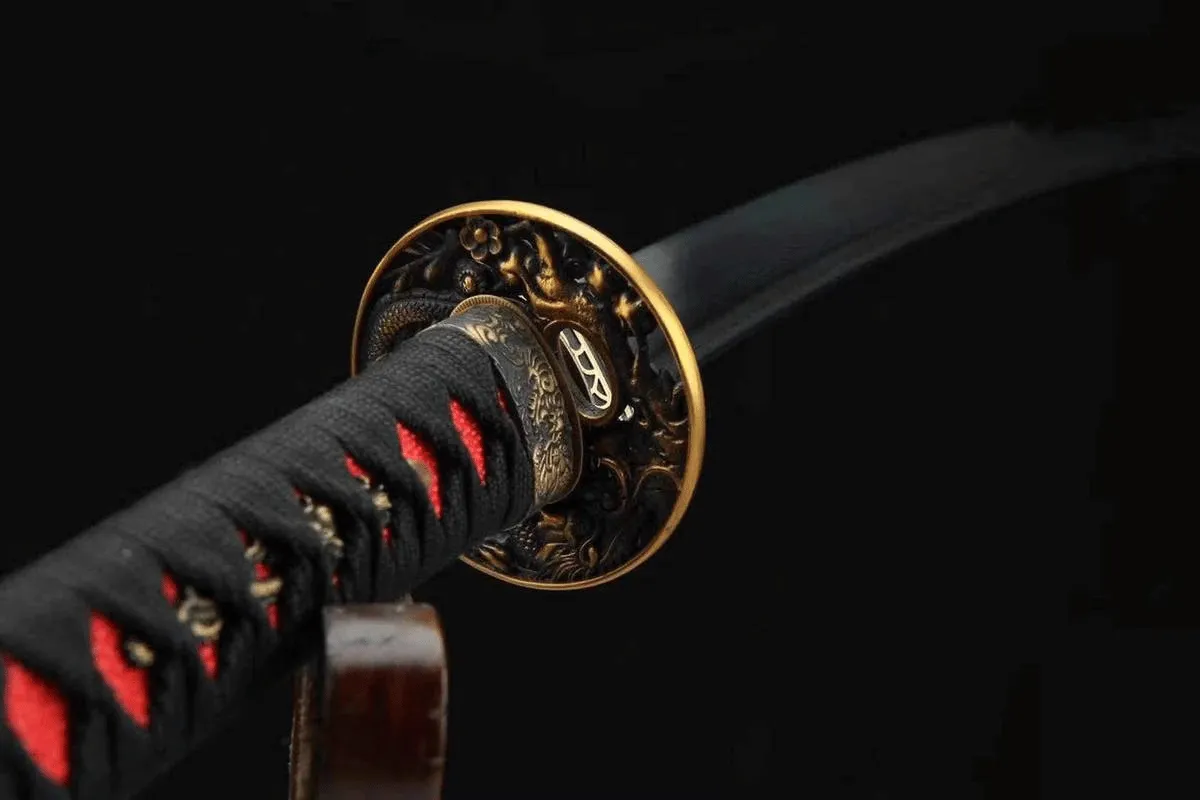
A carved solid-brass tsuba guards the hand; corrosion-resistant, it carries a golden sheen that complements the Damascus grain. The saya is lacquered solid wood, and the tsuka is wrapped in durable stingray leather for a comfortable, moisture-resistant grip that holds firm through repeated draws.
Specifications
| Blade steel | Damascus steel |
|---|---|
| Blade colour | Grey |
| Tsuba | Solid carved brass |
| Saya | Lacquered solid wood |
| Tsuka | Stingray leather |
Dimensions
| Total length | 103 cm |
|---|---|
| Blade length | 71 cm |
| Blade width | 3.2 cm |
| Blade thickness | 0.7 cm |
| Handle length | 26 cm |
Is it battle-ready?
Yes. The folded Damascus blade is sharpened and functional — an exceptional training sword that doubles as a collector’s piece, with a full tang for real cutting work. Like any high-carbon blade it keeps best with a wipe-down and a light film of oil after use, and the durable stingray grip means the mounting asks for little upkeep of its own. Browse the full katana collection, or compare with the folded-Damascus Katana Eien and Katana Doragon.

 Verified owner