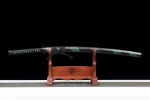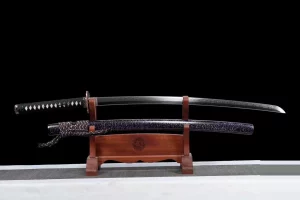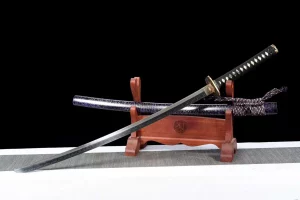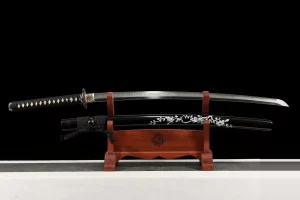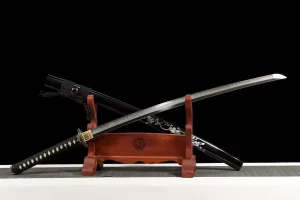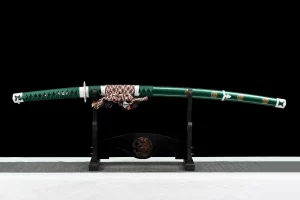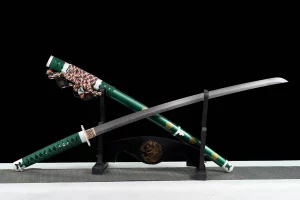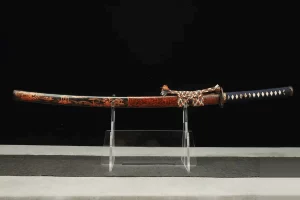
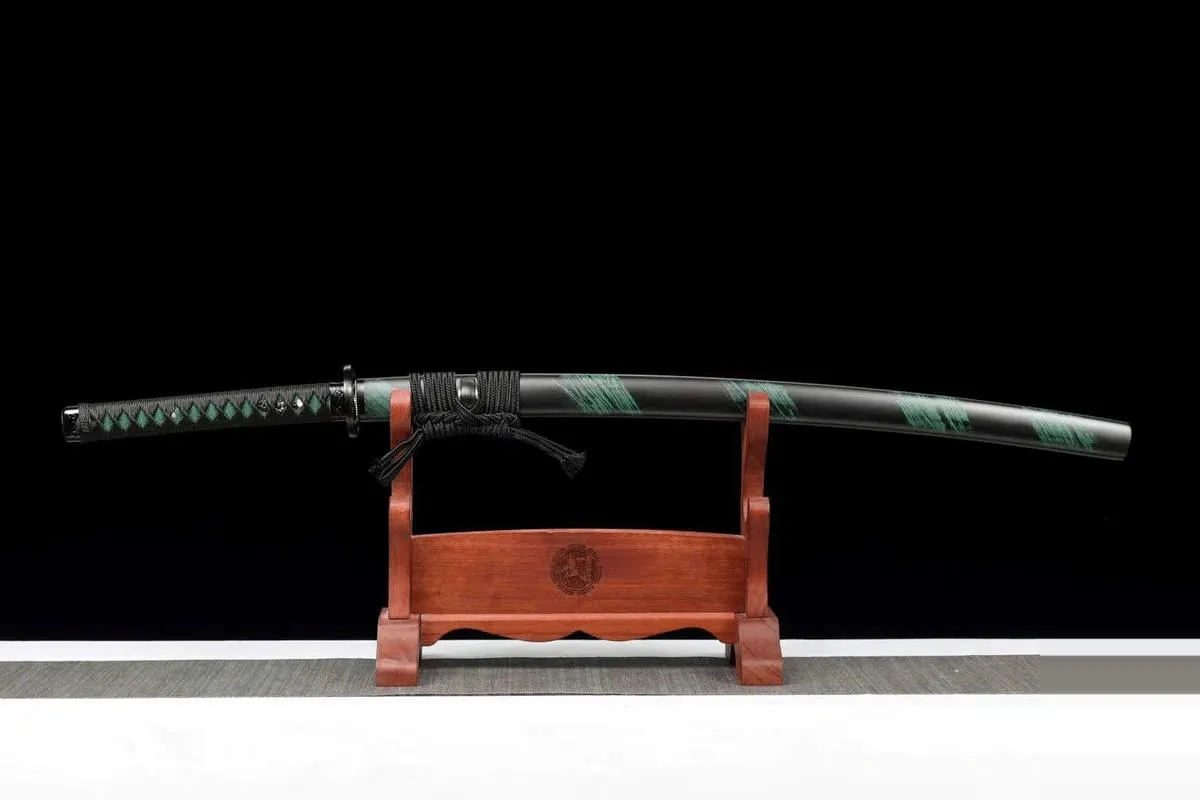
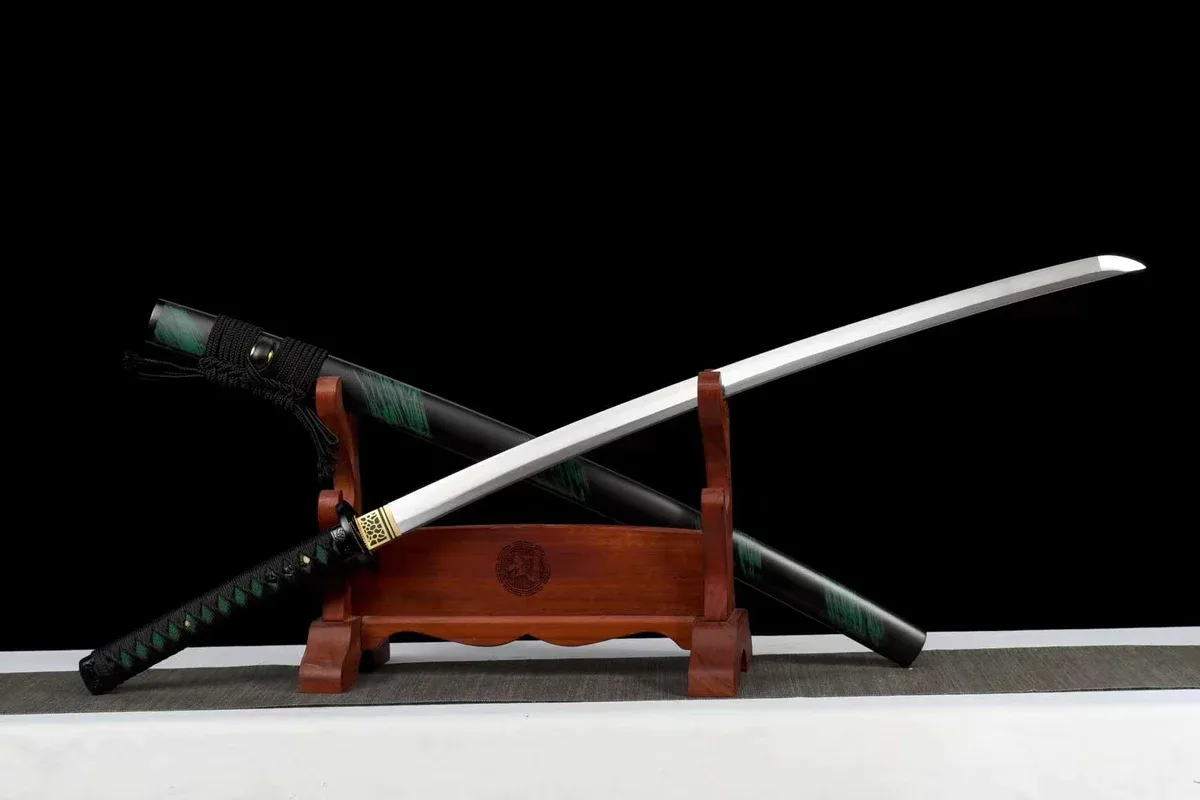
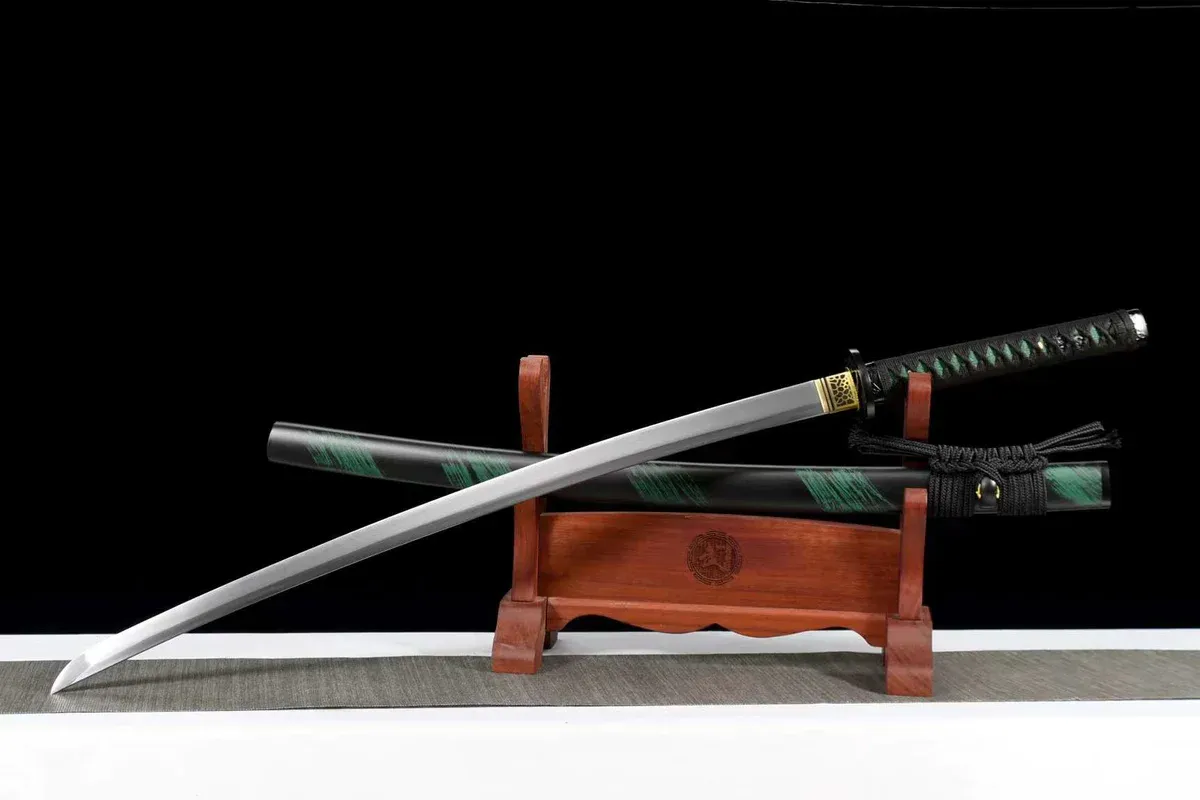
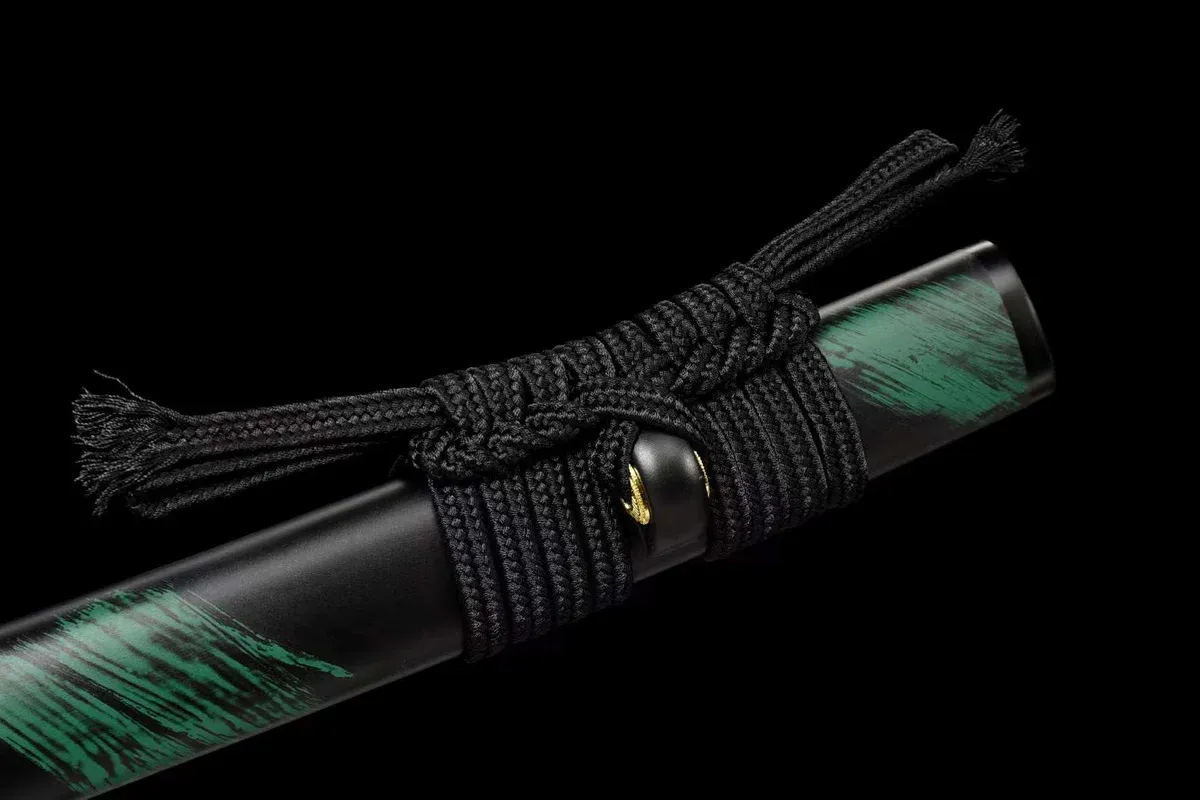
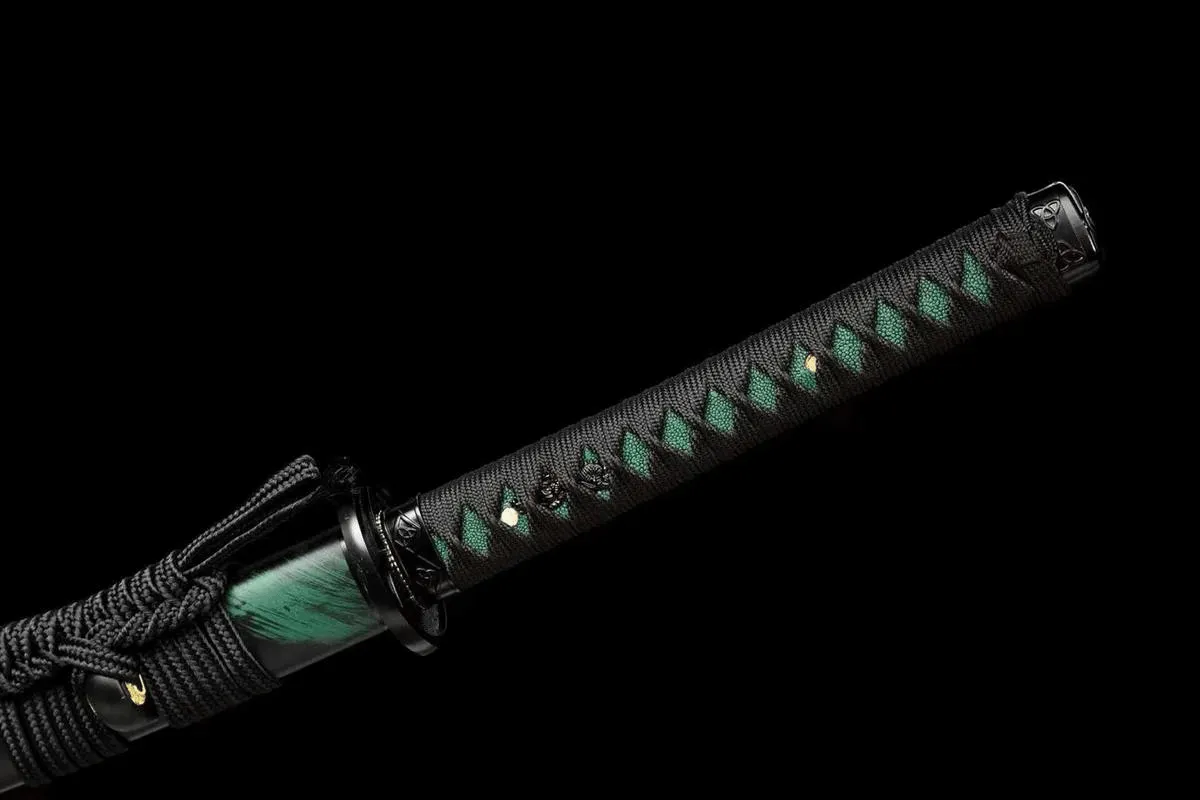
Kakki (活気) means vitality, or vigour — and this is a sword chosen to be used, not coddled. It is our entry point for the practitioner taking a first real step beyond decorative wall-hangers: a genuine functional blade at an accessible price, dressed in light-green brushstrokes on a black ground that echo the name and balance tradition with a modern look.
Forging & Steel
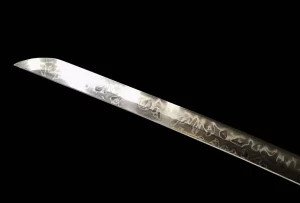
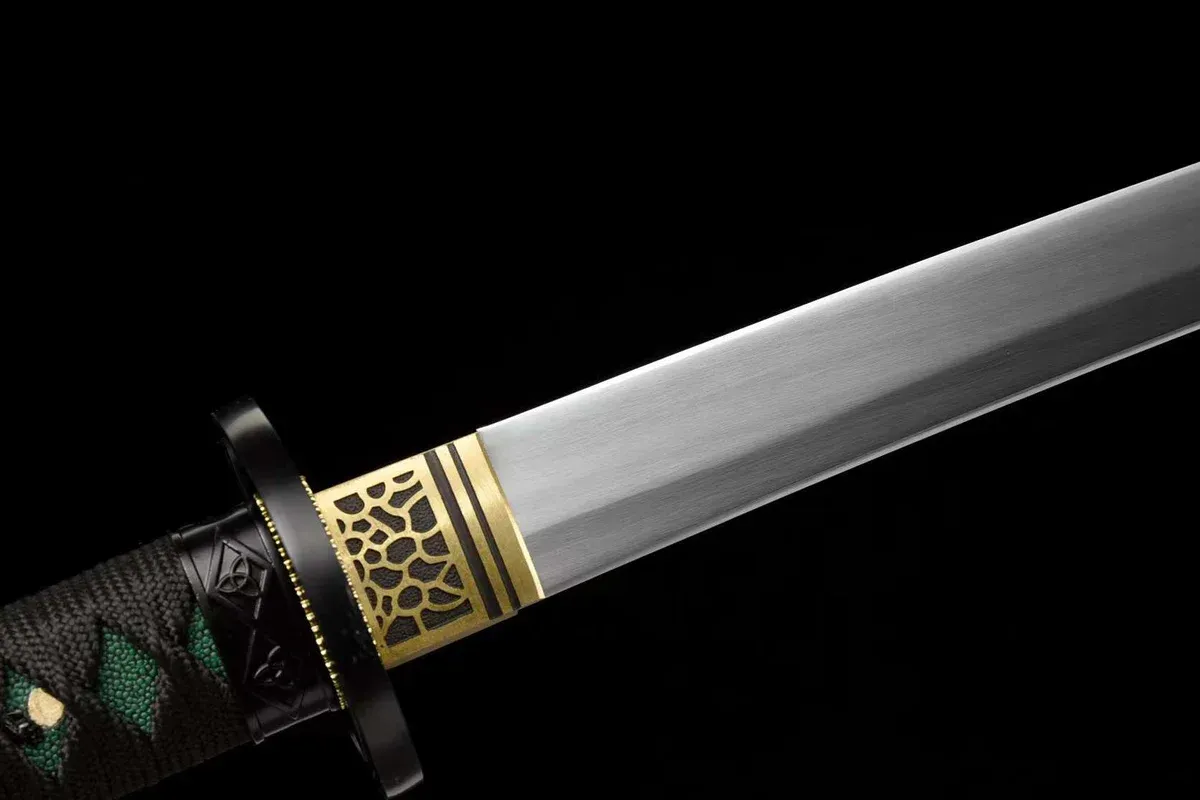
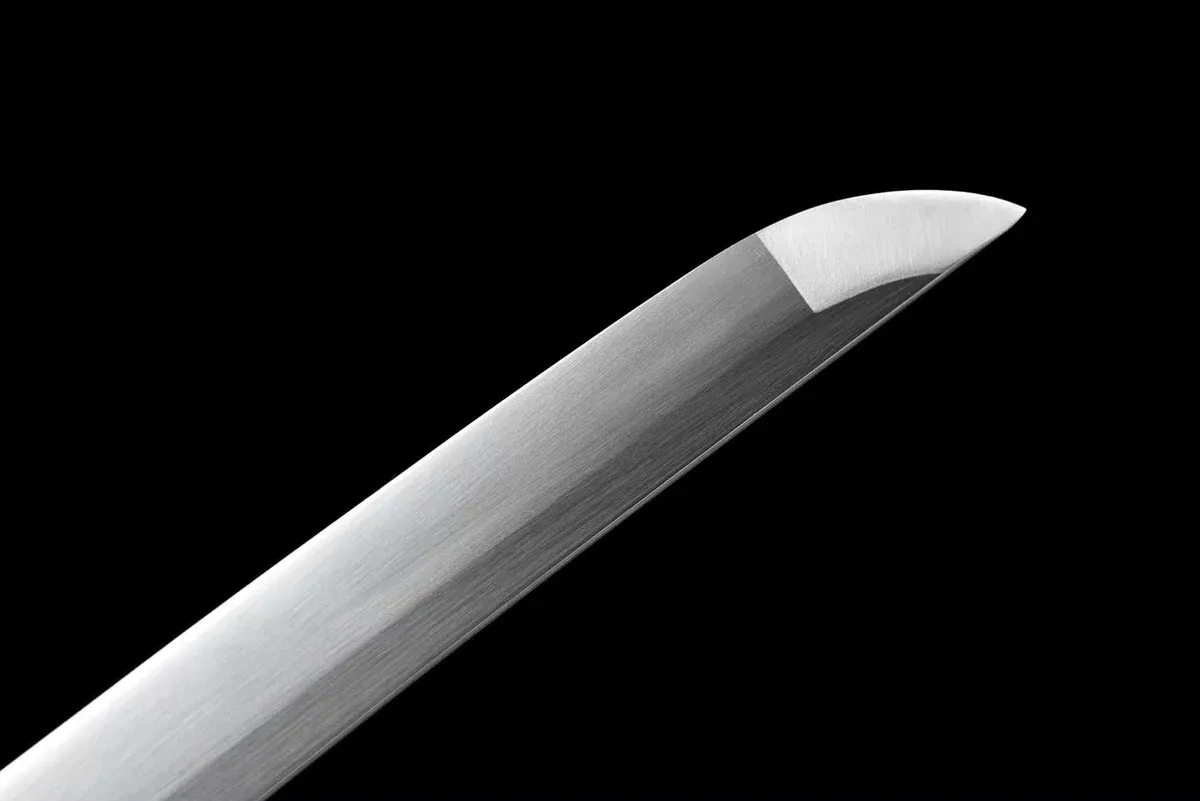
The blade is forged from manganese steel, a tough, impact-resistant alloy that takes the knocks of rigorous training and holds a precise edge. Manganese steel adds strength and resists wear, so a beginner can drill, cut and re-sharpen without quickly tiring the blade. It is forgiving of the small mistakes every new practitioner makes — a slightly off-angle cut that would chip a harder, more brittle steel. This is a working sword built for repetition.
Fittings
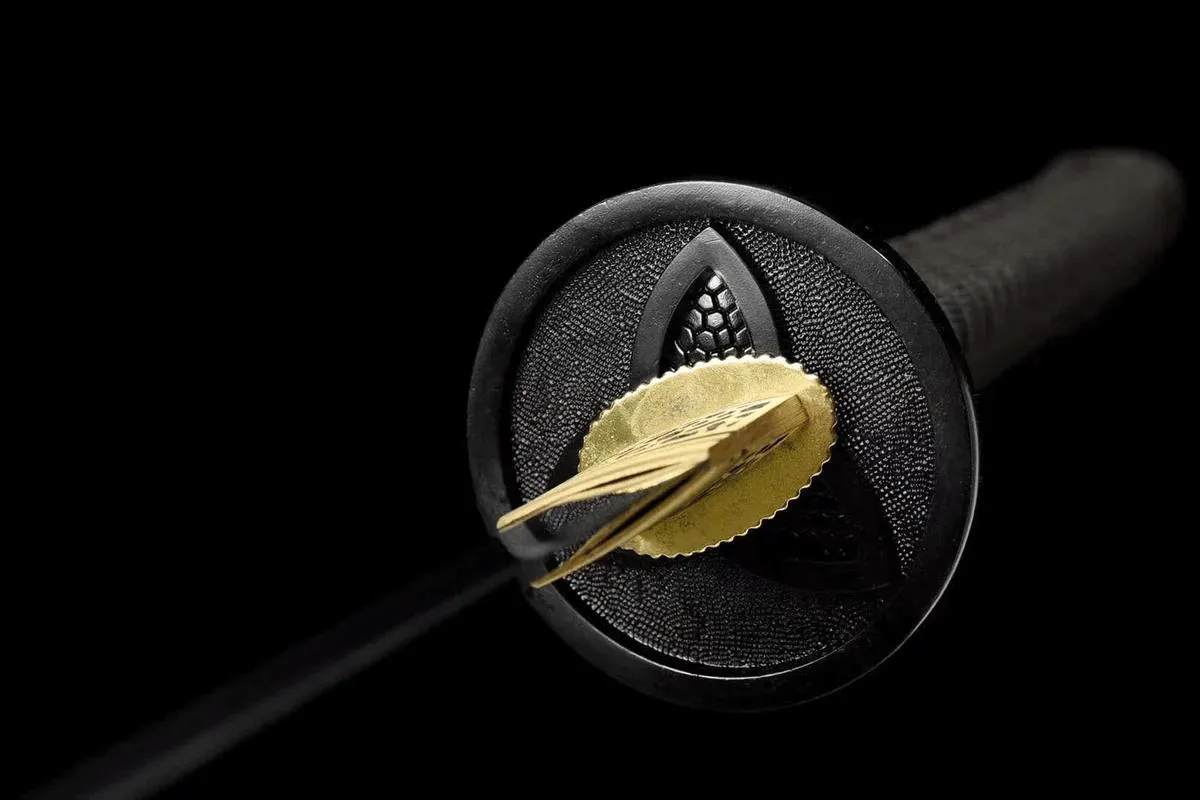
A lightweight zinc-alloy tsuba keeps the balance lively, with matching zinc-alloy menuki under the wrap. The saya is light lacquered wood, its green brushwork on black evoking renewal and the meaning of the name. The tsuka is bound over synthetic shagreen for a secure, low-maintenance grip, and two bamboo mekugi pin the full tang traditionally so the sword comes apart for cleaning.
Specifications
| Blade steel | Manganese steel |
|---|---|
| Tsuba | Zinc alloy |
| Saya | Light lacquered wood |
| Tsuka | Synthetic shagreen leather |
| Menuki | Zinc alloy |
| Mekugi | 2 bamboo |
Dimensions
| Total length | 103 cm |
|---|---|
| Blade length | 72 cm |
| Blade width | 3.2 cm |
| Blade thickness | 0.7 cm |
| Handle length | 25 cm |
| Weight | 1.2 kg |
Is it good for beginners?
Yes — the Kakki is built for it. At 1.2 kg it is light and forgiving, the manganese steel takes impact and wear, and the price keeps the stakes low while you learn. The blade is sharpened and functional for cutting practice, and basic care — a wipe-down and a light oiling after use — is all it asks. Browse the full katana collection, or compare it with the Katana Kage and the Katana Yougan.

 Verified owner