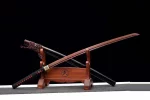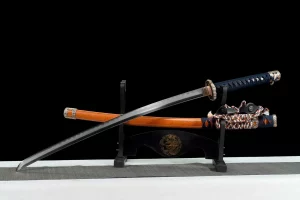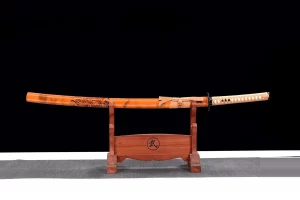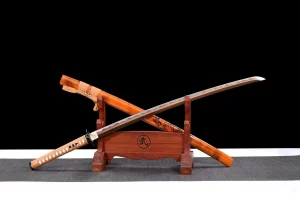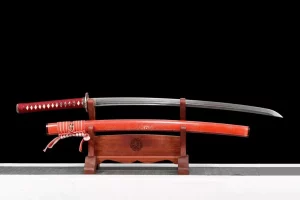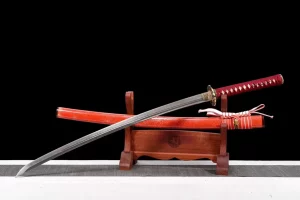
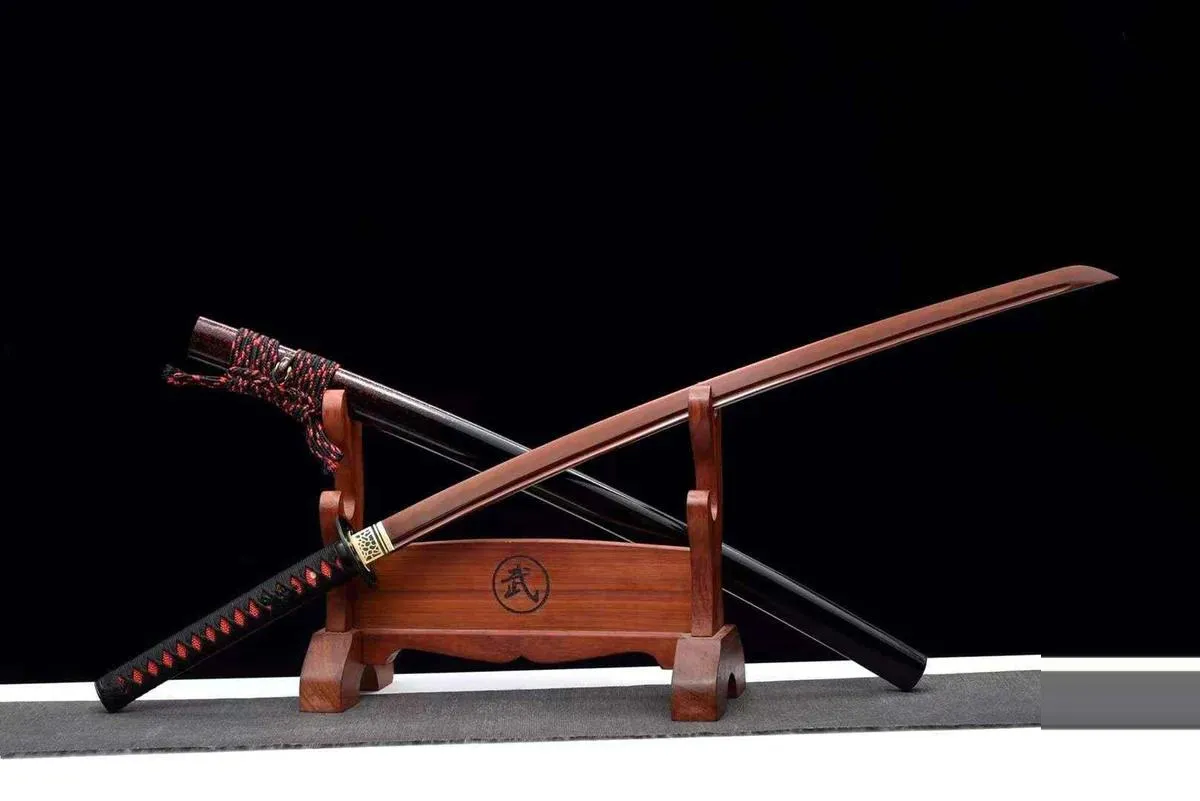
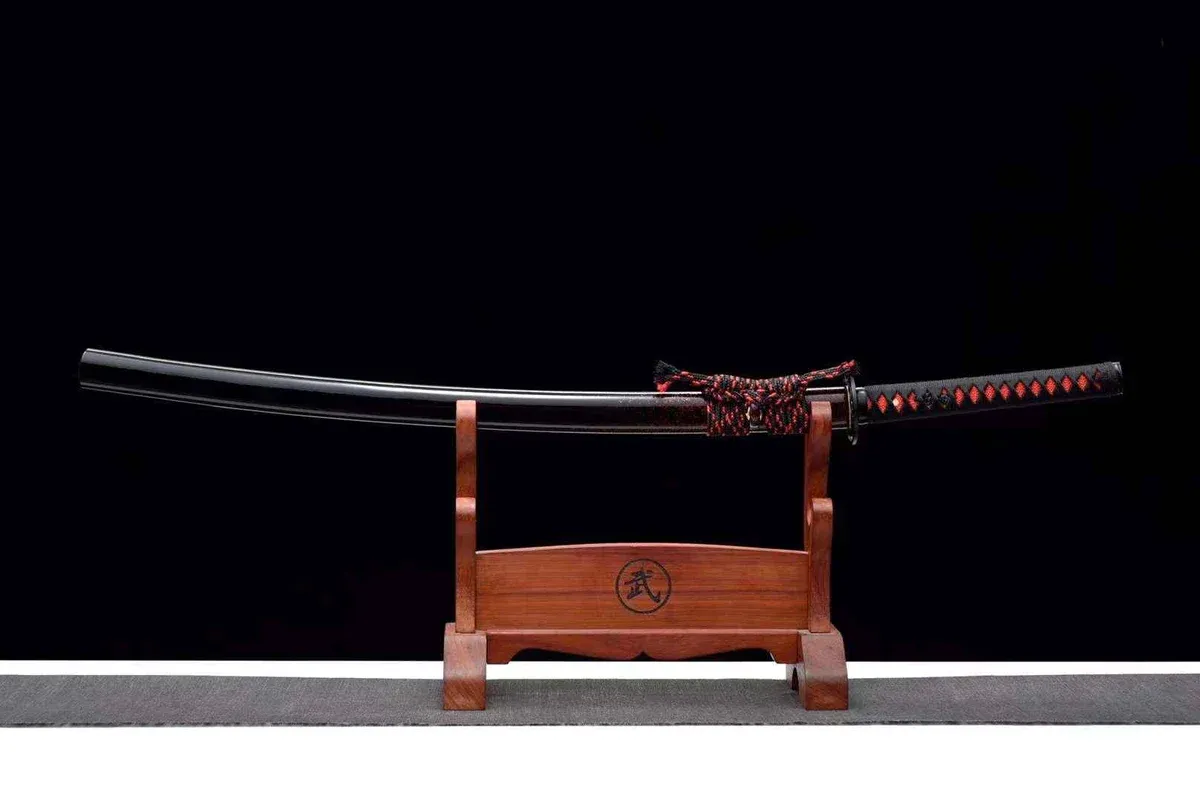
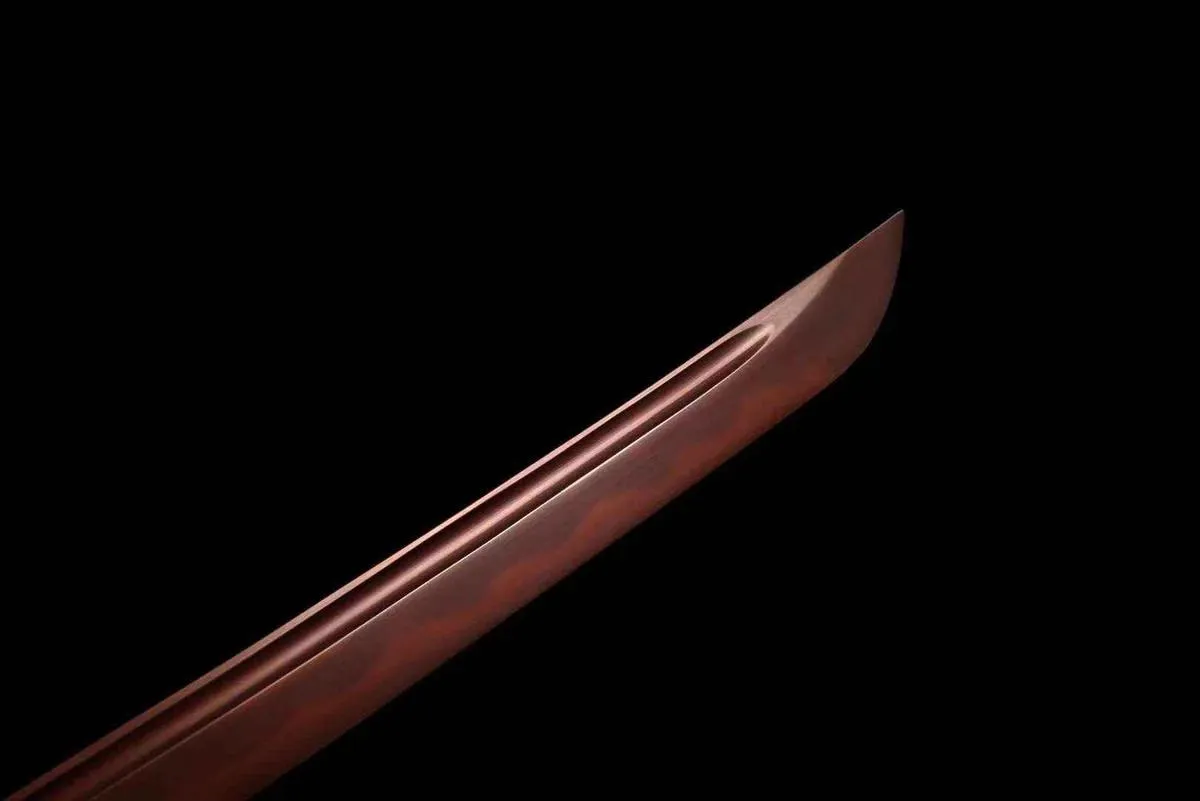
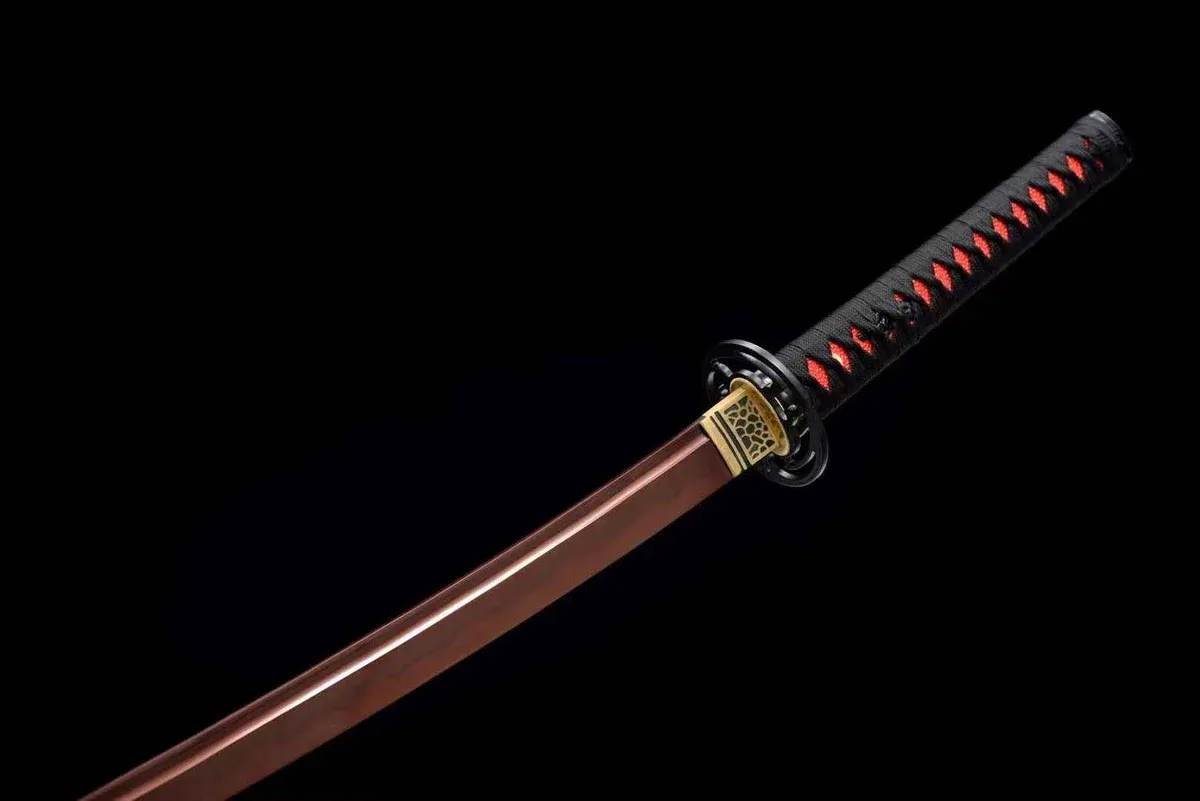
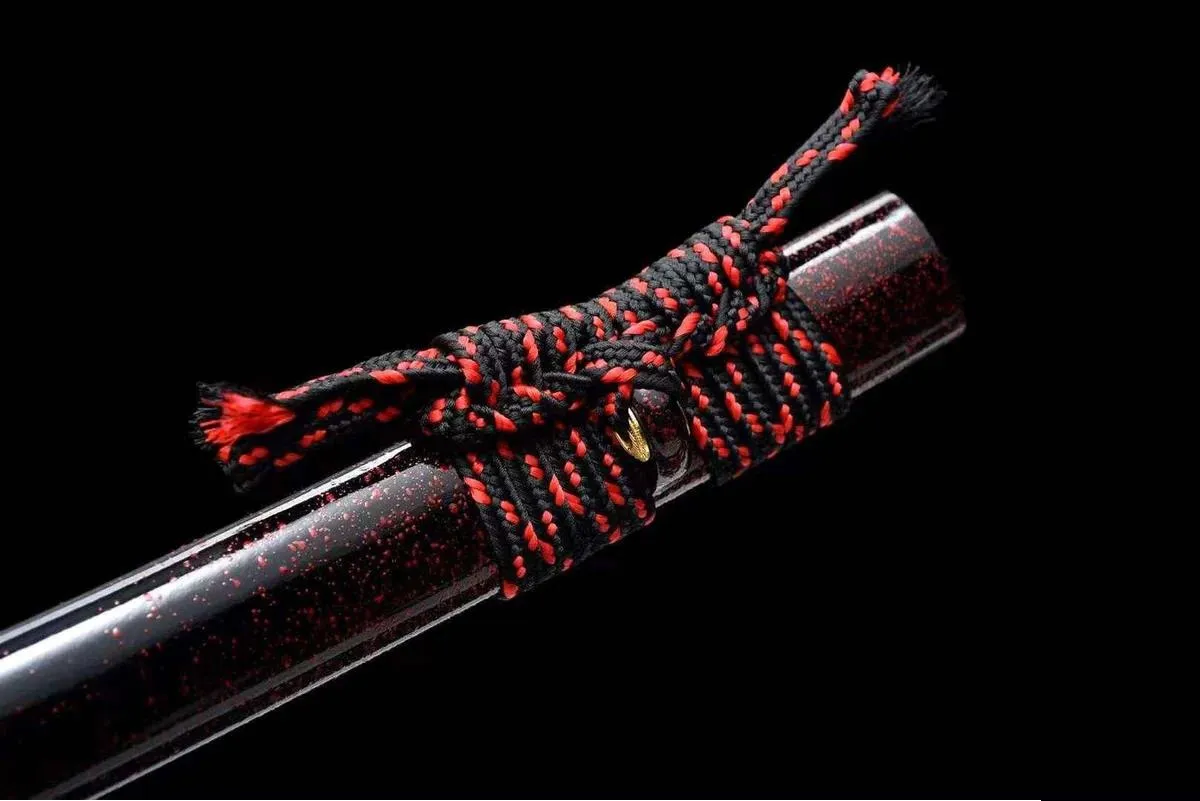
Chikara (力) means strength — the single character a swordsman might carry as a creed. This katana is named for it and wears it openly, mixing classic dress with a distinctive reddish cast at the blade neck that sets it apart on any rack.
Forging & Steel
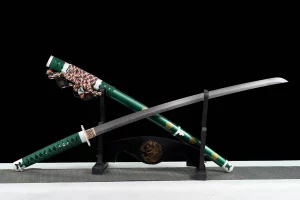
The Chikara is forged from T10 tool steel and differentially hardened to lay down a genuine hamon. T10 is chosen here for its toughness and edge stability: the hardened edge holds its bite through repeated cuts while the softer spine absorbs shock without cracking. The reddish tone along the neck is a finishing flourish over a blade built to work — a katana suited to both decoration and beginner tatami cutting. Upkeep is the usual carbon routine: oil the blade, keep the saya dry, and the reddish neck and bright hamon stay clean. The balance is honest and beginner-friendly, sitting close enough to the guard to keep early cuts controlled while still carrying weight into the target.
Fittings & Mounts
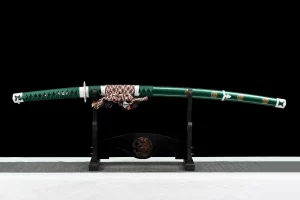
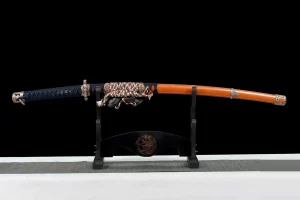
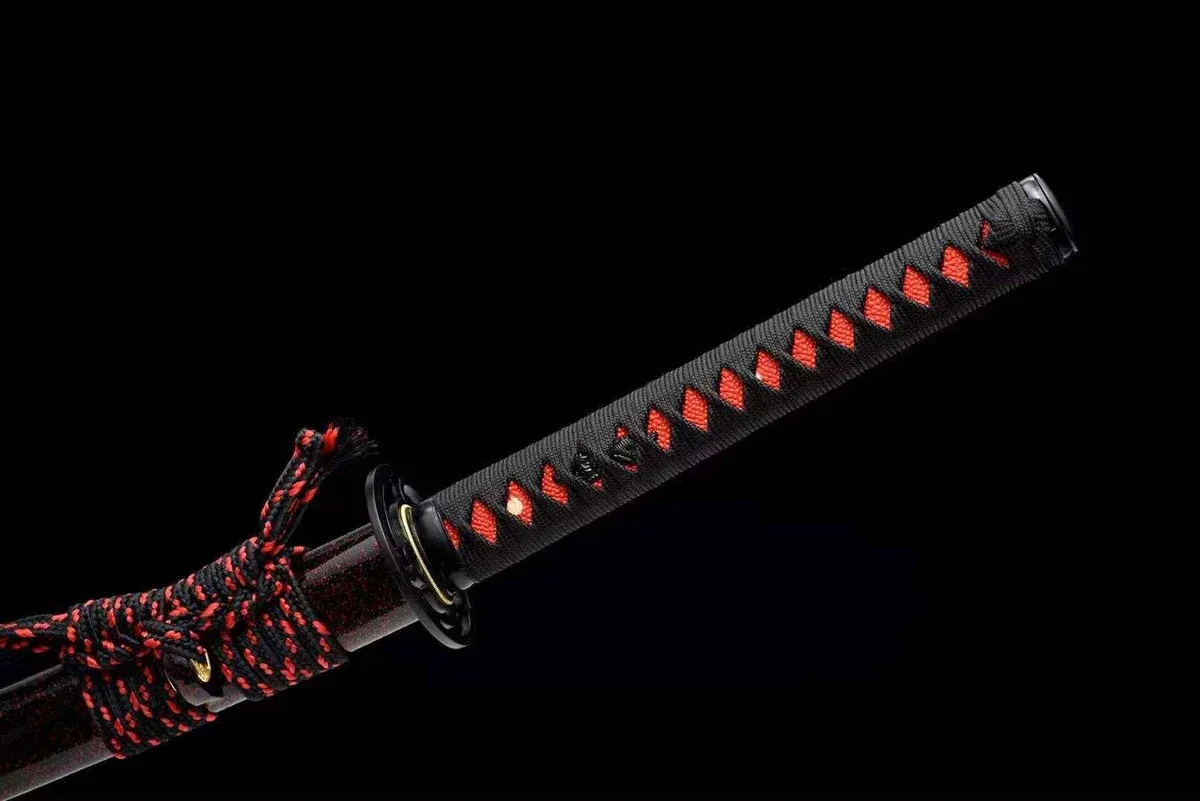
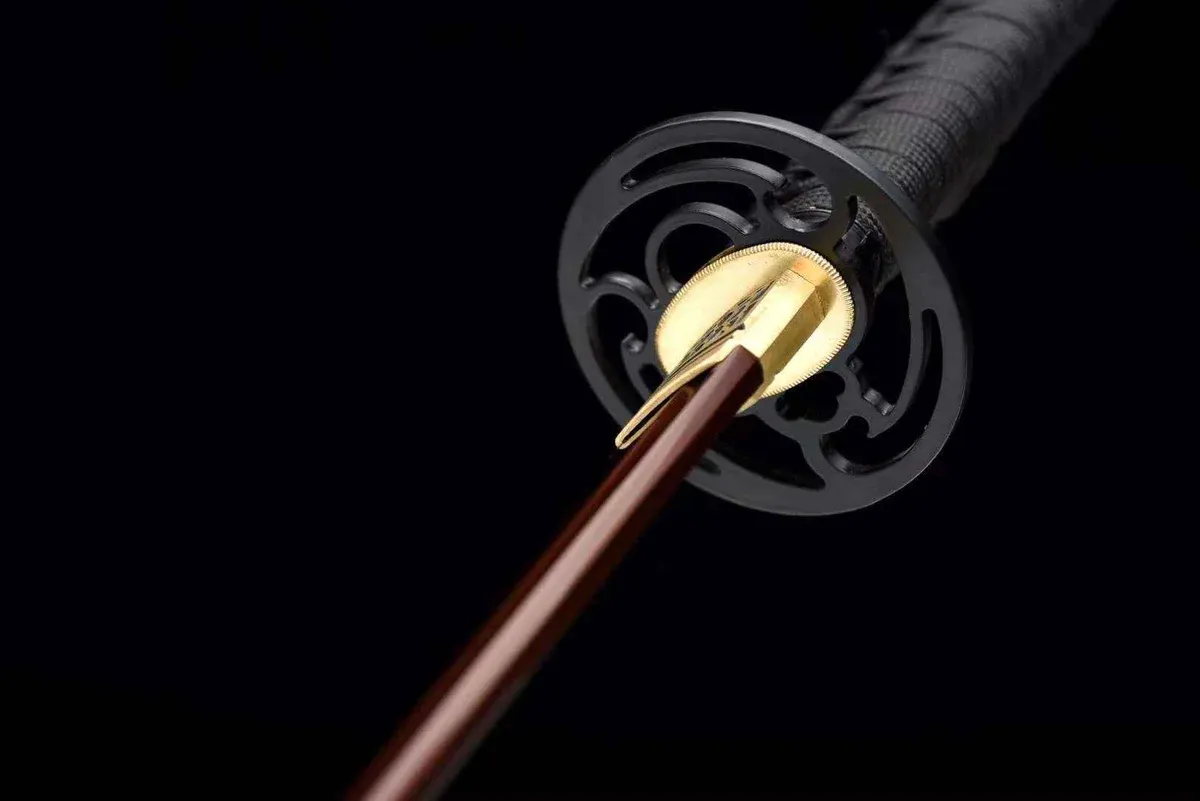
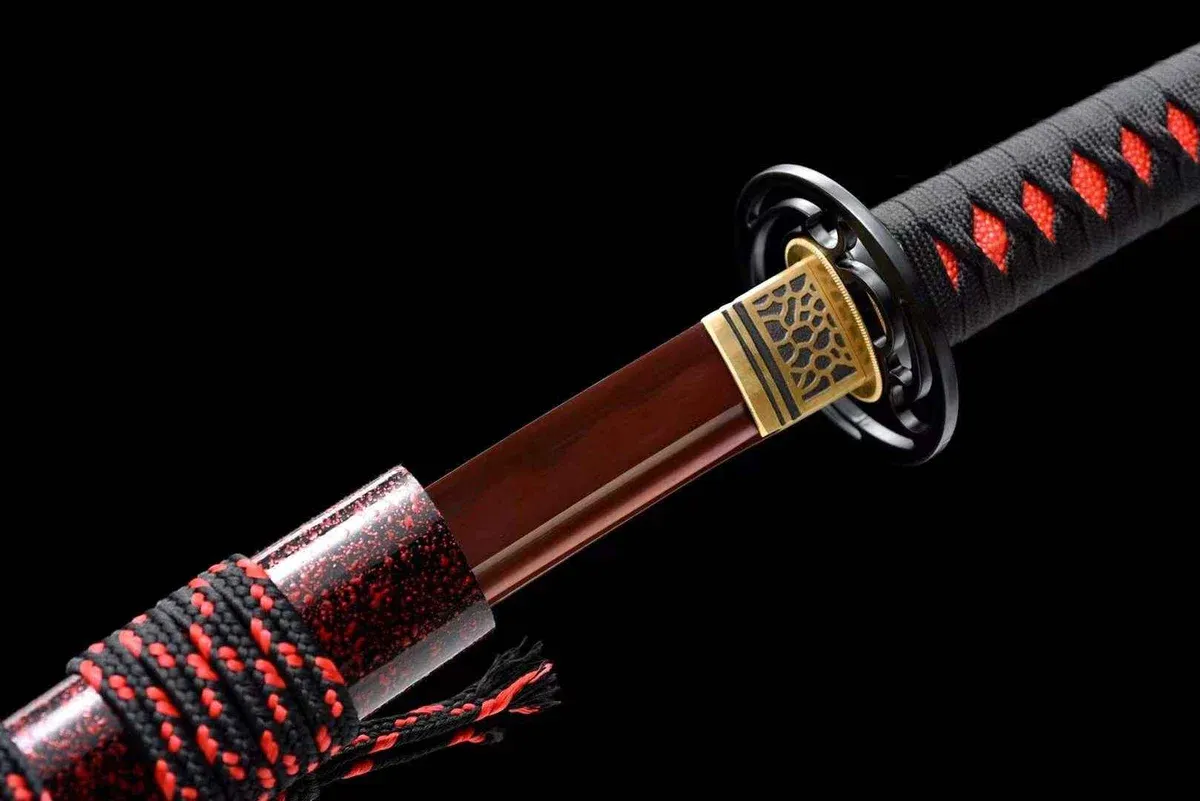
A finely carved iron tsuba guards the hand, and the classic details — sageo, fittings — are all present. The saya is solid wood, and the lacquered solid-wood tsuka is dressed in shagreen (ray-skin) leather for grip.
Specifications
| Blade steel | T10 steel with hamon |
|---|---|
| Blade color | Reddish |
| Tsuba | Finely carved iron |
| Saya | Solid wood |
| Tsuka | Lacquered solid wood, shagreen (ray-skin) leather |
Dimensions
| Total length | 103 cm |
|---|---|
| Blade length | 71 cm |
| Handle length | 26 cm |
| Blade width | 3.2 cm |
| Blade thickness | 0.75 cm |
Is it battle-ready?
Yes. The differentially hardened T10 blade is sharpened and full-tang, making the Chikara a capable cutter for beginners stepping into tatami work as well as a striking display sword. The iron guard and solid-wood saya keep the fittings sober so the reddish blade does the talking, and the full tang gives the assembly the rigidity repeated cuts demand. Compare it with the folded T10 Katana Ōkami and the cross-folded Katana Yonaguni in the wider katana collection.

 Verified owner