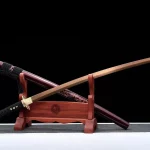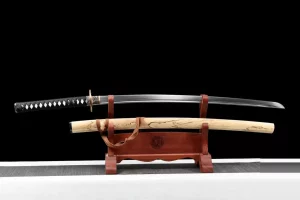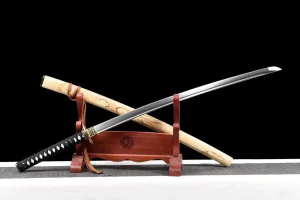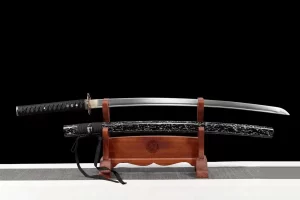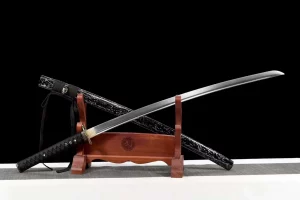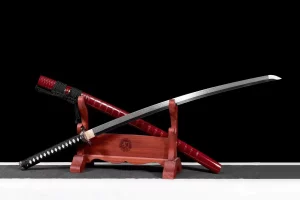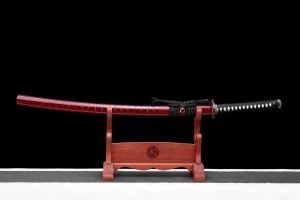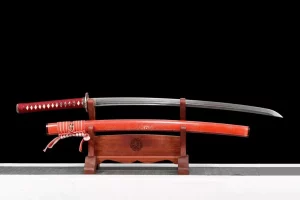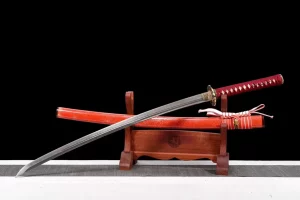
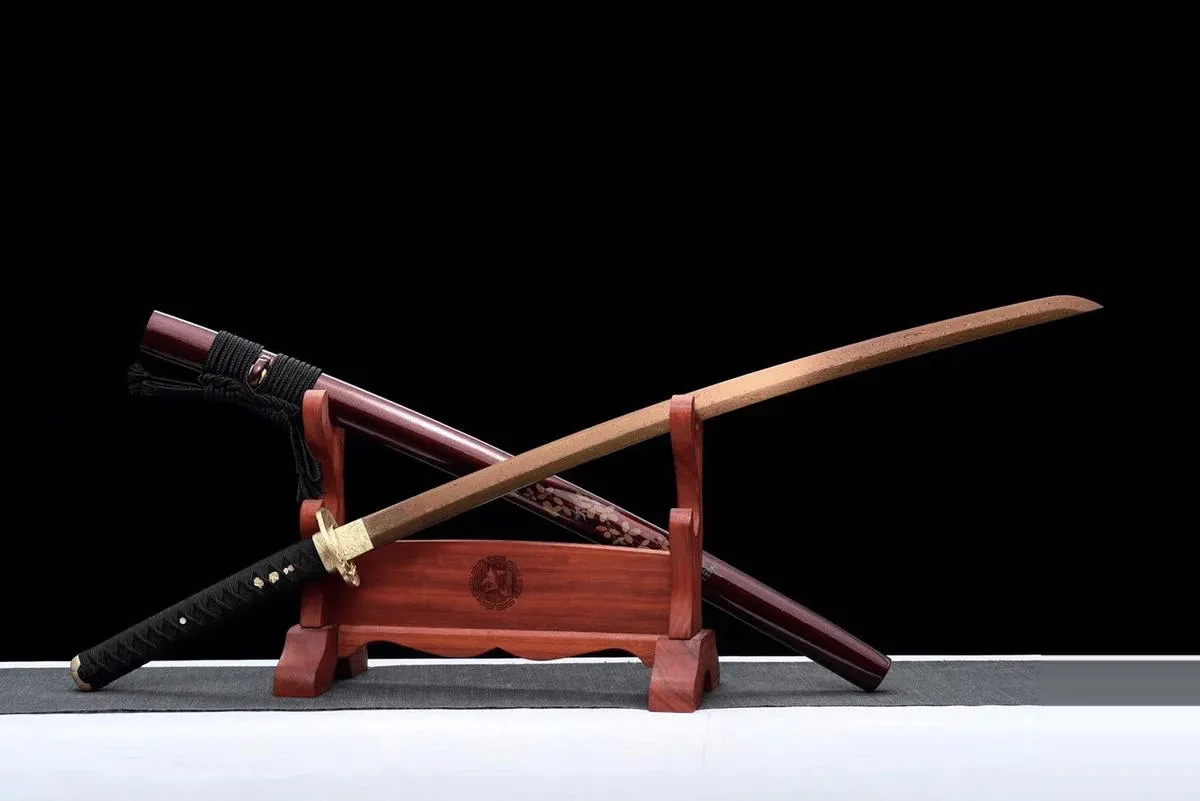
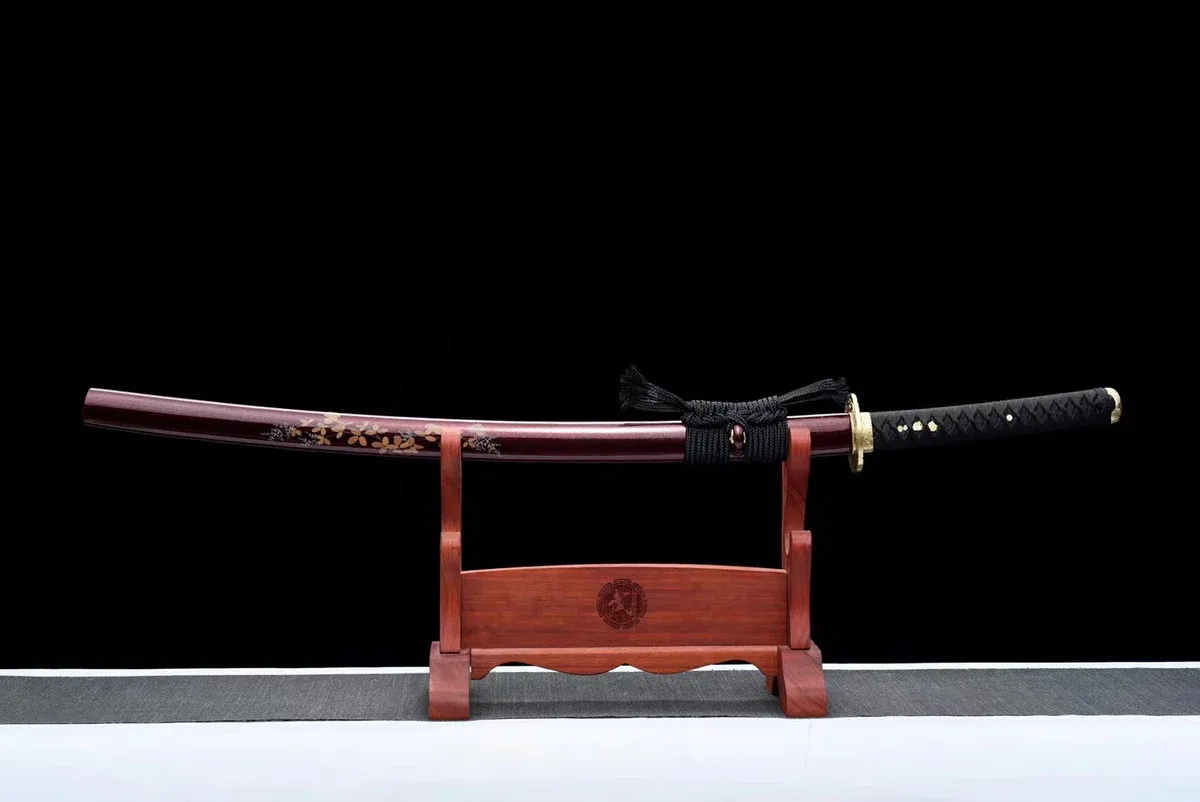
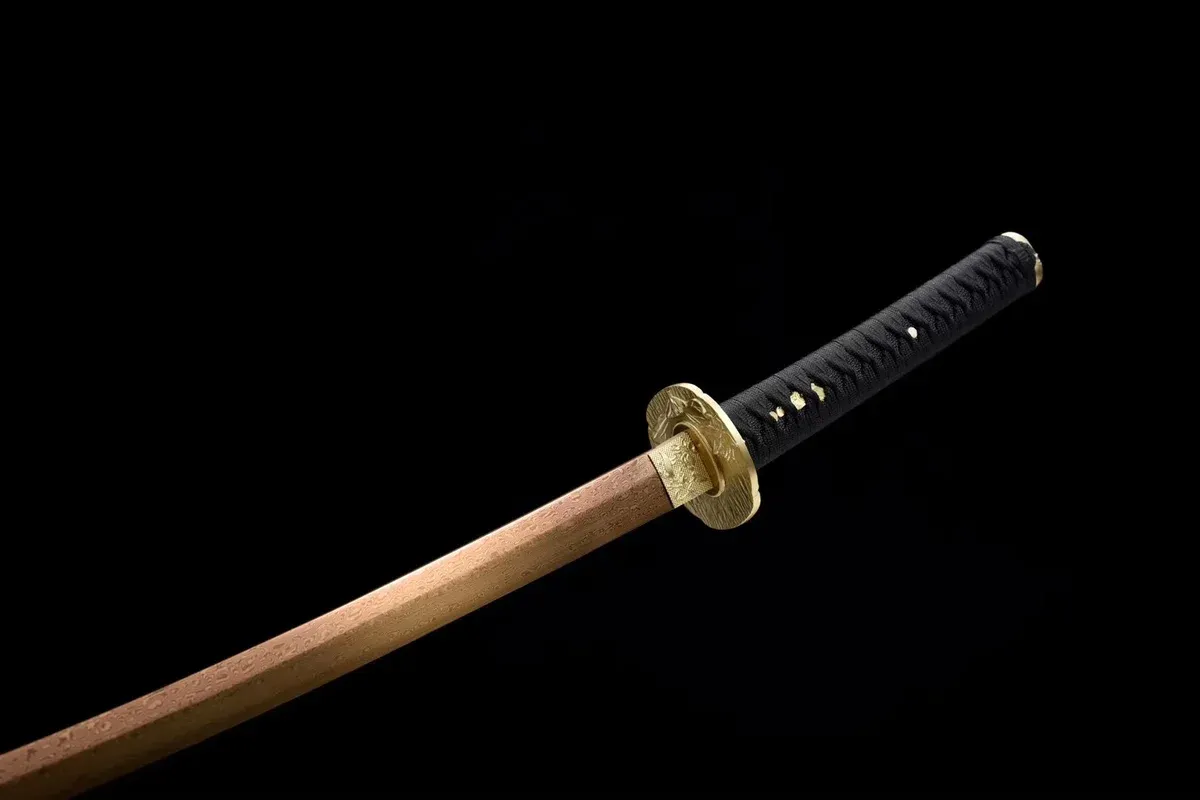
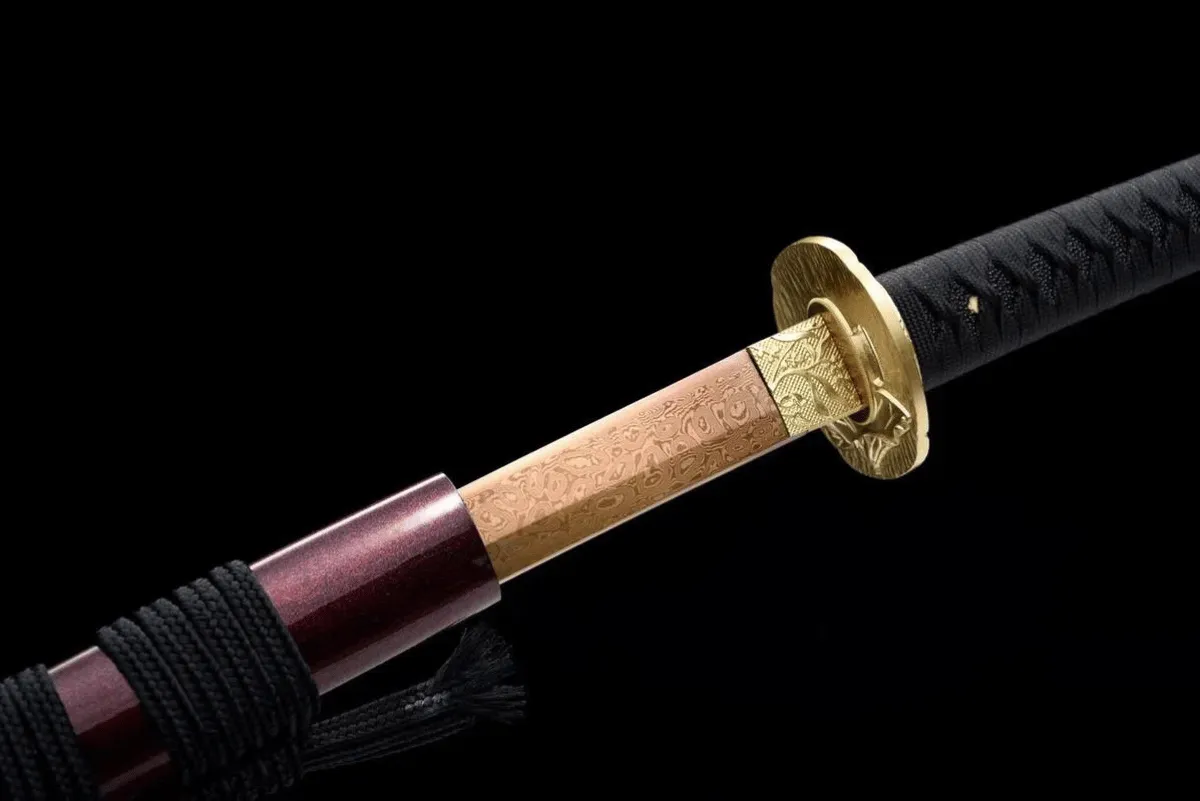
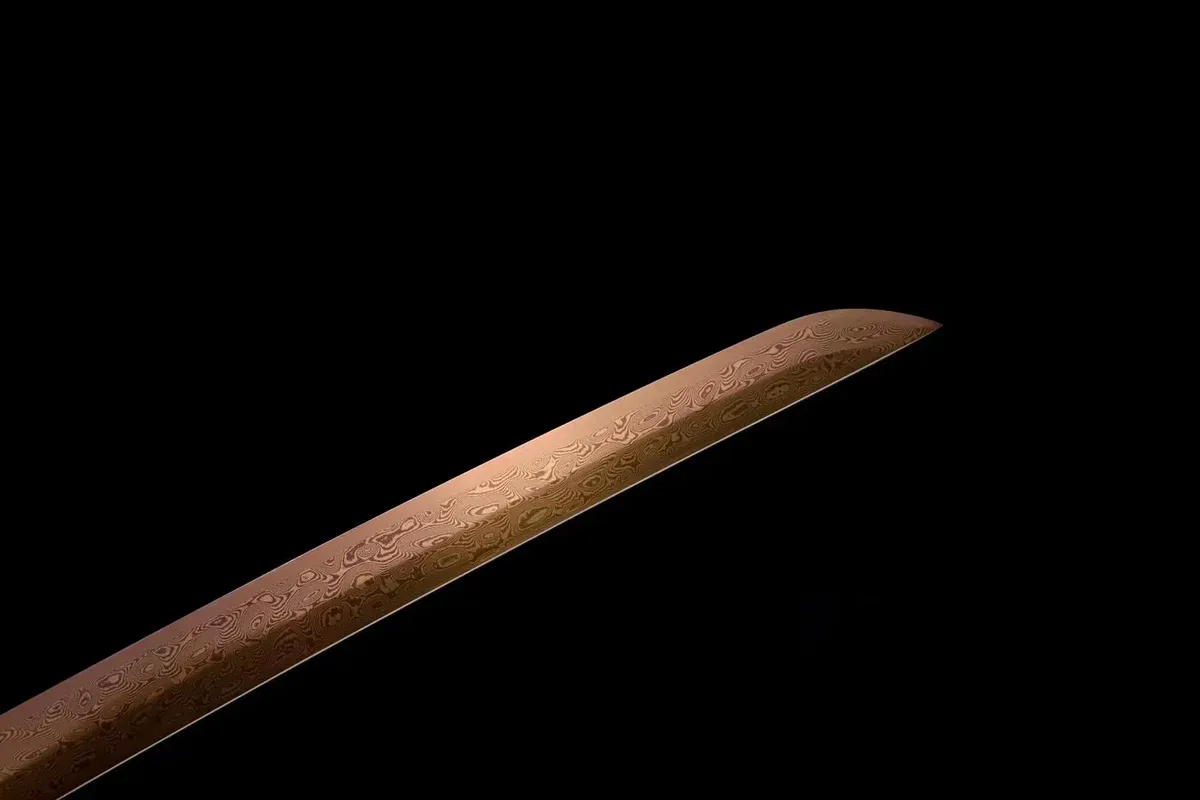
Gōrudo is simply gold — and the name lands the moment you see the blade. The standout here is a gold-finished Damascus edge whose folded composition marries flexibility with hardness, the old smith’s compromise that lets a katana flex without folding and bite without chipping. It is a mid-tier sword that punches well above its price, as striking on the stand as it is honest in the hand.
Forging & Steel
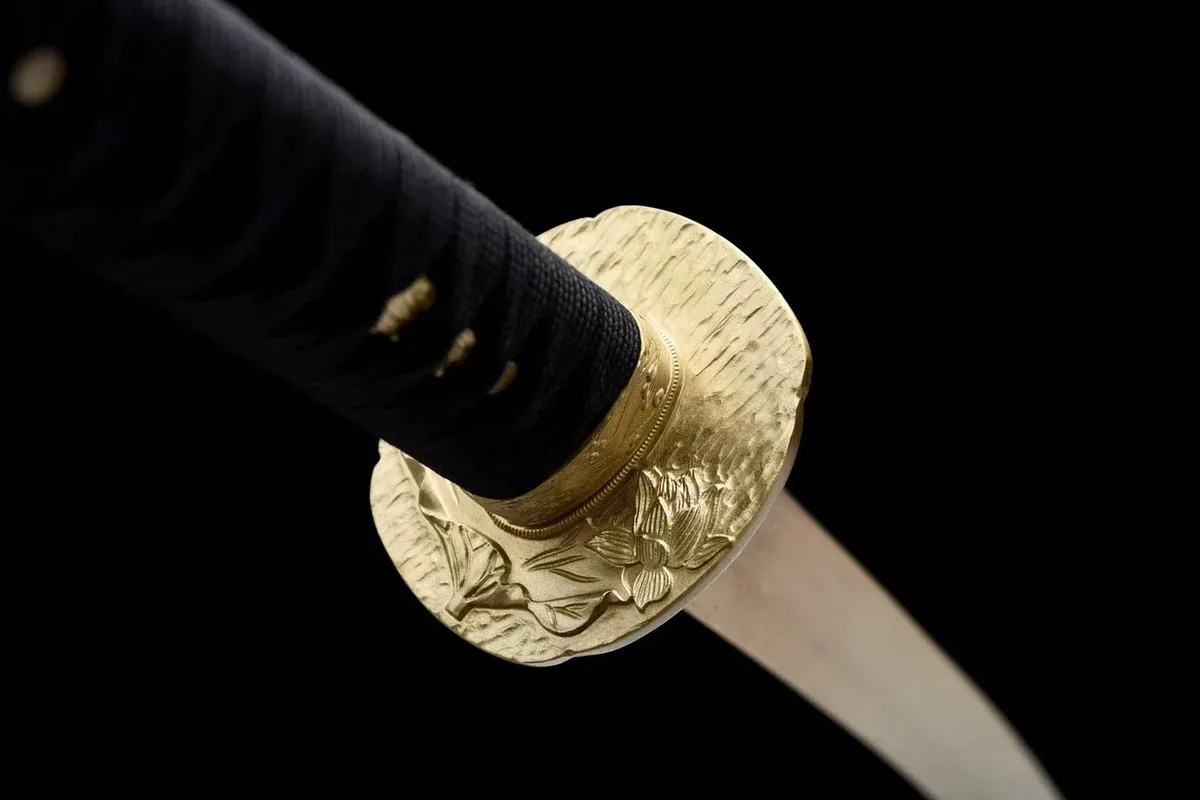
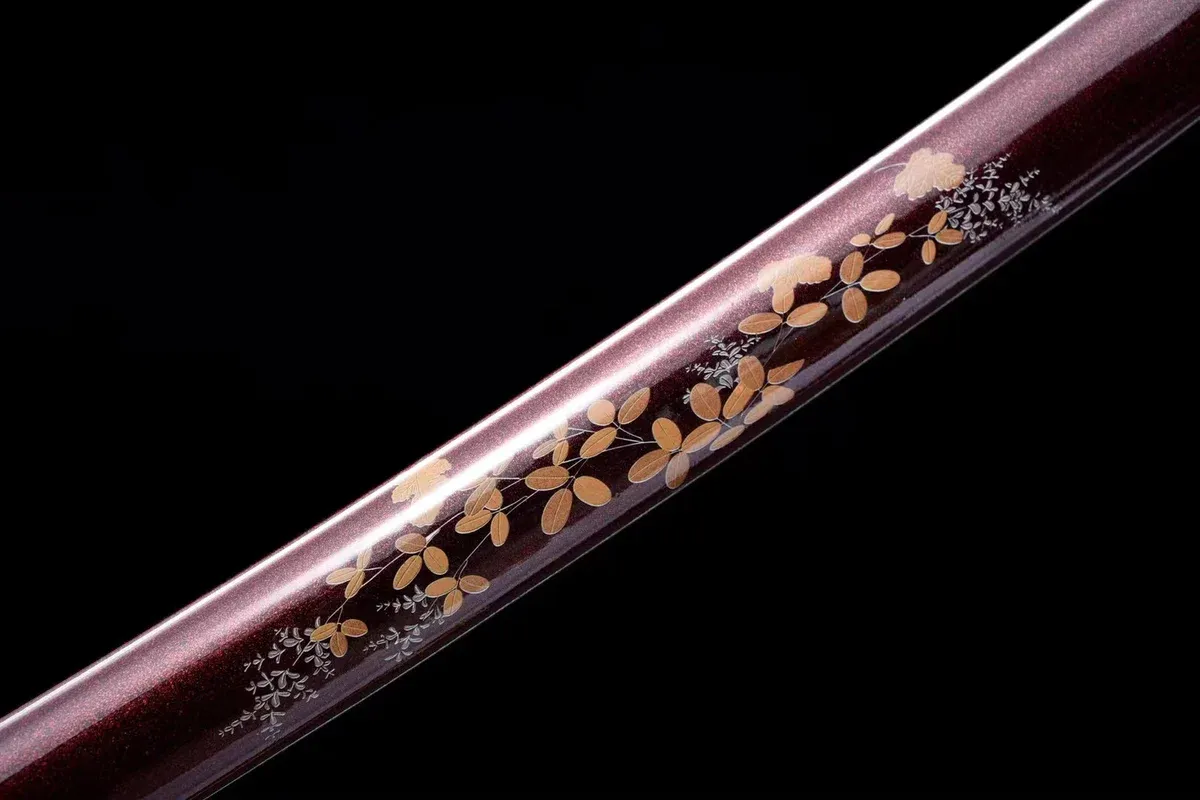
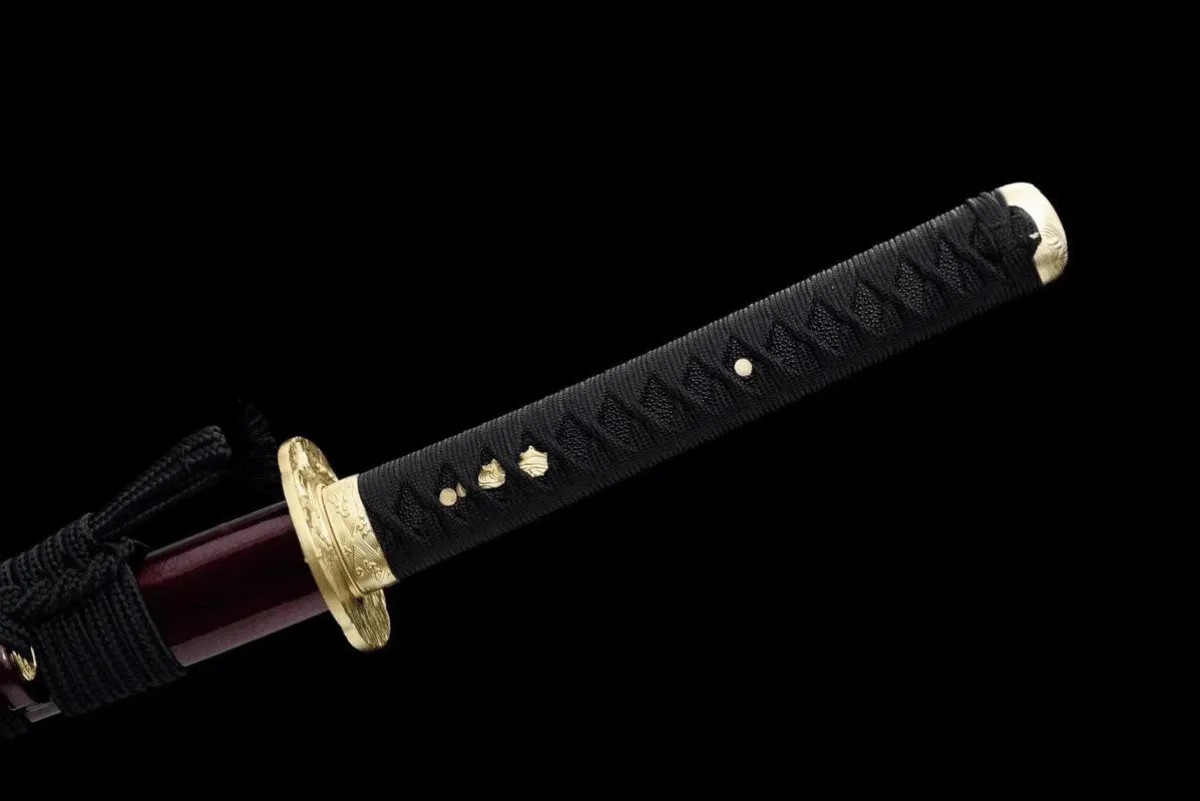
This is folded Damascus steel given a gold finish — a blade with the rippling grain that only comes from welding and drawing out layer after layer of high-carbon steel. The folding process is what tunes the balance of flex and hardness, producing a sword that holds an edge while resisting the shock of a cut, exactly what serious practice demands. The brass tsuba blends function and aesthetics with traditional motifs, while the elegantly lacquered wood saya protects the gold blade between sessions and keeps the finish clean. The tsuka is solid wood wrapped in stingray leather for a grip that stays sure through repeated draws, and every part honours the traditions of the Japanese smiths who first worked steel this way. It is a katana built to be used, not just admired — though it does both well. The gold finish is more than show: it sets the Gōrudo apart on a rack of gray blades while the folded steel beneath handles the real work of cutting.
Specifications
| Blade steel | Damascus steel |
|---|---|
| Blade colour | Gold |
| Tsuba | Brass |
| Saya | Lacquered wood |
| Tsuka | Solid wood and stingray (shagreen) leather |
Dimensions
| Total length | 103 cm |
|---|---|
| Blade length | 71 cm |
| Blade width | 3.2 cm |
| Blade thickness | 0.75 cm |
| Handle length | 26 cm |
Is it battle-ready?
Yes. The Gōrudo is a sharpened folded Damascus blade suited to cutting practice and martial-arts training, with a gold finish that makes it a striking display piece too. Browse the wider katana range, or compare it with the gold-bladed Nobunaga and the Shokubutsu.